


More news on this day
More than 1,000 flights were canceled across the United States after a telecommunications failure disrupted air-traffic operations at a key Federal Aviation Administration facility serving the busy Northeast corridor, leaving travelers from Boston to Charleston scrambling to reach their destinations.
Get the latest news straight to your inbox!
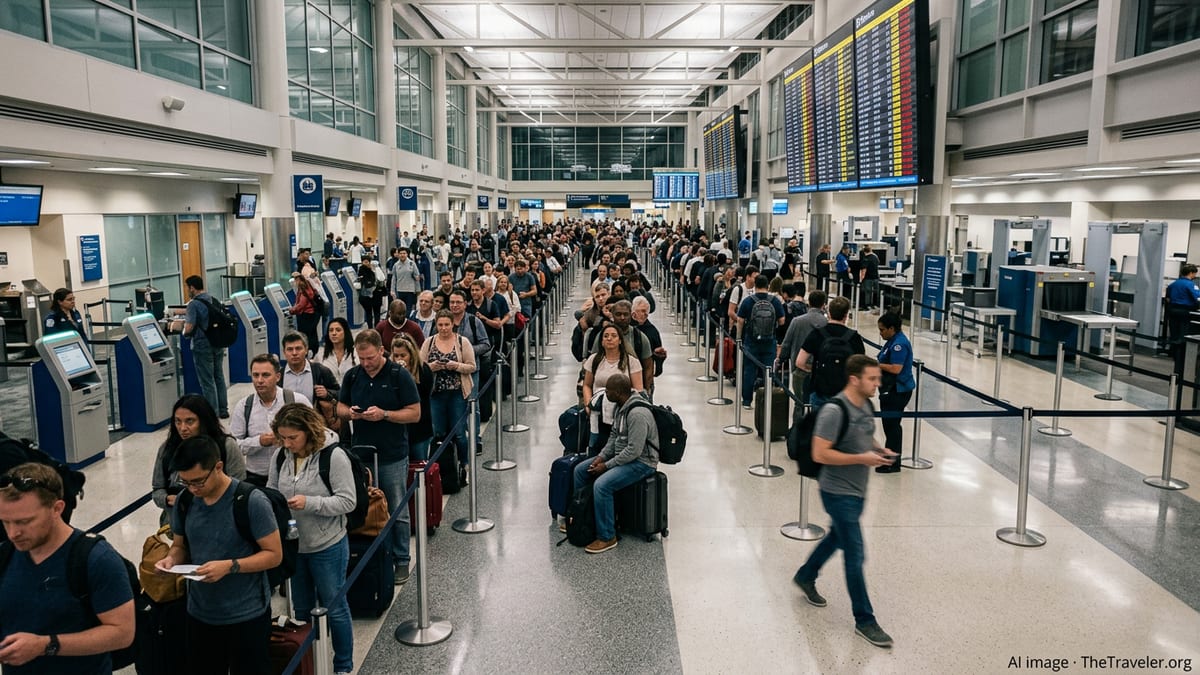
How a technical failure cascaded into widespread cancellations
Publicly available reports indicate that the disruption began on September 21, 2026, when communications systems at an air-traffic control facility near Philadelphia lost key radio and backup links used to manage arrivals and departures for several major East Coast airports. The issue prompted the Federal Aviation Administration to order ground stops that halted or sharply limited flights into airports in the New York, Philadelphia and Boston regions.
Data from flight-tracking services shows that more than 1,000 flights were ultimately canceled nationwide, with the largest concentration at East Coast hubs. Newark Liberty International, a major hub for United Airlines, recorded hundreds of cancellations and delays as traffic into the New York area slowed to a near standstill during the height of the outage. Philadelphia International and the New York City airports saw significant disruptions, while ripple effects reached as far as Charleston and San Francisco as aircraft and crews were left out of position.
By the morning of September 22, operations had largely resumed, but recovery remained uneven. Flight boards at Newark and Philadelphia still showed dozens of cancellations and a high volume of delays as airlines worked to reposition aircraft, reassign crews who had reached duty limits and clear backlogs of passengers from Monday’s shutdown. Industry analyses note that the concentration of traffic and limited slack in airline schedules along the Northeast corridor can turn a single technical failure into a multiday disruption for travelers.
Independent aviation coverage has highlighted concerns about aging components in the air-traffic infrastructure and the vulnerability of critical communications circuits to single-point failures. While detailed technical investigations are still underway, early accounts point to damaged or failed telecom lines as a central trigger, followed by an extended period in which backup systems could not fully restore normal capacity.
Where the impact is being felt the most
Flight-tracking data and local airport reports show that the worst impacts have been concentrated at the major East Coast gateways and their feeder airports. Newark Liberty International and Philadelphia International each reported hundreds of cancellations and delays on September 21, with lingering disruptions into September 22 as carriers rebuilt schedules. New York’s John F. Kennedy and LaGuardia airports, as well as Boston Logan, also experienced ground stops and widespread knock-on delays.
Secondary airports along the corridor felt the strain as well. Charleston International in South Carolina recorded dozens of delays and several cancellations linked to the Northeast outage, while airports in the Mid-Atlantic and Southeast saw disruptions to flights that depended on aircraft or crews moving through the affected hubs. Travelers in unaffected regions, including the West Coast, reported rolling delays when their inbound aircraft were stuck at East Coast airports during the outage window.
Even as ground stops lifted, travelers continued to face challenges securing seats out of affected airports. Carriers focused first on operating already scheduled flights and moving displaced aircraft to where they were needed most, which limited availability for same-day rebooking. Large hubs such as Newark and Boston saw crowded customer service lines and heavy demand on call centers and mobile apps as passengers searched for alternatives, including departures from neighboring airports or later travel dates.
Industry observers note that the pattern mirrors previous large-scale disruptions: hubs closest to the failure experience the highest share of outright cancellations, while outlying airports often see a mixture of protracted delays and a smaller number of cancellations as the network adjusts.
Immediate steps stranded travelers can take
For travelers whose flights are canceled, consumer guidance based on current Department of Transportation policy emphasizes one key protection: if an airline cancels a flight or makes a significant schedule change and the passenger chooses not to travel, the traveler is generally entitled to a cash refund to the original form of payment, even on nonrefundable tickets. Airlines may offer vouchers or credits, but passengers can request money back through official customer service channels.
Rebooking remains the priority in the first hours after a disruption. Passengers are encouraged by airline advisories and consumer advocates to use multiple channels at once: airline apps and websites, airport kiosks where available, and customer service phone lines. Travelers with elite status or co-branded credit cards may have dedicated phone numbers that can move faster than general call queues, although these are often busy during widespread disruptions.
When searching for alternatives, travelers can look at nearby airports that are operating with fewer constraints. For example, passengers originally booked into Newark might find options into or out of Philadelphia, Boston, Washington-area airports, or even secondary regional airports, depending on airline route networks. In some cases, airlines authorize changes to nearby airports within a specified radius as part of official travel waivers, allowing customers to switch without paying change fees or fare differences for a limited time.
Those already at the airport can also ask gate agents to protect them on multiple potential flights, such as a standby option in addition to a confirmed seat later in the day. However, during major events like this week’s outage, the number of open seats systemwide can be constrained, and travelers may need to accept departures a day or more later than originally planned.
Understanding travel waivers and passenger rights
In response to the outage and resulting cancellations, several major airlines have issued temporary travel waivers covering trips to, from or through affected airports for travel dates centered on September 21 and September 22, 2026. Publicly posted advisories describe policies allowing customers to change their itineraries within a limited window, typically a few days, without paying additional change fees. In some cases, travelers can shift to a different airport in the same region, provided the origin and destination are within a specified distance.
Travel waivers usually apply only to tickets issued by the airline and to flights that are still scheduled to operate. For canceled flights, the standard refund rules apply. Passengers who have tickets booked through online travel agencies or corporate travel programs are often required to make changes through the original booking channel, which can add another layer of complexity during a large disruption.
Current Department of Transportation guidance also distinguishes between cancellations within an airline’s control and those that carriers classify as caused by extraordinary circumstances. In practice, travelers affected by a system-wide disruption such as an air-traffic communications failure often find that airlines focus on rebooking and refunds, while additional compensation for meals or hotels is handled according to each carrier’s published customer service commitments. Some airlines provide meal vouchers or hotel discounts in limited situations; others direct passengers to seek reimbursement afterward by submitting receipts through online forms.
Because policies vary, consumer advocates advise checking both the airline’s contract of carriage and the Department of Transportation’s online dashboard, which summarizes what each major carrier commits to provide in situations involving cancellations and extended delays. Travelers who incur significant out-of-pocket expenses may decide to file formal complaints if they believe the airline has not followed its stated policies.
Planning ahead for upcoming East Coast trips
With investigations into the outage ongoing and recovery still in progress at some airports, travelers with upcoming trips involving East Coast hubs are being urged by publicly available advisories and flight-tracking services to monitor their itineraries closely. Checking flight status repeatedly in the 24 hours before departure can provide earlier warning of rolling schedule changes as airlines continue to rebalance aircraft and crews.
Experts in air travel operations point out that the effects of a large-scale disruption can linger for several days, particularly on routes with tight aircraft rotations and few backup planes. Travelers with critical connections, such as cruises, international meetings or events that cannot be rescheduled, may wish to build in additional buffer time or consider more direct routings that avoid multiple East Coast connections while schedules stabilize.
Some travel insurance policies and credit card protections may cover additional expenses or missed connections linked to major disruptions, though coverage varies significantly. Policy documents generally specify the kinds of events that qualify and the minimum delay required before benefits apply. Travelers considering new policies in the wake of this week’s cancellations should review the fine print to confirm whether air-traffic control outages or infrastructure failures are included as covered reasons.
For many passengers, the most practical step over the coming days is to remain flexible on departure times, routings and even airports. As airlines work through the backlog of stranded travelers, empty seats are likely to appear unevenly across the network. Staying prepared to accept alternative options and acting quickly when a viable seat opens can make the difference between spending another night in the terminal and finally getting airborne.