


More news on this day
A major gas leak near Didcot Parkway has closed a critical section of Great Western Railway’s main line west of London, prompting a rare “do not travel” warning for passengers planning to use services through Reading, Swindon and Oxford on Wednesday 23 September 2026.
Get the latest news straight to your inbox!
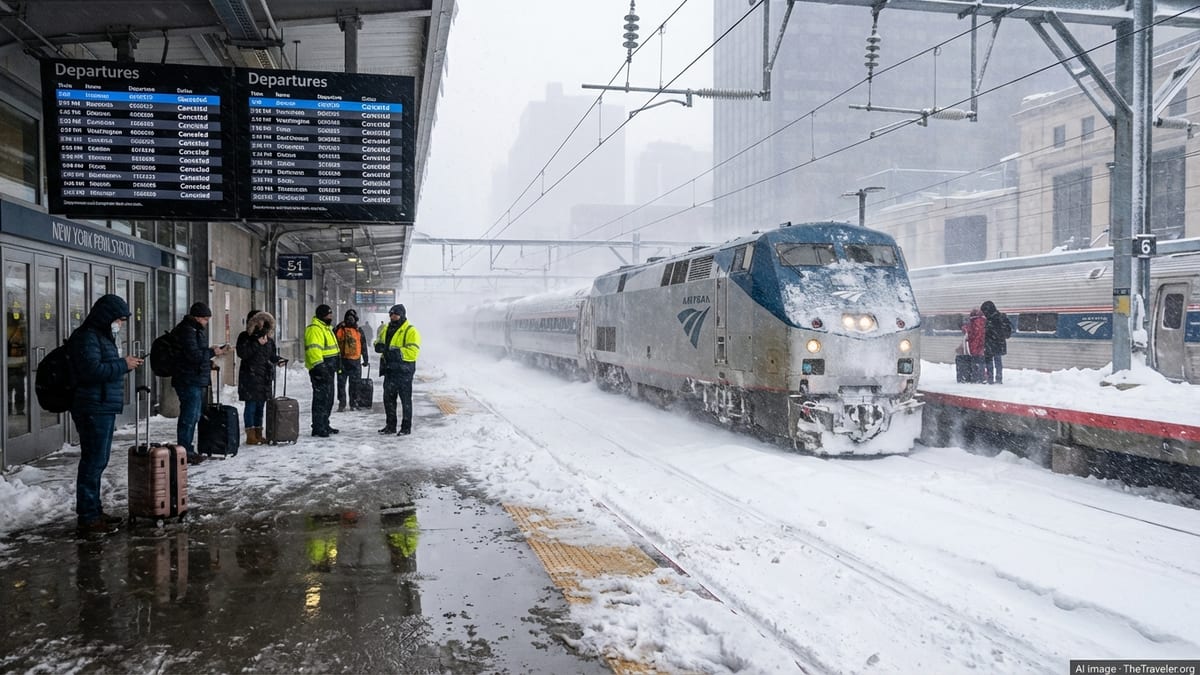
Key stretch of London–West Country corridor shut
Publicly available information from Great Western Railway (GWR) and Network Rail indicates that a gas leak close to the railway in the Didcot area has forced the closure of all lines between Reading and Didcot Parkway. The affected section sits on the Great Western Main Line, a core artery linking London Paddington with Oxford, the Thames Valley, the Cotswolds, South Wales and the West Country.
GWR’s live network updates describe widespread cancellations and alterations on routes that would normally pass through Didcot, with disruption currently expected to last throughout the day. Journey planners and disruption maps show no through trains running between Reading and Swindon via Didcot, and very limited ability to route services around the affected area.
Network Rail’s media briefings state that engineers from gas distribution company SGN are on site and that a safety exclusion zone has been established around the leak. Because the railway falls within this zone, no trains are permitted to operate through Didcot until the leak is fully secured and the area is declared safe for rail traffic.
As a result, long distance trains from London Paddington toward Bristol, South Wales and the South West are being diverted where possible, curtailed short of their usual destinations, or cancelled outright. Services that are able to run are reported to be extremely busy, particularly at key hubs such as Reading and Swindon.
‘Do not travel’ advice for Reading–Swindon passengers
GWR has issued explicit guidance advising customers not to travel between Reading and Swindon while the gas leak continues to disrupt services. The operator’s dedicated disruption page for the incident describes the situation as causing “severe disruption” and urges passengers intending to travel through Didcot to reconsider their plans.
JourneyCheck, the live incident portal used by GWR, repeats the “DO NOT TRAVEL” message for journeys between Reading and Didcot Parkway, and notes that all lines are currently closed between these stations. Timetables for the day show a sequence of cancellations and non‑stopping alterations for trains that would usually call at Didcot Parkway and intermediate Thames Valley stations.
The do‑not‑travel warning applies primarily to passengers whose journeys would take them across the closed section between Reading, Didcot Parkway and Swindon. Travellers using GWR services entirely on unaffected parts of the network are being advised to check journey planners carefully and allow extra time, as knock‑on delays and short‑notice changes are affecting a wider area.
Information published by Network Rail highlights that the disruption is expected to continue until at least the end of service on Wednesday 23 September 2026. Passengers planning trips later in the week are being urged to monitor updates in case repair work or safety inspections extend into subsequent days.
Limited alternative routes and replacement transport
GWR’s disruption advice outlines a reduced pattern of services operating on either side of the affected zone. Trains between London Paddington and Bristol Temple Meads are being routed via an alternative path in some cases, typically calling at Reading and Bath Spa only, and avoiding Didcot Parkway. Separate services are operating between Didcot Parkway, Swindon and Bristol Temple Meads where capacity and routing allow.
Local services are reported to be running between Didcot Parkway and Oxford, and between Swindon and Cheltenham Spa, maintaining some connectivity for passengers north and west of the closure. However, the lack of a through route between Reading and Didcot restricts options for travellers attempting to reach London from stations further west.
GWR indicates that only a very limited rail replacement bus service is available between Reading and Didcot Parkway, constrained by road conditions and the scale of the disruption. With long journey times and restricted capacity on these buses, the operator’s guidance stresses that passengers who do not have to travel should avoid attempting the journey.
Ticket acceptance has been arranged on several neighbouring operators for affected customers, according to information on GWR’s website and standard disruption policies. Passengers with valid tickets for routes through Didcot are being directed toward alternative lines where feasible, including Chiltern Railways links between London Marylebone and the Midlands, South Western Railway services into London Waterloo, and long‑distance connections via CrossCountry and Avanti West Coast.
What affected passengers can do with tickets
GWR’s general policy for retimed and cancelled journeys states that when a train is cancelled, tickets are usually valid on other GWR services up to two hours before or after the original departure. In major incidents such as this gas leak, the operator also typically relaxes routeing rules and accepts tickets on specified alternative operators that overlap the GWR network.
For this incident, publicly available advice notes that tickets dated Wednesday 23 September for journeys through Didcot can be used on Thursday 24 September, offering flexibility to those able to postpone their trip. Passengers who decide not to travel at all because of the disruption may be entitled to refunds under the terms of their ticket, and are encouraged by GWR guidance to apply through original points of purchase.
Delay Repay arrangements continue to apply for travellers who attempt their journey and arrive 15 minutes or more late because of cancellations or severe delays. GWR’s compensation pages explain that customers should keep their ticket or provide proof of purchase when submitting a claim.
Because exact options vary by ticket type, route and retailer, publicly available information consistently advises passengers to check their booking confirmation and refer to GWR’s official disruption and refunds pages before making changes. Those needing to switch to other London terminals, or to use local transport services in the capital that are not covered by existing tickets, may need to pay separate Transport for London fares.
Travel advice for visitors heading into or out of London
The gas leak disruption comes on one of the busiest intercity corridors in the United Kingdom, used heavily by business travellers and tourists moving between London and destinations such as Bath, Bristol, Cardiff, Oxford and the Cotswolds. With through services curtailed west of Reading, travellers are being urged in published guidance to reconsider same‑day long‑distance rail plans via the Great Western route.
Visitors currently staying in London who had planned day trips to Bath, Oxford or the wider West Country by train may find that journey times are significantly extended or that viable rail options are unavailable for certain time bands. In these cases, information from train operators and Network Rail suggests postponing trips, exploring attractions within London, or looking at alternative rail routes that do not rely on the Didcot corridor.
For travellers who must reach airports, such as Heathrow or Bristol Airport, journey planners indicate that additional time should be built into connections. Some itineraries that would usually rely on a fast GWR service may now require slower stopping services, diversions via other operators, or coach transfers from unaffected stations.
Publicly available updates emphasise that the situation is fluid and subject to change at short notice as engineers work on the gas main and safety assessments continue. Passengers are repeatedly urged in official travel advice to recheck live departure boards and journey planners immediately before setting out, and to be prepared for crowding, queuing systems at major stations, and last‑minute platform or service changes.