


More news on this day
A strengthening coastal storm brought rain and gusty winds along the East Coast on Wednesday, triggering dozens of flight delays at Charleston International Airport during one of the busiest travel days of the Thanksgiving period while millions of Americans took to the skies and roads nationwide.
Get the latest news straight to your inbox!
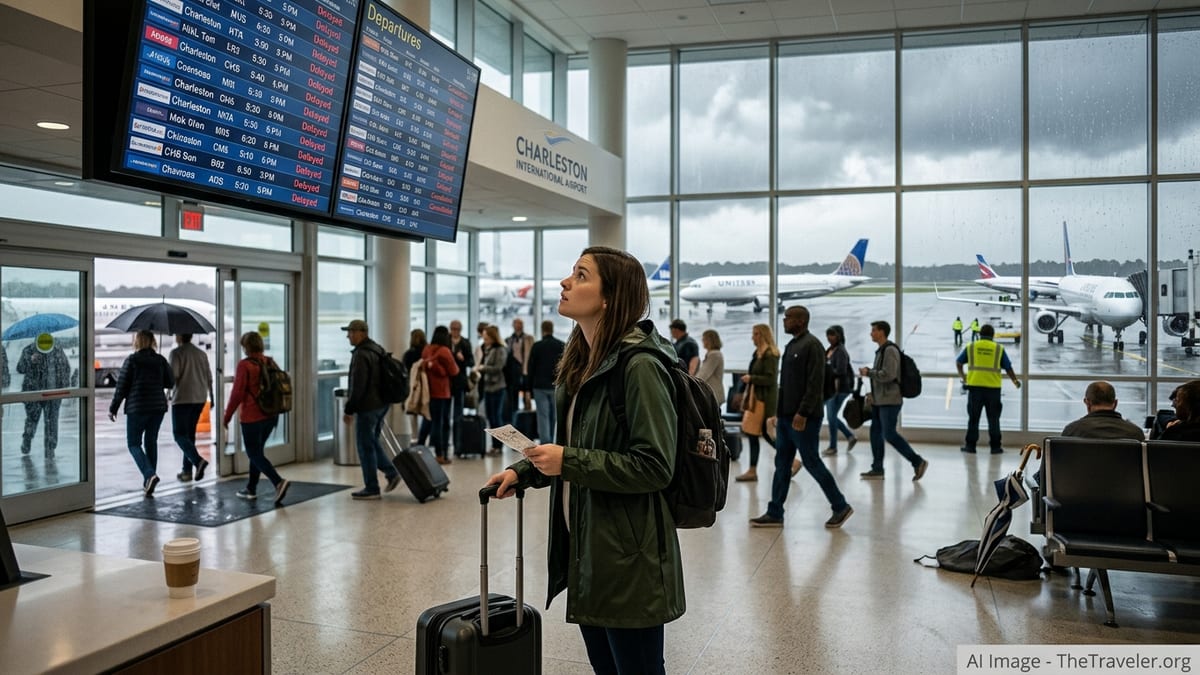
Storm system clips Lowcountry as national travel rush builds
Rain bands from a coastal storm tracking up the Southeast reached the Charleston region on Wednesday, November 25, bringing periods of steady rain, low clouds and gusty winds that slowed operations at Charleston International Airport. Forecasts from federal forecasters had warned that the same system would intensify as it moved north along the Eastern Seaboard through Thanksgiving Day, with heavy rain, coastal flooding and strong winds expected from the Carolinas into the Mid-Atlantic and Northeast. While Charleston avoided the worst of the impacts compared with later in the storm’s path, conditions were poor enough to disrupt flight schedules during peak outbound travel hours.
By late afternoon on Wednesday, flight-tracking services were reporting more than 4,000 flight delays across the United States and several hundred cancellations, reflecting the ripple effect of weather at multiple hubs. At Charleston International, the majority of the disruption took the form of late-arriving aircraft and pushed-back departure times rather than outright cancellations. Airport and airline data showed several dozen flights operating behind schedule, particularly services connecting through large East Coast and Midwestern hubs that were also wrestling with low visibility, rain or snow.
Most delays in Charleston were tied to conditions at destination and connecting airports rather than hazards directly over the airfield. That pattern is consistent with the broader national picture when storms coincide with major travel peaks: even when local weather remains within operating limits, airlines must reduce arrival and departure rates at affected hubs, which in turn cascades to smaller airports in their networks. For Charleston passengers, that meant added time on taxiways, holding patterns en route and longer waits at departure gates, even as runways themselves remained open.
Charleston travelers weigh flying versus driving as forecasts shift
The storm and its timing sharpened a common Thanksgiving dilemma for Lowcountry travelers: whether to fly or get on the road. Forecasts from AAA for the 2026 holiday period indicate that about 81.5 million Americans are expected to travel at least 50 miles from home between Tuesday, November 24 and Monday, November 30, a marginal decrease from the 81.6 million estimated last year. Within that total, nearly 6 million people are projected to fly, while roughly nine out of ten travelers are expected to drive, reflecting the continued dominance of car trips for regional and family visits over the holiday week.
In South Carolina and other Southeastern states, AAA’s regional outlook points to the same pattern: highways remain the preferred mode for most residents, even as major airports in Charlotte, Atlanta and Charleston prepare for elevated passenger volumes. Higher airfares compared with 2025 and lingering memories of previous years’ ground stops and technology glitches have also influenced some travelers’ mode choices. However, for longer-distance trips and tight family schedules, flying into or out of Charleston remains an attractive option, particularly when weather and airline operations hold up reasonably well.
On Wednesday, some passengers arriving in Charleston reported that their journeys had been smoother than anticipated given the forecast headlines. Flights from Nashville and other Southeastern cities, while experiencing periods of turbulence on descent through rain showers, generally managed to land close to schedule early in the day before the worst of the coastal weather developed further north. Others, particularly those connecting through hubs already constrained by storm-related traffic management programs, described extended waits on the runway and concerns about making onward connections as delays accumulated through the afternoon.
National system under strain from weather and recent disruptions
The Charleston delays took place against a backdrop of wider national strains on the U.S. air travel system this Thanksgiving. The Transportation Security Administration has forecast screening about 17.6 million passengers over the holiday travel window, with the Sunday after Thanksgiving historically the busiest day. Early TSA checkpoint counts through Tuesday indicated that volumes were running close to those projections, underscoring how little slack exists in the system when weather or technical problems arise.
In the days leading up to the storm, a series of disruptions at major hubs heightened traveler anxiety. A brief federal ground stop affecting flights into Atlanta earlier in the week, tied to a technical issue with airline weight-and-balance systems, created knock-on delays even after normal operations resumed. Earlier, separate technology outages at other large airports had forced temporary ground stops and prompted renewed questions from passengers about the resilience of airline and federal aviation systems ahead of peak holiday periods.
Weather-related constraints on the East Coast added a further layer of complexity as airlines and air traffic controllers tried to keep holiday schedules intact. Forecasts issued at the beginning of the week had already flagged the risk of a strengthening coastal low developing near the Southeast on Wednesday before moving toward the Mid-Atlantic and New England. As the system organized, the National Weather Service and emergency management briefings highlighted the potential for coastal flooding, strong marine winds and pockets of heavy rain, with Charleston, Wilmington and Raleigh among the cities in the storm’s initial path before Thanksgiving.
How the Thanksgiving 2026 travel picture compares
Although the Wednesday storm underscored the vulnerability of holiday schedules to weather, current forecasts and travel projections suggest that 2026 may ultimately be remembered as a slightly less intense Thanksgiving travel year than the three prior seasons. AAA’s national outlook notes that the slight dip in expected travelers ends a post-pandemic streak of record volumes, attributing the change in part to higher trip costs. Airfares for many domestic routes, including those touching Charleston, have risen compared with 2025 according to booking analyses, leading some potential flyers to reconsider or shorten their trips.
Even with that marginal decline, overall movements remain near historic highs, meaning that airports such as Charleston International still face sustained pressure on everything from parking and check-in lines to security checkpoints. At the same time, airlines have emphasized that they enter the 2026 holiday window with more staffing and aircraft available than in the immediate rebound years after the pandemic, when crew shortages and aggressive schedules combined to produce frequent large-scale disruptions. This year, carriers have generally tried to keep modest reserve capacity in place so that they can recover more quickly when isolated storms or glitches occur.
For Charleston specifically, Wednesday’s pattern of delays but relatively few cancellations aligns with that more cautious operational stance. By holding some spare crews and aircraft at key hubs, airlines serving the airport were able to absorb late inbound flights and still operate many outbound services, albeit behind schedule. While inconvenient for travelers with tight connections or time-sensitive plans, the resulting disruption remained within the range aviation officials view as manageable for a weather-affected peak day, rather than a full-scale breakdown of service.
What travelers through Charleston should expect in the coming days
Looking ahead to Thanksgiving Day and the holiday weekend, forecasts indicate that the center of the storm will shift farther north, with the most significant wind and rain impacts concentrating on the Mid-Atlantic and Northeast. For Charleston International, that transition should bring gradually improving local weather conditions, though residual delays remain possible as aircraft and crews work back into position after Wednesday’s disruptions. Travelers booked on early-morning flights on Thursday and Friday may find operations closer to normal, particularly on routes within the Southeast that are less exposed to the later stages of the storm.
However, those connecting through or flying to cities along the I-95 corridor, including major hubs from Washington and Baltimore to New York and Boston, should be prepared for potential knock-on effects if heavy rain, low ceilings or strong crosswinds require further traffic management measures there. Airlines have advised passengers throughout the Thanksgiving period to monitor their flight status closely, use mobile apps for real-time updates and consider building extra time into itineraries that involve tight connections through weather-affected airports.
With the Sunday after Thanksgiving traditionally the single busiest air travel day of the year, Charleston passengers returning home at the end of the long weekend may still encounter crowds even if the coastal storm has long since moved offshore. TSA screening forecasts and airline booking data suggest that the heaviest volumes will concentrate on that day and on the preceding Friday and Saturday. For travelers, that makes early planning particularly important: verifying flight times the day before departure, arriving at the airport earlier than usual, and having contingency plans in mind in case weather elsewhere in the country once again affects aircraft and crew availability for Charleston-bound services.