


More news on this day
U.S. airline passengers heading into the Thanksgiving holiday on Tuesday, November 24, encountered widespread delays and scattered cancellations, as an equipment outage at Chicago O’Hare and pockets of low clouds, rain and congestion across the country disrupted already heavy holiday traffic.
Get the latest news straight to your inbox!
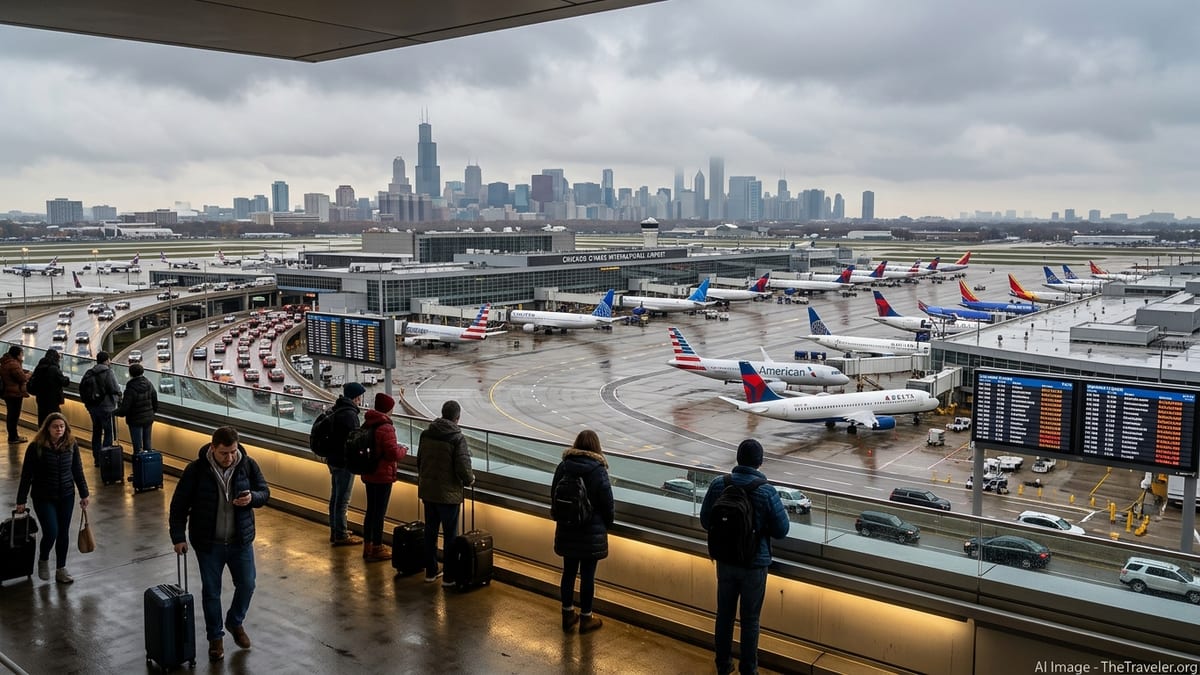
How extensive were Tuesday’s flight disruptions?
By mid-morning on Tuesday, November 24, real-time flight tracking data showed hundreds of delays accumulating across the United States. According to figures compiled by FlightAware and cited by multiple local outlets on Wednesday, at least several hundred U.S. departures and arrivals were running behind schedule by late morning, with a smaller number of outright cancellations. One widely shared snapshot taken around 9:15 a.m. Eastern time showed just under 1,000 delayed flights within, into or out of the United States and a few dozen cancellations, alongside many more disruptions worldwide. Those totals continued to change through the day as airlines adjusted schedules, aircraft and crews.
The raw numbers on Tuesday followed a turbulent ten days for U.S. air travel. On Friday, November 13, a nationwide ground stop linked to an FAA network upgrade forced airlines to cancel or significantly delay hundreds of flights while air traffic communications were restored. In the days after that event, major carriers including American, Delta and United reported lingering schedule challenges, and airports such as Chicago O’Hare and Midway were dealing with aircraft and crew out of position as the Thanksgiving travel period began.
Transportation officials have also warned that Thanksgiving 2026 is one of the busiest holiday periods since before the pandemic. Federal forecasts cited by industry analysts indicate that total scheduled flights through the extended holiday window, from roughly November 21 to November 30, are at or above 2025 levels, meaning that even modest operational issues can ripple quickly through the system.
Why Chicago O’Hare became a focal point
Chicago O’Hare International Airport, one of the country’s main connecting hubs, was at the center of Tuesday’s problems. The Federal Aviation Administration confirmed that it issued a ground stop for O’Hare early Tuesday afternoon because of an equipment outage affecting a system controllers use on the airfield. Local reports from Chicago cited officials who said the problem involved ground surveillance equipment used to track aircraft and vehicles on runways and taxiways. Once technicians isolated the fault, the initial ground stop was lifted in less than an hour.
Although the formal ground stop ended quickly, the FAA then put a ground delay program in place for flights heading to O’Hare. Under such programs, aircraft bound for an affected airport are held at their departure points and given new arrival slots to prevent congestion while operations are constrained. According to summaries from aviation data services that track FAA advisories, average arrival delays at O’Hare were around 45 to 50 minutes for a period on Tuesday afternoon as the backlog was cleared. Departures and arrivals continued to operate, but at a slower pace than scheduled.
Local television and radio outlets in Chicago reported that the outage came on top of a brief staffing-related ground stop at O’Hare earlier in the week and followed the nationwide ground stop on November 13. While Wednesday, November 25, saw largely normal operations with only routine weather-related delays, the sequence of events underscored how sensitive such a large hub is to any failure in the broader national aviation system, particularly during peak travel times.
Weather, congestion and earlier outages added pressure
The equipment outage in Chicago was only one factor affecting travelers on Tuesday. Forecasts from the National Weather Service highlighted low clouds, rain and pockets of reduced visibility across parts of the Midwest and Northeast, along with coastal storms on portions of the West Coast. These conditions can force air traffic controllers to increase spacing between aircraft for safety, reducing the number of flights that can land or depart in a given hour, especially at busy airports.
In the Southeast and along parts of the East Coast, lineups of storms and strong winds at different points during the week also contributed to delays at key airports such as Atlanta, Charlotte and the New York area. Even when those conditions are not severe enough to halt operations outright, they typically result in programs that slow arrivals or departures, and those slowdowns tend to propagate along an airline’s network as aircraft and crews arrive late to their next flights.
The week’s disruptions also followed a major automation system problem at Delta Air Lines on Sunday, November 22. The carrier acknowledged that a technology issue caused it to delay roughly half of its schedule that day and to cancel a smaller share of flights. Flight tracking data and subsequent reporting showed that hundreds of Delta flights remained delayed on Monday as the airline worked through the backlog. United Airlines experienced a separate system outage of its own within the past week, according to the airline and federal officials, leading to another round of delays. Although systems were restored before Tuesday, these operational shocks left some aircraft and crews out of their normal positions just as the pre-Thanksgiving rush intensified.
What the numbers mean for Thanksgiving travelers
While Tuesday’s snapshot of just under 1,000 delayed U.S. flights is eye-catching, historical data from the U.S. Department of Transportation and independent analysts indicate that holiday disruptions are highly uneven from day to day. In recent years, the Sunday after Thanksgiving has consistently been the most delay-prone travel day of the period, with more than one-third of flights arriving at least 15 minutes late on average, compared with single-digit percentages on Thanksgiving Day itself. Tuesdays and Wednesdays before the holiday typically see moderate delay rates, reflecting both busy schedules and early winter weather patterns.
For 2026, schedule data published by major U.S. airlines show that they plan to operate a particularly heavy set of flights on the Sunday following Thanksgiving, November 29, to meet returning demand. Industry forecasts cited by travel planning services suggest that if weather cooperates, overall delay rates for the week could remain similar to those seen in 2024 and 2025, but that any new equipment or technology issue at a major hub could again cause an outsized impact, as seen in Chicago on Tuesday and during the nationwide ground stop on November 13.
Airports with the most holiday delays in recent years include large hubs such as Denver, Chicago O’Hare, Dallas Fort Worth, Atlanta and several major Florida airports, where thunderstorms or coastal systems are common. Analysts caution, however, that conditions can vary sharply from year to year. For 2026, early figures from Florida, for example, show only modest cancellation totals ahead of Thanksgiving, despite those airports’ reputation for higher disruption risk, suggesting that localized weather and infrastructure issues remain more important than any single national trend.
How travelers can respond to delays and cancellations
For travelers caught up in Tuesday’s disruptions, the practical steps remain largely the same as in any major travel period. Airlines and consumer advocates consistently advise passengers to monitor flight status through official channels and to download their carrier’s mobile app, which often reflects rebooking options before they are widely available through call centers or airport agents. During Tuesday’s O’Hare outage, airlines pushed schedule changes and revised departure times to their apps and websites as new FAA arrival and departure slots were assigned.
Travel finance specialists also emphasize that booking directly with an airline can simplify rebooking in a disruption. When a ticket is purchased through a third-party site, agents at the airport or on airline hotlines sometimes have less flexibility to change itineraries quickly, because the underlying ticket is controlled by the intermediary. Travelers with frequent flyer status may also see rebooking offers appear earlier in their apps and may be prioritized for available seats on the next flight when capacity is constrained at a hub.
Passengers facing long delays or cancellations should also familiarize themselves with their airline’s specific policies on refunds, meal vouchers and hotel accommodations, which differ across carriers and often depend on whether the cause of the disruption is considered within the airline’s control. Problems linked to airline staffing or internal technology may qualify for more generous accommodations than delays caused by weather or FAA equipment issues. The U.S. Department of Transportation maintains an online dashboard comparing these commitments, and airlines typically summarize their rules in their contracts of carriage and customer service plans.
What to check before flying later this week
Looking ahead to the remainder of Thanksgiving week, both federal officials and airlines stress that Tuesday’s problems, while disruptive, do not necessarily predict the pattern for the rest of the holiday period. As of early Thursday, November 26, the FAA was not reporting an active ground stop or ground delay program for Chicago O’Hare, and most major hubs were operating without extraordinary nationwide restrictions. Forecasts called for unsettled weather in some regions, including parts of the East Coast and the West Coast, which could trigger localized delay programs at short notice.
Travelers flying later this week are advised to check three things in the 24 hours before departure: the FAA’s current status for their departure and arrival airports, their airline’s latest flight status for each segment and short-term local weather forecasts along their route. Monitoring these sources can provide early warning of emerging ground stops or delay programs, such as the one that affected O’Hare on Tuesday, and give passengers more time to adjust plans or request changes.
For those returning home at the end of the holiday, especially on Sunday, November 29, experts recommend allowing extra time for connections at major hubs, building in flexibility where possible and keeping essential items in carry-on bags in case of extended delays. While airlines and the FAA have restored normal operations after the recent outages, the combination of full flights, winter weather and a still-modernizing aviation infrastructure means that conditions can change quickly. Staying informed and proactive remains the most reliable way for passengers to navigate what is shaping up to be one of the busiest Thanksgiving travel periods in recent years.