


More news on this day
Major U.S. airlines have activated broad weather waivers for Thanksgiving Day travel along the East Coast, allowing many passengers to change flights without penalty as forecasters warn that a powerful coastal storm on Thursday, November 26, 2026, could bring heavy rain, strong winds, coastal flooding and significant disruption at some of the nation’s busiest airports.
Get the latest news straight to your inbox!
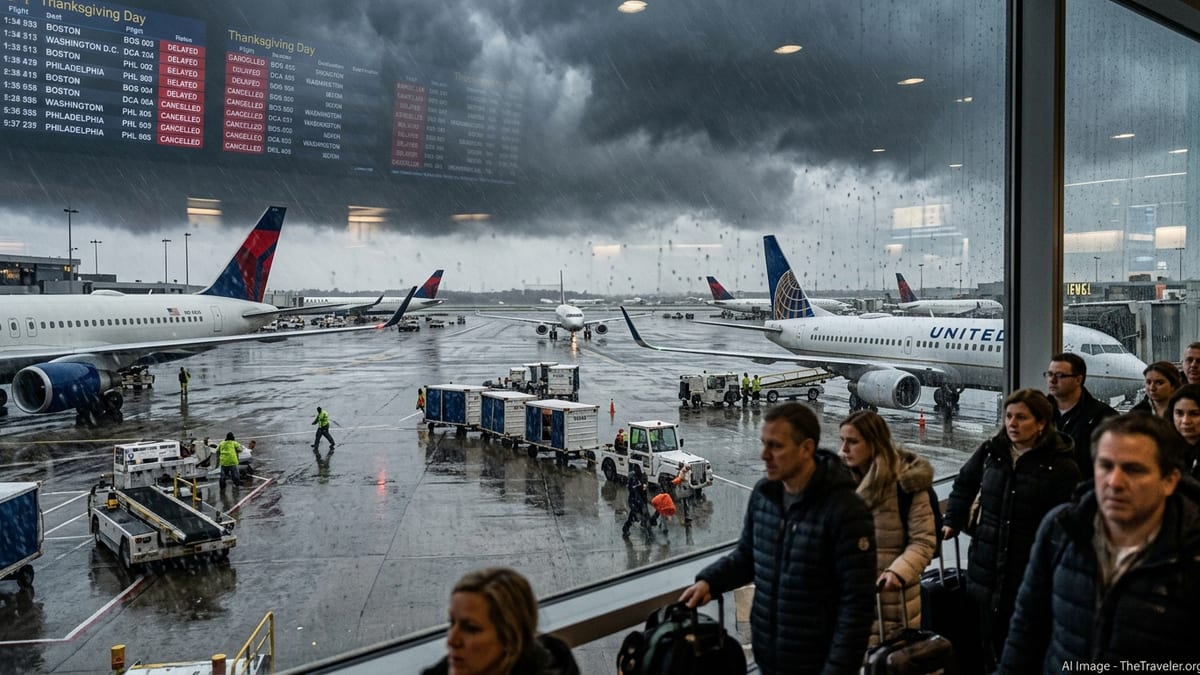
Storm forecast points to high‑impact Thanksgiving travel day
The National Weather Service and the National Oceanic and Atmospheric Administration are warning that an intensifying coastal storm will track from the Southeast toward the Mid‑Atlantic and Northeast through Thanksgiving Day, bringing heavy rain, high winds and areas of coastal flooding from the Carolinas to New England. Forecast discussions issued on November 24 and 25 highlight a strong low‑pressure system developing off the Southeast coast on Wednesday before moving north along or just inland of the Eastern Seaboard on Thursday, coinciding with peak holiday travel. Meteorologists expect widespread rain, pockets of wintry mix inland and wind gusts strong enough to affect ground operations at major airports, particularly from Washington and Baltimore through New York and Boston.
NOAA’s Thanksgiving week outlook, published on November 24, calls for a “potent Thanksgiving Day storm” spanning the Ohio Valley to the Eastern Seaboard, with heavy downpours, strong winds and coastal flooding likely to disrupt Thursday morning parades, road travel and flights from the Carolinas through southern New England. Regional forecast offices, including Mount Holly, New Jersey, have upgraded wind alerts for coastal counties and warned of significant coastal flooding potential on Thursday, with strong onshore winds coinciding with high tides from Georgia to the Northeast. These conditions are expected to ease gradually on Friday as the system lifts into Atlantic Canada, but forecasters caution that lingering rain and gusty winds could continue to affect aviation through the first half of the day in parts of New England.
The timing of the storm is particularly challenging for the aviation system. Industry and government projections point to one of the busiest travel periods of the year, with tens of millions of Americans expected to travel between November 20 and 30, including nearly 6 million by air. While overall passenger volumes and exact figures vary by source, airlines and airports have been preparing for heavy terminal crowds and full flights, and the storm increases the likelihood of congestion, missed connections and rolling delays if ground stops or flow restrictions are imposed around key hubs along the I‑95 corridor.
Major carriers roll out weather waivers for East Coast routes
In response to the evolving forecast, multiple large U.S. airlines have introduced temporary weather waivers that relax their usual change rules for affected flights on Thanksgiving Day. Publicly available travel alerts and agency bulletins show that Delta Air Lines, United Airlines and American Airlines have all issued waivers tied to the November 26 storm, focusing on airports in the Mid‑Atlantic and Northeast that are most likely to see strong winds, heavy rain and possible coastal flooding. The waivers generally apply to passengers booked to travel to, from or through specified airports during a limited date range, typically centered on Thursday and in some cases extending into Friday, and allow a one‑time change to a different flight without an additional change fee.
A Delta agency bulletin dated November 26 outlines a “Northeast Weather Flexibility” policy that covers select airports in the storm‑impacted region. Under this bulletin, eligible customers whose itineraries include those airports on the covered dates may rebook on alternative flights, usually within a defined window, with the change fee waived. Standard fare rules for any fare difference generally remain in place unless Delta subsequently extends or broadens the policy. The bulletin also confirms that if Delta cancels a flight because of the storm and no acceptable alternative is available, travel agents may process refunds for totally unused nonrefundable tickets under normal settlement procedures.
Separate travel alerts from American Airlines and United Airlines describe similar temporary waivers for passengers traveling through specified East Coast airports on November 26. American’s notice, highlighted in regional coverage from Boston, lists impacted airports that include Boston Logan and allows customers to change flights without paying a change fee for travel within a rebooking window, subject to seat availability in the same cabin. United’s waiver applies to an overlapping set of East Coast cities expected to experience bad weather, including major hubs in the Washington and New York areas. In each case, the waivers are structured as short‑term exceptions to normal rules rather than permanent policy changes, and they are explicitly tied to the forecast storm and its expected timing.
How the waivers work and who qualifies to change plans
Although the precise terms differ by carrier, the Thanksgiving storm waivers share several common elements that determine which travelers can adjust their plans without a standard change penalty. First, each airline specifies the airports and dates covered. For this storm, carriers have focused on airports along the Eastern Seaboard where the National Weather Service anticipates the most disruptive combination of low clouds, heavy rain and high winds on Thursday into early Friday. Typical lists for these waivers include major hubs such as New York’s LaGuardia and John F. Kennedy, Newark Liberty, Washington Reagan National and Dulles, Baltimore/Washington, Philadelphia, Boston and, in some cases, other regional airports in the Mid‑Atlantic and New England.
Second, waivers define a purchase or ticket‑issue date. Generally, they apply only to tickets issued before the airline posted the alert or bulletin, so they are designed to help travelers who booked earlier rather than those purchasing last‑minute fares after the weather disruption became clear. Third, the policies outline a rebooking window, often allowing customers to move their trip to a nearby date, such as any day between Wednesday and Saturday, as long as all travel is completed by a stated end date. Within that window, most large U.S. airlines allow a one‑time change to another flight on the same routing or a limited set of alternative routings without charging a change fee, although any fare difference between the original and new flights may still apply.
Finally, the waivers clarify how cancellations and refunds are handled if the storm forces schedule changes. If an airline proactively cancels or significantly reschedules a flight because of the weather system, passengers are generally entitled to rebooking on the next available flight. In some cases, particularly when the remaining options do not meet a traveler’s needs or when there is an extended delay, the carrier’s policy or agency guidance may allow a refund even on a nonrefundable ticket. Delta’s bulletin for the Northeast notes this explicitly for completely unused tickets when the flight cancellation is attributed to the storm, while similar practices are commonly referenced in United and American advisories in connection with weather‑related cancellations.
Expected impacts at key airports and what travelers should check
Forecast discussions and regional briefings suggest that the worst conditions for aviation will be concentrated on Thursday from the mid‑Atlantic through New England, where low cloud ceilings, heavy rain bands and wind gusts are expected to coincide with peak morning and midday operations. For example, weather briefings from the National Weather Service office in Mount Holly, New Jersey, emphasize that a strong coastal low will bring significant impacts to the region starting late Wednesday night, peaking on Thanksgiving Day and lingering into Friday, including high winds across coastal New Jersey, Delaware and the Philadelphia metro area. Those conditions can trigger a range of air traffic management steps, from increased separation between aircraft to ground delay programs or temporary ground stops at heavily used airports such as Philadelphia and the New York area hubs.
Further north, the National Weather Service notes that heavy rain and high winds in southern New England from midday Thursday through Friday morning could affect operations at airports such as Boston Logan and Providence, where a wind advisory is in effect along the coast. When surface winds reach certain thresholds or are misaligned with runway directions, aircraft movements may need to be reduced for safety, which often results in delays that ripple through the network. Elsewhere along the storm track, including portions of the Carolinas and the Ohio Valley, bands of heavy rain and embedded thunderstorms could also cause localized slowdowns, while inland areas in the mid‑Mississippi Valley may see accumulating wet snow that affects smaller regional airports.
Because airline networks are highly interconnected, disruptions at a few major East Coast hubs on a peak travel day can have knock‑on effects across the country even where local weather is relatively benign. Aircraft and crews scheduled to operate multiple segments in a day may be delayed on early flights, leaving later departures without equipment or staff at their starting airports. For passengers, this can mean missed connections and unexpected overnight stays if a cascading series of delays leaves them stranded away from home or their final destination. Airlines have not published definitive estimates of how many flights might be affected, and forecasters emphasize that the exact track and intensity of the storm will influence the scope of disruption, but the early activation of waivers indicates that carriers see a meaningful risk of operational impact.
What happens next and how travelers can prepare
As of the evening of Wednesday, November 25, forecasts still show a high likelihood that the coastal storm will be near peak intensity on Thanksgiving Day as it affects the Mid‑Atlantic and Northeast. The National Weather Service expects conditions to gradually improve from south to north on Friday as the low pulls away from New England, although lingering rain and gusty winds could keep delays elevated in some areas, particularly during the morning hours. Additional Pacific systems are forecast to affect the West Coast through the weekend, which may create separate travel challenges there, but these are not currently tied to the East Coast waivers associated with Thursday’s storm.
Airlines are likely to update their travel alerts and waiver policies if the forecast or operational impact changes. In previous large holiday storms, carriers have sometimes expanded city lists, extended rebooking windows or added more flexible provisions, such as waiving fare differences for rebooked flights within a tight time frame. As of now, however, the publicly posted waivers remain focused on flights booked for November 26 involving specific East Coast airports, with standard fare rules applying outside the limited exception periods. Any passenger considering a change should consult their airline’s most recent travel alert, which will set out the exact conditions, rather than relying on earlier versions or general summaries.
For travelers planning to fly on Thanksgiving Day or early on Friday, the most practical steps are to verify flight status frequently, monitor weather forecasts for both origin and destination airports and review the details of any applicable waiver on the airline’s website or app. Those with flexible plans may choose to move their trips earlier or later within the allowed rebooking window, while passengers whose flights are still scheduled but at risk of delay might consider adjusting connection times or routing options. Because policies differ between airlines and can change quickly as the storm evolves, checking directly with the carrier before making decisions about rebooking, cancellations or airport arrival times remains essential.