


More news on this day
A new Federal Aviation Administration runway safety directive that took effect nationwide two days before Thanksgiving could modestly increase taxi and takeoff waits at some U.S. airports during one of the busiest travel periods of the year, as controllers adopt stricter limits on when they may line up departing aircraft on the runway.
Get the latest news straight to your inbox!
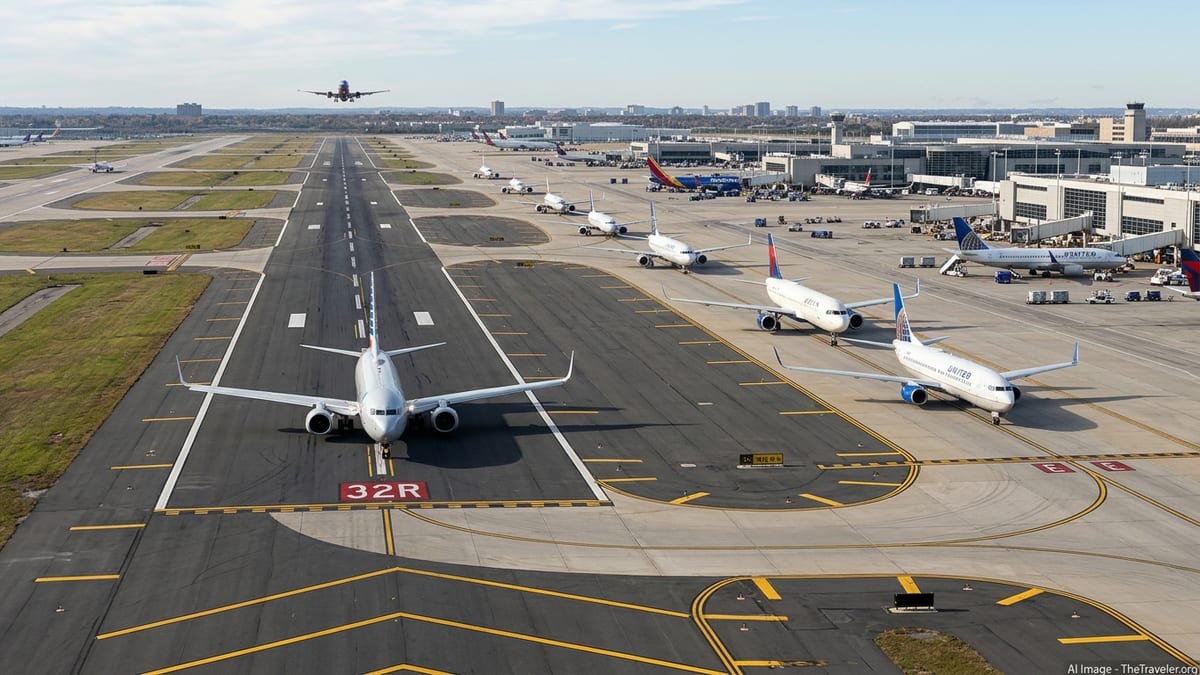
What the new line-up rule changes on the runway
The Federal Aviation Administration has tightened how air traffic controllers use a common departure procedure known as “line up and wait,” in which an aircraft is instructed to taxi onto the runway and hold in position before takeoff clearance is issued. Under a directive rolled out on Tuesday 24 November 2026, controllers may now employ line up and wait only when a dedicated tower supervisor is actively monitoring operations, a measure the agency says is designed to strengthen runway safety during busy periods.
The new restriction does not ban line up and wait outright, but it raises the threshold for when it can be used. Previously, individual controllers had more discretion to clear aircraft into position on the runway while simultaneously handling other duties. With the revised rule, a second set of eyes must be available to oversee those movements, particularly at complex or high-traffic airports where multiple runways and taxiways intersect and the risk of runway incursions is higher.
The policy applies nationally and is temporary, currently set to remain in effect until 9 June 2027. During that period, airports of all sizes that use line up and wait are expected to comply, although how much the change alters day-to-day operations will vary depending on traffic levels, staffing and local procedures. The FAA has said it does not expect the directive to affect airport capacity in a significant way, while some controllers and pilot groups have cautioned that there could be measurable impacts at peak times when tower staffing is tight.
Why the rule is arriving in the middle of the holiday rush
The timing of the directive has drawn attention because it coincides with a particularly busy Thanksgiving travel period. According to figures shared by the FAA, about 417,775 flights are scheduled across U.S. airspace between 23 November and 1 December 2026, representing the highest Thanksgiving-week flight volume in roughly 16 years. Airlines have loaded dense schedules into major hubs such as Atlanta, Dallas–Fort Worth, Chicago O’Hare, Denver, Los Angeles and New York, leaving less margin for operational slowdowns.
Line up and wait is one of several tools controllers use to keep those heavy departure banks flowing. At an airport with steady outbound demand, controllers may stage one aircraft on the runway in a takeoff-ready position while the previous departure accelerates and lifts off, allowing them to issue takeoff clearance as soon as the runway is confirmed clear. If use of that technique is limited because a dedicated supervisor is not on duty or must briefly step away, controllers may instead keep aircraft just short of the runway, clearing them to cross the hold line only after the preceding departure is airborne and separation requirements are met. That change in timing can add tens of seconds to each departure, which can multiply across dozens of flights in a single bank.
The new rule also lands in a season already complicated by other stressors. In the week before Thanksgiving, U.S. travelers saw several high-profile technology disruptions, including automation issues that affected aircraft weight-and-balance systems at a major airline and a separate nationwide FAA ground stop linked to an air-traffic technical problem. Forecasters are warning of storms and strong winds along parts of both U.S. coasts during the Thanksgiving period, factors that can force controllers to increase spacing between arriving and departing aircraft. In that context, even a modest operational adjustment like the line up and wait directive attracts scrutiny because it can interact with weather and technical issues to create longer queues.
How much delay travelers might actually see
At this stage, there is no comprehensive data showing how the rule is affecting departure times across the national airspace system. The directive has been in place only since 24 November, and most assessments so far come from frontline staff and early operational observations. Some controllers at busy towers have told industry publications that if a supervisor is unavailable for any portion of a departure push, they may need to pause use of line up and wait and revert to more conservative sequencing, which could gradually slow takeoff rates during those windows.
Analyses published ahead of the holiday period emphasize that the practical impact will likely be highly uneven. At well staffed towers, where a dedicated supervisor is already present during peak hours, the rule may largely formalize existing practice, with little noticeable effect for travelers. At smaller or moderately busy airports, where a supervisor might cover multiple tasks or where staffing fluctuates, there is a greater chance that the new requirement could limit use of line up and wait during certain shifts, potentially increasing taxi-out times when demand is high.
Independent reporting has also highlighted that the directive is only one element among many shaping Thanksgiving delays. Historical data from the Bureau of Transportation Statistics show that late-arriving aircraft, airline operational issues and weather together account for the majority of delay minutes in the late-November and December travel window. For 2026, early-week storms have already triggered ground delays at some coastal airports, and airlines are still absorbing the ripple effects of recent technology outages. In that environment, isolating the specific contribution of the line up and wait change to any individual delay is difficult, and officials caution that travelers should view the rule as a background factor rather than the sole cause of a disrupted itinerary.
Runway safety concerns driving the change
The FAA has framed the stronger line up and wait restrictions as part of a broader push to reduce runway incursions and near-collisions following a series of high-visibility incidents in recent years. Although line up and wait is widely used around the world and is considered safe when properly managed, it does involve placing an aircraft on an active runway without immediate takeoff clearance, which increases the importance of clear communication, monitoring and situational awareness in the tower.
Advisory material published by the FAA prior to the new directive has underscored the importance of redundant monitoring in runway operations, encouraging airports to adopt low-visibility procedures, surface-movement radar and standardized phraseology to avoid misunderstandings between pilots and controllers. The temporary change to line up and wait oversight effectively codifies one of those layers of redundancy by ensuring that whenever an aircraft is positioned on the runway awaiting takeoff clearance, a supervisor is responsible for scanning the field and supporting the controller who issued the instruction.
Regulators and safety advocates note that the United States continues to maintain a very low rate of serious runway collisions relative to the volume of operations, but that a small number of close calls prompted an internal FAA “safety call to action” in 2023 and renewed emphasis on surface risk. The Thanksgiving-period directive emerges from that context. While it may slightly reduce departure throughput in certain circumstances, the FAA’s message to airlines and passengers is that safety margins will not be compromised to maintain schedule performance, particularly during periods of high traffic and complex weather.
What holiday travelers should watch in the days ahead
For travelers, the most practical implications of the new rule will unfold over the next several days as the Thanksgiving travel period peaks and then tapers into the following week. Because the directive is in force nationwide until June 2027, it will also be a factor during the upcoming Christmas and New Year holiday periods, as well as spring break and other high-demand windows. That makes the current week an early test of how towers and airlines adapt, and whether any operational adjustments might be needed to balance safety objectives with throughput.
Passengers with flights scheduled between 26 November and 1 December may encounter slightly longer taxi-out times at some airports, particularly during morning and late-afternoon departure banks when runways are busiest. Most airlines build limited schedule padding into their timetables to absorb modest delays, but tight connections could still be affected if a departure queue grows longer than expected due to a combination of the new rule, weather constraints and high traffic. Travelers who are changing planes at major hubs may wish to favor itineraries with more generous connection times or monitor their flights closely through airline apps and airport information screens.
Looking beyond Thanksgiving, the FAA has not indicated any immediate plans to modify or lift the directive before its stated end date. In the months ahead, the agency is expected to evaluate operational data, including any measurable changes in runway incursion rates and average taxi-out times, to determine whether the stricter oversight should become permanent, be revised or be allowed to expire. Travelers planning holiday-season or early 2027 trips should assume that the rule will remain in place and check day-of-flight conditions such as weather and airport delay advisories, which are likely to play a larger role in their experience than the procedural change itself. For now, the primary message from regulators and airlines is to arrive early, stay informed and be prepared for the possibility that extra minutes on the tarmac may be part of the cost of a wider runway safety margin.