


More news on this day
After a nationwide FAA ground stop and separate technology failures at major US airlines in November 2026, air travelers are facing a holiday season where sudden flight disruptions feel more likely. New federal refund rules and airline policies now determine what passengers are owed when cancellations and long delays strike, while experts say simple planning steps can still make the difference between getting stranded and making it home on time.
Get the latest news straight to your inbox!
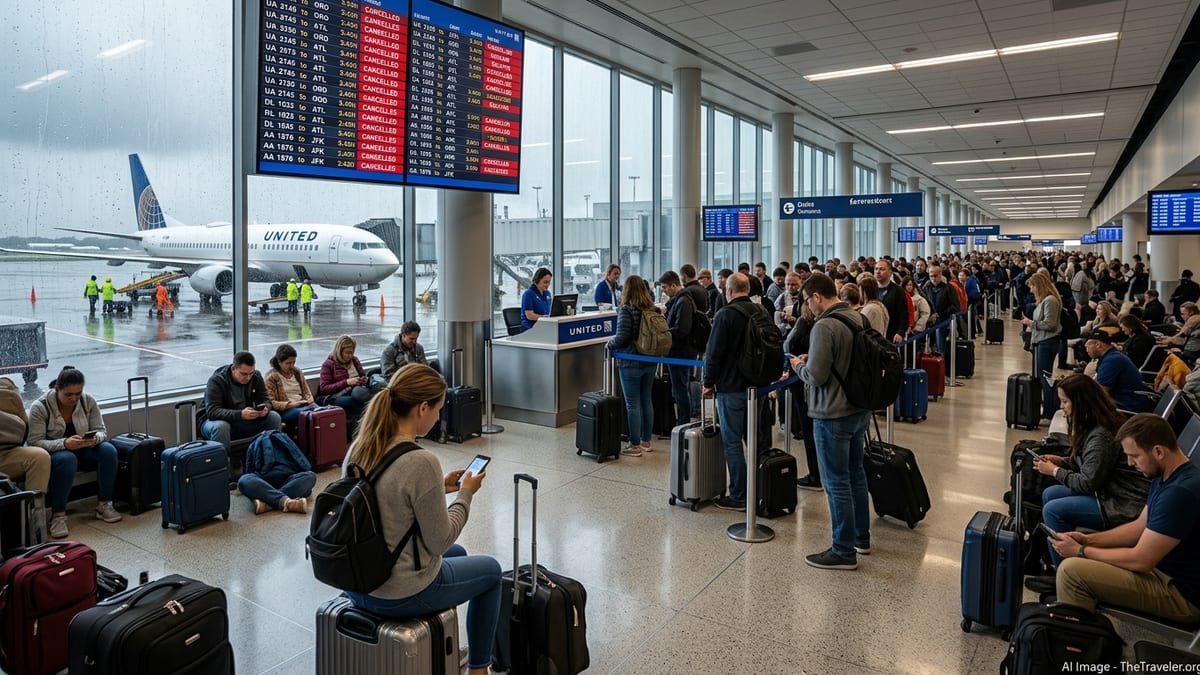
System outages and severe weather are colliding with peak travel
The 2026 US holiday season began with one of the most disruptive technical incidents in more than a decade. On 13 November 2026, the Federal Aviation Administration ordered a nationwide ground stop after a telecommunications failure in legacy radar and communications equipment, forcing thousands of flights to be cancelled or delayed while the system was restored. The agency later said the issue was linked to work on a new router by its network service provider, and officials reported no evidence of a cyberattack.
Within days, individual airlines reported their own problems. United Airlines experienced a system outage that disrupted departing flights, and on 22 November Delta Air Lines said more than 1,000 of its flights were delayed after an automated system used to calculate aircraft weight malfunctioned. The FAA briefly halted flights into Atlanta, Delta’s largest hub, while the carrier worked through the backlog during one of the busiest travel periods of the year.
These technical failures have coincided with typical late‑November weather problems. Forecasts and early data show rainstorms and snow affecting the Northeast and Midwest, coastal flooding risks in parts of the West Coast, and strong cross‑country weather systems, all of which can force air traffic control to slow arrivals and departures. Flight‑tracking services such as FlightAware have reported several thousand delayed flights on some peak days as airlines recover from both weather and technology setbacks.
New federal rules clarify when long delays trigger a cash refund
For US passengers caught up in these disruptions, a key development in 2024 was a new Department of Transportation rule that defines when a “significant” schedule change or delay entitles travelers to a refund instead of just a credit. Under regulations that took effect for covered flights from 16 May 2024, if a domestic flight is delayed three hours or more, or an international flight is delayed six hours or more, and the traveler chooses not to take the altered trip, they are generally entitled to a cash refund of the unused portion of their ticket.
The rule applies to flights to, from or within the United States operated by US or foreign carriers. It covers outright cancellations as well as substantial changes such as large shifts in departure time, new connections replacing a nonstop segment, or moves to a different airport in the same region. The refund must return the fare, taxes and any mandatory ancillary fees in the original form of payment, unless the traveler voluntarily accepts a different form such as a voucher.
Importantly, this automatic refund entitlement hinges on the passenger deciding not to travel on the significantly changed itinerary or alternative flight offered. If a traveler accepts a later departure or rerouting instead of cancelling their trip, they are not guaranteed additional cash compensation under federal law, although the airline may voluntarily offer vouchers or other assistance under its own customer service policies.
What airlines owe during disruptions and how to check policies
Beyond refunds for cancellations and long delays, US law leaves most other compensation to individual airline commitments. The DOT maintains an airline cancellation and delay dashboard that compares how major carriers handle disruptions under their control, such as mechanical or crew‑scheduling problems, rather than weather or air traffic control restrictions. The dashboard tracks whether each airline promises meal vouchers, hotel rooms, ground transportation or frequent‑flyer miles when passengers are stranded overnight because of an issue the airline could reasonably have prevented.
Policies differ widely. Some US airlines commit to covering hotel costs and providing meal vouchers if a traveler must stay overnight after a controllable cancellation. Others explicitly do not guarantee hotel coverage, even when their own mechanical problems are responsible. No US carrier is required by federal law to provide compensation for weather‑related disruptions, and most state in their contracts that severe weather or air traffic control orders fall outside their control, meaning that hotels and meals in those situations are usually at the traveler’s expense.
Travelers can check each airline’s customer service plan and contract of carriage before travel to understand the specific commitments in both controllable and uncontrollable events. Consumer advocates also recommend documenting interactions with staff and keeping receipts for any out‑of‑pocket costs, particularly on international itineraries. On overseas trips covered by the Montreal Convention, passengers may later be able to claim reimbursements from airlines for some expenses caused by delays or cancellations, although outcomes can vary by case and carrier.
Practical steps to reduce the risk of being stranded
With system outages and unstable weather in play, experts emphasize a combination of real‑time monitoring and basic backup planning. Airlines, airports and flight‑tracking services encourage travelers to use official mobile apps, text alerts and email notifications so that gate changes, rolling delays and cancellations are visible as soon as they are recorded. Third‑party tools such as FlightAware and Flightradar24 can provide additional context on broader congestion patterns and whether earlier flights on a route are running late, which can signal upcoming problems.
Industry specialists also warn travelers to be cautious when searching for airline telephone numbers or customer service portals in an emergency. Fake websites and search‑engine ads that mimic major carriers have been used to capture payment details from passengers trying to rebook disrupted flights. Using an airline’s mobile app, typing its web address directly into a browser, or navigating from the carrier’s official app store listing can lower the risk of being diverted to a fraudulent site.
Basic preparation continues to matter. Carrying on luggage instead of checking bags reduces the chance of being separated from essential items if a flight is cancelled at the last minute or an overnight diversion becomes necessary. Medications, a change of clothes, chargers and any critical documents should stay in hand baggage. Travel specialists also recommend carrying printed copies of boarding passes, hotel reservations and key phone numbers in case mobile connectivity or cloud services are interrupted at the same time as airline systems, an issue that has occasionally occurred during broader technology outages.
How insurance, credit cards and timing can help during the 2026 holidays
Financial protections for delays and cancellations vary just as widely as airline policies. Some standalone travel insurance policies and certain premium credit cards include trip interruption and trip delay coverage, which can reimburse additional hotel nights, meals and alternative transport up to stated limits when a trip is disrupted. However, coverage terms depend heavily on the cause of the disruption and the wording of each policy. Travelers are advised to read conditions closely to see whether weather, air traffic control decisions or technology failures at airlines and government agencies are covered events.
In the wake of the November 2026 outages, regulators and the White House have said they are working to reduce the risk of another nationwide ground stop, and the FAA has directed travelers to its online status tools for real‑time information. Forecasts from travel‑booking platforms suggest that disruption risk will remain elevated on the busiest days, particularly the Wednesday before and Sunday after Thanksgiving and the peak weekends around late December holidays. Some travel analysts and insurers are advising customers to build a buffer day into their itineraries when possible, travelling earlier to key events so that they have time to recover from an initial cancellation or long delay.
Passengers whose flights are cancelled or significantly delayed during this period should receive notification of their refund rights from the airline under the federal rules introduced in 2024. If a carrier does not process an automatic refund after a covered cancellation or qualifying delay, travelers can submit a complaint directly to the airline and, if unresolved, to the DOT’s Aviation Consumer Protection office. Because these rules apply regardless of whether the ticket was purchased before they took effect, they form an important backstop for travellers booking year‑end trips in a season marked by both intense demand and highly visible system failures.