


More news on this day
Travellers heading to Europe this summer are being warned to expect prolonged disruption at border control, as reports of queues stretching up to six hours fuel concerns that delays linked to the European Union’s new Entry/Exit System are likely to continue for months.
Get the latest news straight to your inbox!
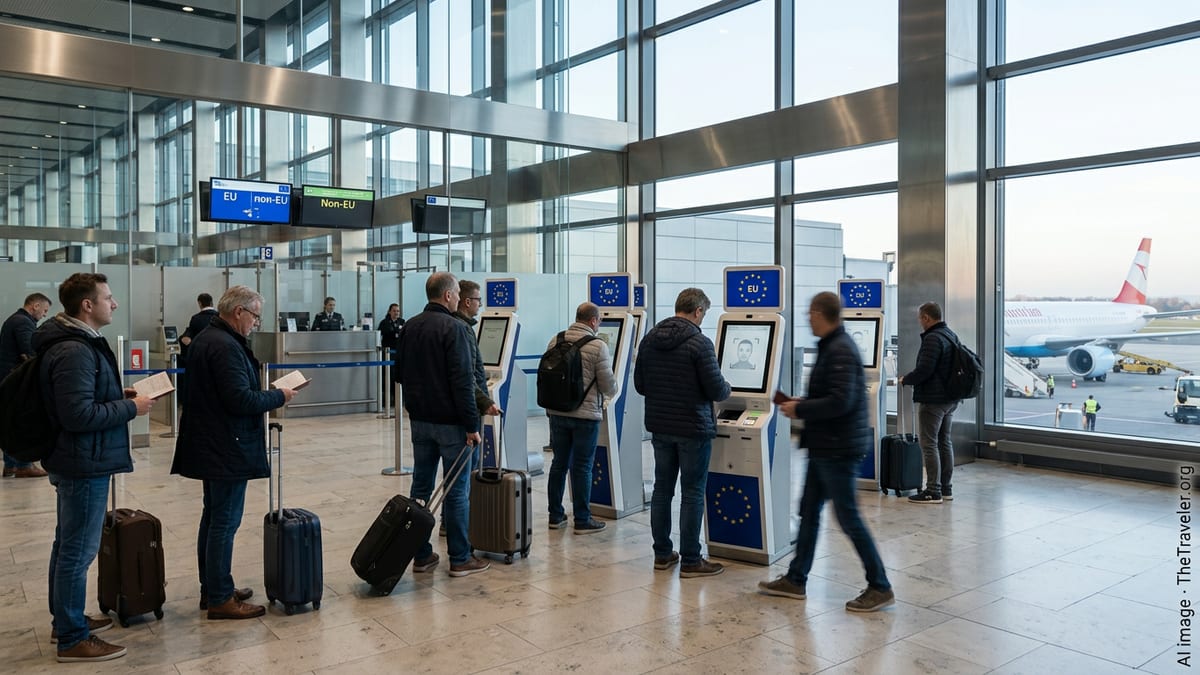
New biometric border checks struggle under peak demand
The Entry/Exit System, a long-planned EU overhaul of external border checks for non-EU nationals, became fully operational across the Schengen Area in April 2026 after a phased rollout that began in late 2025. The system replaces manual passport stamping with biometric registration, including fingerprint and facial image capture, for third-country travellers entering and leaving the bloc.
In practice, the transition has proved far more disruptive than many travellers anticipated. Published accounts from airports in Spain, Portugal, Italy and Belgium describe long, slow-moving lines at passport control as first-time EES registrations are completed. At Brussels Airport, recent coverage highlighted waits of up to four hours for some arriving non-EU passengers, with additional queues for departing travellers at exit checks.
Industry and consumer reports indicate that the first wave of peak-season traffic is exposing weak points in staffing, infrastructure and passenger information. Older terminals with limited space for biometric kiosks and manual document checks appear particularly vulnerable, while land and sea crossings used by coach and car passengers are also facing pressure during holiday weekends.
Despite years of preparation, the pace of processing has been significantly slower than standard pre-EES passport control in many locations, especially where officers must guide first-time users through the registration process or troubleshoot malfunctioning equipment.
Warnings of six-hour queues as airlines and airports raise alarm
Travel industry bodies are now openly cautioning that queues could reach six hours at some airports during the busiest summer days. According to recent trade and specialist travel coverage, the International Air Transport Association has described a “hard risk” of extended waits and missed flights as EES procedures are fully applied to growing numbers of passengers.
Airports council representatives have similarly warned that even a modest slowdown per passenger can cascade into long delays when airlines are operating near capacity. Some analyses suggest that first-time EES registration can add several minutes per traveller, multiplying across wide-body arrivals and congested terminals.
Reports from recent bank holiday and school vacation periods show long lines forming at major leisure gateways in Spain and Portugal, as well as at northern European hubs handling significant point-to-point and transfer traffic. In some cases, airlines have advised passengers to arrive considerably earlier than usual, particularly if they are not yet registered in the system.
The warnings are not confined to air travel. Cross-Channel routes that funnel large numbers of non-EU passengers through constrained border facilities, including coaches and cars, have already seen hours-long tailbacks, prompting the use of emergency flexibility measures designed to ease bottlenecks temporarily.
Emergency fallback measures ease pressure but extend transition
EU legislation establishing EES allows member states to invoke temporary relaxation of biometric registration at specific border crossings if queues and waiting times become excessive. Publicly available briefings from national and EU bodies describe these “precautionary flexibility” measures as a safety valve to keep traffic flowing during exceptional congestion.
In recent weeks, reports from Channel ports and some airports have referred to these provisions being activated during peak surges, allowing officers to prioritise throughput over full EES processing for limited periods. While this helps clear immediate backlogs, it effectively spreads first-time registrations over a longer period and can prolong the adjustment phase for the new system.
Analysts note that this trade-off is likely to characterise the coming months. Border authorities face pressure to reduce visible queues and prevent missed departures, yet also need to complete comprehensive biometric enrolment for millions of regular visitors from the United Kingdom, North America, the Gulf and other non-EU markets.
Some transport operators have publicly called for a slower or more flexible enforcement timetable over the busy summer window, arguing that infrastructure and staffing are still catching up with the technical demands of EES. However, the system remains a central element of the EU’s long-term border management strategy, making a wholesale pause unlikely.
Travellers advised to build in extra time and prepare documents
Consumer travel organisations and airline advisories are increasingly focused on practical steps passengers can take to reduce the risk of being caught in the longest lines. Common recommendations include arriving at the airport earlier than usual, particularly for long-haul flights into busy leisure destinations, and ensuring passports and any supporting documents are ready before reaching border control.
Passenger accounts suggest that confusion at the front of the line, such as uncertainty over where to stand, how to use biometric kiosks or which documents are required, can quickly slow down entire queues. Clear signage and ground staff assistance are helping in some locations, but information remains inconsistent between airports and carriers.
Families and groups travelling with children, older relatives or people with reduced mobility may need additional time, especially on their first trip into the Schengen Area since EES became fully operational. Some airports have begun directing vulnerable travellers to dedicated lanes or manual booths to avoid prolonged standing in crowded spaces.
Travel insurance specialists are also reminding customers to check policy wording around missed departures caused by security or border delays. While some products include cover for extraordinary queues at immigration, others treat such disruption as part of normal travel risk, leaving passengers to negotiate rebooking with their airline.
Extended bedding-in period expected as system stabilises
Despite the current wave of disruption, officials and analysts cited in recent European media coverage suggest that EES performance should gradually improve as more frequent visitors complete their initial registration and as border posts refine procedures. However, some assessments now warn that the system could take up to two years to fully stabilise across all modes and border crossings.
The pace of improvement is likely to vary widely between locations. Well-resourced hubs that invested early in large banks of self-service kiosks, staff training and passenger communications may see shorter adjustment periods. Smaller regional airports and busy land crossings with constrained infrastructure could struggle longer with intermittent queues and ad-hoc workarounds.
For travellers, that means EES-related delays are unlikely to disappear after this summer season. The combination of growing international demand for European holidays, staggered adoption of best practices at border posts and the continued phasing-in of related systems such as the European Travel Information and Authorisation System points to a prolonged period of change.
Until the new regime becomes routine for both border staff and passengers, those planning trips to the Schengen Area are being encouraged by travel experts to factor potential delays into connections, allow more time at the start and end of journeys and stay informed about conditions at their specific point of entry.