


More news on this day
Volcanic ash from Indonesia’s Anak Krakatau eruption has disrupted international air travel to Jakarta, with Emirates cancelling a Jakarta service and Etihad delaying flights after authorities temporarily closed Soekarno-Hatta International Airport.
Get the latest news straight to your inbox!
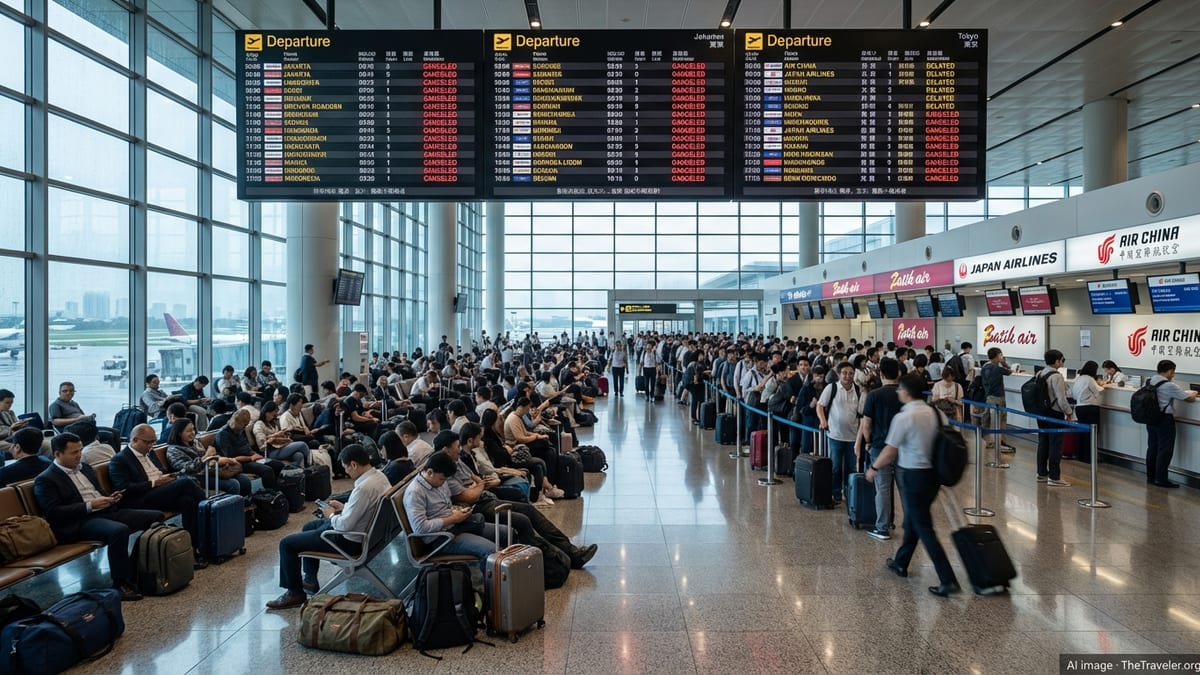
Jakarta’s main hub shut as ash cloud spreads
Jakarta’s Soekarno-Hatta International Airport suspended flight operations on Sunday 6 September after tests detected volcanic ash from the ongoing Anak Krakatau eruption in the surrounding airspace. Notices to airmen indicated that the closure began in the early hours of the morning, halting all departures and arrivals at Indonesia’s busiest international gateway.
Publicly available information from Indonesia’s Transportation Ministry and airport operators shows that operations were initially halted until 9.30 a.m. local time, before subsequent advisories extended the suspension into the afternoon as ash continued to drift across western Java. Meteorological data cited in local coverage pointed to multiple ash clusters stretching over Banten, Jakarta, West Java and parts of Sumatra.
The shutdown at Soekarno-Hatta quickly cascaded across the aviation network. Reports from Indonesian authorities and domestic media outlined temporary suspensions or restrictions at several other airports in the capital region and Lampung province, as air navigation providers and meteorological agencies monitored ash concentrations and issued repeated weather and safety bulletins.
Images from Jakarta’s main terminals showed long queues and packed waiting areas as passengers were advised to remain inside the terminals while operators assessed conditions. Airport management indicated that aircraft parked overnight were being inspected but remained grounded until airspace restrictions were lifted.
Hundreds of flights disrupted and tens of thousands affected
Figures released through official channels in Jakarta and reported by regional news agencies indicate that hundreds of flights were affected by the ash related closure. One update from Indonesia’s airport operator group cited more than 700 scheduled movements impacted at Soekarno-Hatta alone as the operating window for the shutdown was extended into Sunday evening.
Separate tallies from national disaster and transport agencies, carried by local media, highlighted at least 200 to 250 cancellations and a growing number of delays and diversions as airlines reworked schedules. Passenger disruption estimates ranged from just under 25,000 people in the early hours of the crisis to well over 100,000 travellers once multiple airports around Greater Jakarta were included.
The impact was felt across both domestic and international networks. Cancellations and delays hit services linking Jakarta with major Indonesian cities such as Denpasar, Surabaya, Makassar and Lampung, as well as long haul and regional routes to hubs including Singapore, Kuala Lumpur, Hong Kong, Doha, Sydney and Amsterdam. Air traffic management advisories urged airlines to avoid ash contaminated corridors and to remain clear of specified danger areas while the eruption continued.
Indonesia’s meteorological agency and volcanology bodies maintained round the clock monitoring of Anak Krakatau’s activity, issuing a series of volcanic ash advisories and aviation weather alerts. Public information from these agencies stressed that the combination of eruption column height, wind direction and ash particle density justified continued caution over the Sunda Strait and the Jakarta flight information region.
Emirates cancels Jakarta service as closure widens
Among the international carriers affected, Emirates suspended at least one scheduled Dubai to Jakarta rotation after the airport shutdown took effect. Flight tracking data referenced in regional travel reports shows that an overnight service due to arrive in the Indonesian capital around the time of the first paper tests for ash contamination did not operate, aligning with the blanket closure imposed on outbound and inbound traffic.
Social media posts and traveller accounts shared publicly from Soekarno-Hatta described late night announcements advising passengers on the affected Emirates flight that Jakarta bound operations had been cancelled, with rebooking to later dates or alternative routings offered once the situation became clearer. Information on the airline’s website and mobile channels directed customers to check flight status frequently and highlighted the potential for further short notice changes.
Dubai based services to Indonesia continued to appear on schedules for other days, but with advisories that operations were subject to prevailing volcanic ash assessments. Aviation analysts cited in international coverage noted that wide body operators such as Emirates tend to take a conservative approach to ash events, given the high engine power settings required for long haul departures and the potential for ash ingestion to cause serious damage.
Travel industry observers indicated that premium demand between the Gulf and Indonesia remains strong, but that carriers are likely to prioritise aircraft safety and regulatory guidance over schedule integrity while Anak Krakatau’s activity remains elevated. Passengers holding Dubai Jakarta tickets were advised through public channels to monitor airline communications closely and to consider flexible onward arrangements.
Etihad delays and reroutes services to safeguard operations
Etihad Airways also adjusted its Jakarta program in response to the ash related airspace restrictions. Flight status information made available on the airline’s digital platforms and referenced by regional media showed at least one Abu Dhabi Jakarta service operating with a significant delay, while another rotation was rerouted or retimed to avoid the closure window at Soekarno-Hatta.
The carrier’s public travel alerts for Indonesia advised customers that Jakarta flights could experience delays or operational changes while local authorities assessed conditions. Etihad encouraged passengers to verify departure and arrival times before travel and to ensure that contact details in bookings were up to date in order to receive notifications if schedules shifted at short notice.
Aviation tracking services indicated that some Etihad operated aircraft held outside Indonesian airspace or adjusted cruising altitudes and routings on approach to the region, in line with common industry practice for flights operating near volcanic activity. Travel sector analysis noted that Gulf carriers often have limited slack in their wide body schedules, meaning that a disruption in one region can reverberate through connecting banks of flights at Abu Dhabi and other hubs.
Publicly available commentary from airline and airport sources suggested that capacity between the Middle East and Indonesia could remain uneven over the coming days if intermittent ash clouds force further tactical delays or temporary suspensions. Passengers with tight onward connections through Abu Dhabi were urged through online advisories to allow additional time and to review minimum connection recommendations.
What travellers flying to and from Jakarta should expect next
As Anak Krakatau’s ash plume continues to be monitored, Indonesian transport and meteorological agencies have indicated through public statements that further adjustments to airspace restrictions remain possible depending on wind patterns and eruption intensity. At the time of writing, Soekarno-Hatta’s operating status had shifted from full suspension to a more managed resumption, but with the potential for renewed closures if fresh ash clouds move across key flight paths.
Travel advisories shared by regional news outlets recommend that passengers booked on services to or from Jakarta in the coming days check flight status repeatedly, rather than relying on information obtained at the time of ticket purchase. Airlines are expected to continue issuing rolling updates via websites, apps and social channels as they coordinate with air navigation and airport authorities.
Industry observers note that once airspace is officially deemed safe, carriers typically work through a backlog of stranded passengers by upgrading aircraft to larger types where possible, operating additional sections and re accommodating travellers through alternative hubs. However, the complexity of multinational schedules from Gulf hubs to Southeast Asia means that normal patterns may take several days to re emerge.
For now, the ash driven disruption around Jakarta serves as another reminder that Indonesia’s location along the Pacific Ring of Fire can periodically affect aviation. Travellers heading to or from the country, particularly during periods of elevated volcanic activity, are being encouraged through publicly available guidance to maintain flexible plans, monitor official channels and be prepared for schedule changes even at short notice.
Soekarno-Hatta airport suspends operations after volcanic eruption - The Jakarta Post
Anak Krakatau eruption temporarily closes Soekarno-Hatta International Airport - Bernama
Indonesia suspends six airports amid Anak Krakatau ash spreads - Antara News