


More news on this day
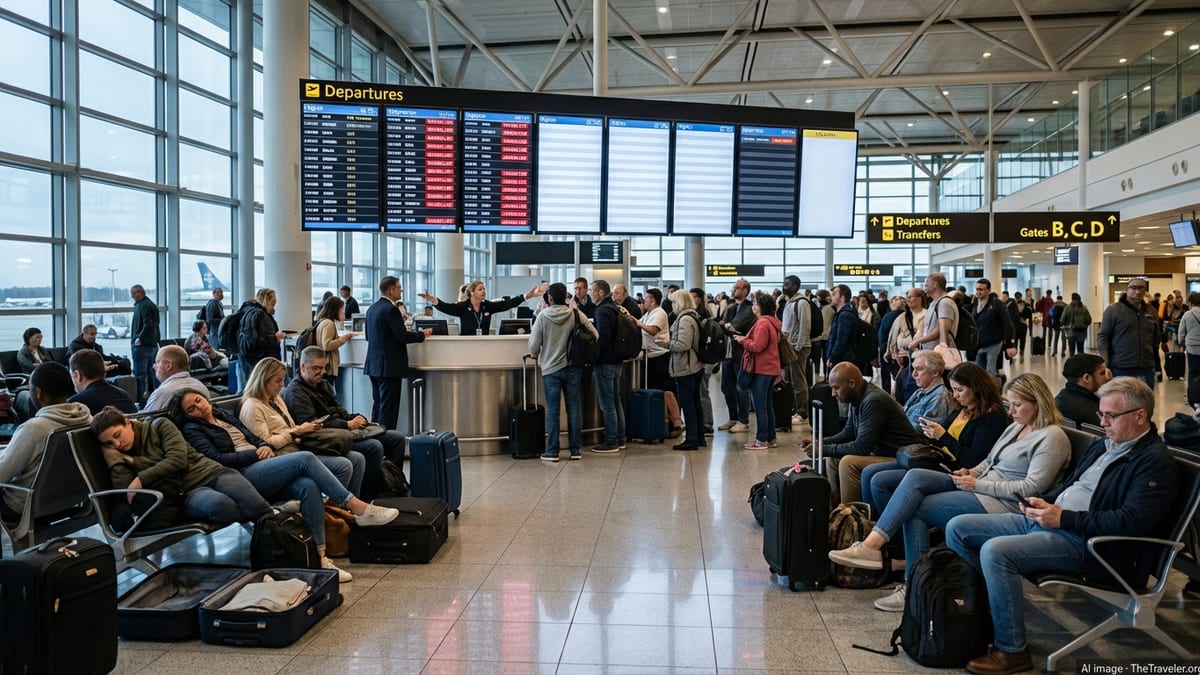
Erbil International Airport is adapting its operations in 2026 as security-related airspace constraints and airline schedule adjustments trigger waves of cancellations and delays on routes to Turkey, Jordan, and the United Arab Emirates, affecting some of the Kurdistan Region’s busiest international gateways.
Get the latest news straight to your inbox!
Security Shocks Ripple Through Regional Flight Networks
Erbil International Airport has entered the peak summer travel season against a backdrop of heightened regional tensions that continue to reshape flight patterns across the Middle East. Published coverage of the 2026 Iran conflict and subsequent airspace restrictions shows that Iraqi airports, including Erbil, have periodically faced temporary closures and rerouted traffic as carriers reassess the safety and viability of operating in contested skies.
According to aviation-focused reporting compiled on July 18, 2026, Erbil recorded around fifteen flight cancellations and several delays in a single 24 hour period, with services to Turkey, Jordan, the Gulf, and parts of Europe among those disrupted. The majority of the cancellations involved regional and short haul routes, underscoring how sensitive Erbil’s connectivity is to shifts in nearby airspace corridors and insurer risk assessments.
While Iraq’s northern hub remains officially open and its published timetable still lists frequent departures to Istanbul, Amman, Dubai, Abu Dhabi, and Sharjah, analysts note that operational reality can change within hours. Airlines have responded with a mix of suspensions, reduced frequencies, and late rescheduling, often announced close to departure time and leaving passengers reliant on airport screens and airline channels for the latest status.
Travel advisories from foreign governments continue to highlight the possibility of sudden airport closures and flight suspensions across Iraq and the Kurdistan Region, encouraging travelers to maintain flexible itineraries and monitor flights closely. This environment has pushed Erbil’s airport management and partner airlines to refine contingency plans aimed at keeping at least a skeleton network open to key regional hubs.
Turkish Carriers Cut Back While Keeping a Lifeline to Istanbul
Among Erbil’s most important markets, Turkey has seen some of the sharpest fluctuations in 2026. Istanbul and Antalya typically rank among the busiest destinations from Erbil, serviced by a mix of Turkish Airlines and low cost brands such as Pegasus, AJet, and SunExpress. However, regional security incidents and broader commercial adjustments have led to repeated cancellations on these corridors.
Local Kurdish language coverage in July 2026 reported that several Turkish operators, including Turkish Airlines, Pegasus, and AnadoluJet, temporarily withdrew or sharply curtailed flights into Erbil and Sulaymaniyah during recent spikes in tension. Aviation data compiled the same week indicated that services branded by Turkish carriers accounted for a significant share of the fifteen cancellations recorded at Erbil, particularly on Istanbul and Antalya rotations.
At the same time, Turkish Airlines has publicly rejected claims of an across the board suspension of its Erbil operations, emphasizing earlier in 2026 that flights continue with adjustments based on evolving conditions. The carrier has used commercial policies to give affected passengers options for rebooking, refunds, or rerouting through alternative Turkish gateways when Iraqi airspace or demand patterns change, though travelers report that access to these options can depend on fare rules and ticket type.
For Erbil, the ebb and flow of Turkish capacity has direct consequences. During periods when Turkish carriers reduce frequencies or consolidate flights, the airport’s timetable still reflects some movement to Istanbul, but with fewer daily choices and a higher risk of last minute disruption. When restrictions ease or demand recovers, Turkish capacity tends to return quickly, helping to reestablish Erbil’s role as a northern Iraqi feeder into the wider European network via Istanbul’s hubs.
Royal Jordanian Balances Cancellations With Flexible Policies
Jordanian connectivity, centered on Royal Jordanian’s services between Erbil and Amman, has also been repeatedly tested by the volatile environment. Reports from Erbil and Sulaymaniyah in mid July 2026 indicated that Royal Jordanian joined Turkish carriers in temporarily canceling selected flights as a cautionary measure during a period of heightened security concerns.
Royal Jordanian’s publicly available travel updates show that when Erbil and other regional airports experience closures or significant operational constraints, the airline activates special commercial policies. These measures typically allow passengers booked on affected sectors to change dates or reroute within specified time frames without additional change fees, and sometimes without paying fare differences, subject to defined validity windows and booking channels.
Such policies are designed to relieve pressure at airports and limit congestion at counters when waves of cancellations occur. For Erbil bound and outbound passengers, they also create alternative pathways, including rerouting via other RJ destinations in the region where airspace conditions are more stable at a given moment. However, these options depend on seat availability and may still involve substantial delays compared with original itineraries.
Erbil’s airport information channels continue to list Amman among the destinations served on a regular basis, but the real time status of these flights can vary rapidly. Travelers heading to or from the Jordanian capital in 2026 are increasingly advised by travel agents and airline advisories to verify bookings close to departure and to build in buffer time for missed connections on onward long haul sectors.
Gulf Gateways: Limited Disruptions, Lingering Delays
In contrast to some of the sharper cuts on Turkish and Jordanian corridors, routes linking Erbil with Gulf hubs, particularly in the United Arab Emirates, have largely remained operational, albeit with notable delays. Aviation monitoring published in July 2026 noted that carriers serving Dubai and other Gulf cities, including FlyDubai and other UAE based airlines, managed to maintain services even when Turkish and Jordanian operators were canceling flights.
The same datasets, however, highlighted that Gulf flights into Erbil were not immune to disruption. FlyDubai and other regional airlines recorded arrival and departure delays as they adjusted routings to avoid restricted airspace or queued for available corridors through crowded regional traffic flows. This has sometimes resulted in late night or early morning arrivals into Erbil, along with missed connections for passengers transiting Dubai or Abu Dhabi onward to Europe, Asia, or North America.
Airport statistics and regional coverage from May 2026 show that as ceasefire periods took hold and broader airspace restrictions eased, Erbil’s links to Dubai, Sharjah, and other Gulf cities were among the first to return to normal patterns. Over several weeks, the airport logged hundreds of flights, with full restoration of schedules to key Emirati and Qatari hubs highlighted as a sign of recovering confidence in the route structure.
For travelers in 2026, this has positioned UAE gateways as relatively reliable lifelines. Even when Turkish or Jordanian flights are trimmed, many passengers from the Kurdistan Region have been able to route via Dubai or Abu Dhabi, accepting potential delays in exchange for a higher likelihood that flights will operate. This trend reinforces the strategic role of Gulf carriers in underpinning Erbil’s international connectivity during periods of regional stress.
Operational Responses and What Passengers Are Experiencing
As disruptions have mounted, Erbil International Airport has leaned on a combination of real time information tools, schedule coordination, and cross border travel options to manage the impact on passengers heading to Turkish, Jordanian, and Emirati gateways. The airport’s official flight information platform is updated throughout the day, providing status changes on departures to Istanbul, Amman, Dubai, and other key cities as airlines adjust their operations.
Publicly available information from the Kurdistan Regional Government also reflects a broader response framework that includes facilitating overland movement when Iraqi airspace is partially closed. During earlier closures, authorities created coordination centers to assist travelers in reaching neighboring airports in Turkey and other countries by road, then flying onward from there. Although designed as an exceptional measure, this model remains a reference point whenever airspace restrictions threaten to strand passengers.
Passengers have increasingly reported a patchwork of experiences when traveling between Erbil and regional hubs in 2026. Some complete journeys with only minor delays, particularly on Gulf carriers, while others face repeated rebookings when Turkish or Jordanian flights are trimmed or retimed. Online discussions show travelers comparing refund options, examining special airline waivers linked to regional tensions, and in some cases opting to reroute entirely via alternative cities such as Baghdad, Basra, or Turkish border airports.
Industry updates and travel advisories consistently stress that the situation across Iraq and its neighbors remains fluid. For Erbil International Airport, managing cancellations and delays has become an ongoing process rather than a short term crisis, with the airport and its airline partners striving to preserve core links to Istanbul, Amman, Dubai, and other vital gateways, even as the precise schedule shifts from week to week.