


More news on this day
Rail passengers in the UK are facing significant disruption after a fire at a railway station prompted widespread train cancellations and local road closures, according to early reports from British transport operators and broadcasters.
Get the latest news straight to your inbox!
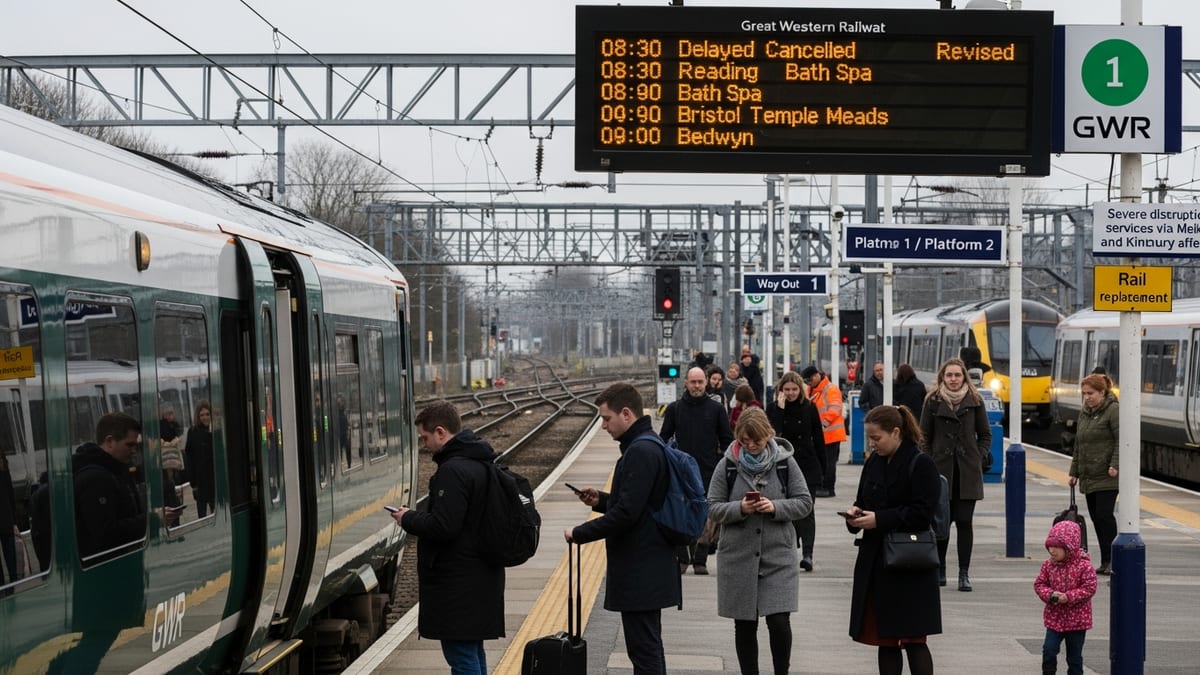
Station fire halts services and blocks nearby roads
Initial coverage from British media indicates that a fire in or near a busy railway station led to an immediate suspension of services as emergency crews responded and rail infrastructure was checked for damage. Trains were held outside the affected hub, platforms were cleared and concourses evacuated as a precaution, with rail operators advising travellers not to attempt to reach the station while the incident was ongoing.
Roads around the station were also closed while the fire was dealt with and engineers assessed any impact on bridges, overhead power equipment and signalling. Bus routes that normally pass close to the station were diverted onto surrounding streets, adding to congestion at peak travel times and creating delays for commuters who were not directly using the rail network.
Travel updates suggest that closures were extended beyond the immediate station footprint, with exclusion zones set up around nearby buildings until they could be checked for structural issues and smoke damage. Drivers were advised to avoid the area, use ring roads where possible and leave extra time for essential journeys into city centres.
In the hours after the fire was reported, rail companies issued repeated warnings that journey planners and printed timetables could not be relied upon, as services were cancelled or re-routed at short notice and replacement road transport struggled to reach the affected streets.
Knock-on disruption across regional and intercity routes
The suspension of services at a major station can quickly ripple across the wider rail network, and that pattern appears to have been repeated after this incident. Trains scheduled to start or terminate at the affected hub were either cancelled outright or turned back at earlier stations, creating crowding on alternative services that remained in operation.
Passengers travelling between major regional cities were among those hardest hit, with some intercity trains removed from the timetable in order to free up paths for shorter local services needed to move stranded commuters. In several cases, operators warned that the first trains to run once routes reopened would be extremely busy, and that some travellers might not be able to board their preferred departure.
Long-distance journeys that would normally cross the affected station were diverted via alternative lines where capacity allowed, but rail operators cautioned that diversionary routes are limited and often already busy. As a result, journey times were extended by an hour or more on some corridors, and advertised connections at intermediate stations could not be guaranteed.
Published information from infrastructure managers and train companies indicates that disruption continued into the following day on certain lines, even after the immediate fire risk had passed. This was due to trains and crews being in the wrong place, damage inspections still under way and a reduced number of platforms or tracks temporarily available at the station.
Impact on commuters, leisure travellers and events
The timing of the fire meant that thousands of commuters were caught up in the disruption, particularly those relying on early morning or evening peak services to travel into and out of city centres. Some passengers reported waiting on concourses as information screens showed rolling cancellations, before being advised to seek alternative routes or abandon their journeys.
Weekend leisure travellers were also affected where services to shopping districts, sports fixtures or cultural events usually pass through the affected station. With road closures limiting access by car or coach, organisers of large events in city centres saw attendees arriving late, changing plans at short notice or choosing not to travel at all once the scale of delays became clear.
Travellers with onward connections to airports or other long distance transport hubs were encouraged to build in extra contingency time, as missed rail links can lead to additional costs and rebooking challenges. In some cases, passengers who needed to be certain of arriving on time chose to travel the night before or switch to entirely different routes that did not depend on the disrupted station.
Social media posts and televised footage showed busy platforms at alternative stations, where operators had strengthened some services with additional carriages but were still dealing with significant crowding. Travellers were advised to check live departure boards throughout their journey and to carry water, given the longer waits and slower journeys being reported.
Safety checks and repairs required before full reopening
According to publicly available information from infrastructure managers and fire services, comprehensive safety checks are required whenever a serious fire occurs in or near a railway station. Inspectors examine electrical systems, signalling cabinets, cable routes and any structures such as bridges or station roofs that might have been exposed to intense heat.
Even where the flames are confined to a relatively small area, smoke and water used to extinguish the fire can affect sensitive equipment. That means services may remain suspended or heavily reduced for several hours while engineers test systems and, where necessary, install temporary workarounds to allow a limited number of trains to move safely through the area.
Road closures can also remain in place after the visible signs of the fire have gone, particularly if adjacent buildings have suffered damage. Local authorities and transport managers may keep exclusion zones in force until structural engineers are satisfied there is no risk from falling debris, loose masonry or overhead features that need to be secured.
Once the site is deemed safe, operators typically introduce a phased resumption of services, starting with a reduced timetable. Passengers are advised that, during this period, there may still be short-notice cancellations and that replacement buses could take longer than normal to complete their routes because of altered road layouts and residual congestion.
Guidance for travellers during and after major station fires
Travel organisations recommend that passengers caught up in fire-related station closures rely on official rail and road transport channels for the most accurate updates. Journey planners and apps are often updated throughout the day to reflect cancellations, revised stopping patterns and any diversionary routes that are in use.
Where a station is completely closed, travellers are usually asked not to attempt to enter the surrounding area, both to reduce pressure on emergency responders and to avoid becoming stuck behind cordons. Instead, rail users are encouraged to travel from alternative stations where possible, or to postpone non-essential journeys until operators confirm that more normal services have resumed.
Passengers who decide not to travel because of fire-related disruption are often entitled to refunds or fee-free changes, subject to the policies of the relevant train company. Guidance from consumer groups advises keeping tickets and any receipts for additional travel costs, in case claims can be made once the incident has been formally reviewed and compensation arrangements clarified.
The latest incident highlights how quickly a fire at or near a major railway station can cascade into widespread transport disruption, closing nearby roads and forcing operators to cancel or reroute trains across a wide area. For regular travellers, it serves as a reminder of the value of checking live updates before leaving home, and of allowing extra time when journeys depend on a single critical hub on the rail network.