


More news on this day
Etihad Airways cancelled a Delhi to Abu Dhabi service over the weekend, leaving passengers to rebook and wait at Indira Gandhi International Airport as the airline and other Gulf carriers continue to navigate a period of regional disruption affecting schedules across the UAE.
Get the latest news straight to your inbox!
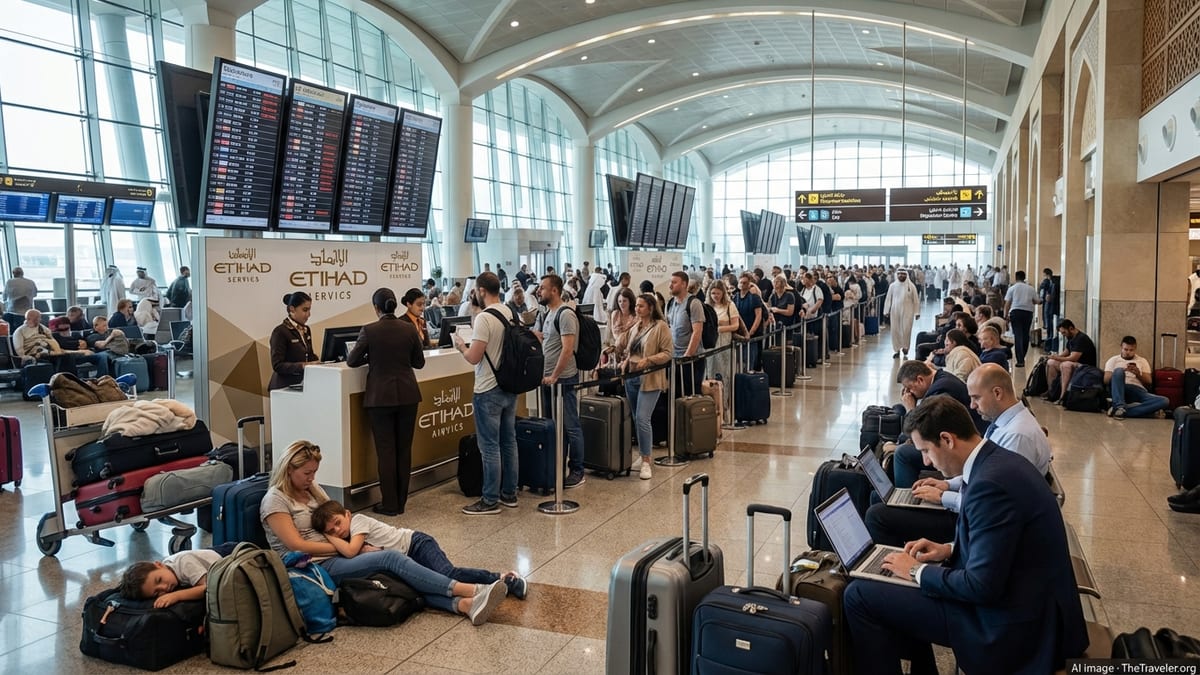
What happened to the Delhi-Abu Dhabi Etihad service
Published coverage in India indicated that Etihad flight EY217 operating from New Delhi (DEL) to Abu Dhabi (AUH) was cancelled late Saturday, September 19, 2026, after a technical issue was identified with the aircraft before departure. Flight tracking data for EY217 also showed the September 19 service recorded as cancelled.
Reports described hundreds of travelers being impacted at the Delhi airport, with some passengers already boarded before the cancellation was communicated. The flight is commonly operated by a Boeing 787-9 on the route, based on published flight information and tracking details for the service.
While the immediate reason cited in published reporting for EY217 was a technical issue, the cancellation landed amid a wider travel environment in which Gulf-region operations have faced intermittent disruption in September, with delays and cancellations reported at major UAE hubs.
How broader Gulf disruption is influencing schedules
Over the past several weeks, travelers have seen recurring pockets of disruption at Abu Dhabi’s Zayed International Airport and Dubai International Airport, with airline timetables affected by a mix of operational constraints and regionwide security-driven routing considerations. In early September, published coverage listed multiple Etihad services experiencing delays or disruption, including additional flights linked to Delhi.
Separate reporting during September also pointed to wider complications in the operating environment, including periodic knock-on effects from air traffic control issues outside the region and heightened sensitivity to security developments that can force airlines to adapt routings, adjust schedules, or consolidate services.
For passengers, the practical result can be last-minute changes that do not always follow a predictable pattern: a route may operate normally on one day, then see a cancellation or significant delay the next, particularly when aircraft rotations and crew scheduling are already tight.
What passengers can expect from Etihad after a cancellation
Etihad’s publicly available conditions of carriage describe options that typically include rebooking on an alternative flight within a reasonable time, or a refund if a passenger chooses not to travel. The airline’s policies also describe obligations to communicate disruption information and outline passenger rights as required by local regulations.
Because the cancelled flight departed from India, Indian passenger-protection requirements may be relevant in addition to the airline’s own rules. India’s Directorate General of Civil Aviation framework for cancellations and long delays generally centers on assistance such as alternate arrangements or refunds, and in some circumstances additional compensation, depending on notice, cause, and other factors.
In real-world disruptions, the immediate bottleneck is often seat availability rather than paperwork. When a high-load flight is cancelled, the fastest rebooking options may involve later departures on the same route, indirect itineraries via other hubs, or placement on other Etihad services where onward connections can be rebuilt.
What to do if you are booked Delhi-Abu Dhabi in the coming days
Travelers booked between Delhi and Abu Dhabi in the near term may want to monitor flight status frequently, especially on the day of departure, and keep booking reference details handy in case re-accommodation is required. During periods of disruption, airlines often prioritize rebooking through their own channels to align inventory and connections.
It can also help to review whether your itinerary is a point-to-point ticket or part of a longer connection via Abu Dhabi, because a cancellation on the first segment can affect baggage routing, transit plans, hotel bookings, and visa or entry timing in onward destinations.
Passengers with time-sensitive travel, such as same-day onward connections, medical appointments, cruise departures, or major events, may want to evaluate backup options early. Even when the cause of a specific cancellation is technical, the broader environment can make recovery slower if aircraft substitutions are limited or if airports are managing heavy irregular-operations loads.
Why the India-UAE corridor remains high-impact for travelers
The India-UAE air corridor is among the most heavily traveled in the region, serving business traffic, visiting-friends-and-relatives demand, and long-haul connections beyond the Gulf. Abu Dhabi is a key hub in that network, and delays on one city pair can ripple into later departures across the day as aircraft and crews rotate.
Published UAE coverage earlier this month listed multiple Etihad services affected by disruption, including additional flights associated with Delhi, highlighting how quickly schedule changes can spread beyond a single flight number. When hub operations become uneven, even travelers on unaffected routes may see gate changes, longer connection times, or misaligned arrival and departure banks.
For passengers, the most important takeaway is that a single cancellation, even if rooted in an aircraft issue, can coincide with wider Gulf disruption that complicates rebooking. That makes early monitoring and flexible planning especially valuable for anyone flying between Delhi and Abu Dhabi during the current stretch of intermittent operational stress.