


More news on this day
Air passengers across Europe faced renewed disruption as data from flight-tracking services showed 118 cancellations and 2,478 delays affecting routes through Vienna and other major hubs in a single day, underscoring the fragility of the continent’s summer schedules.
Get the latest news straight to your inbox!
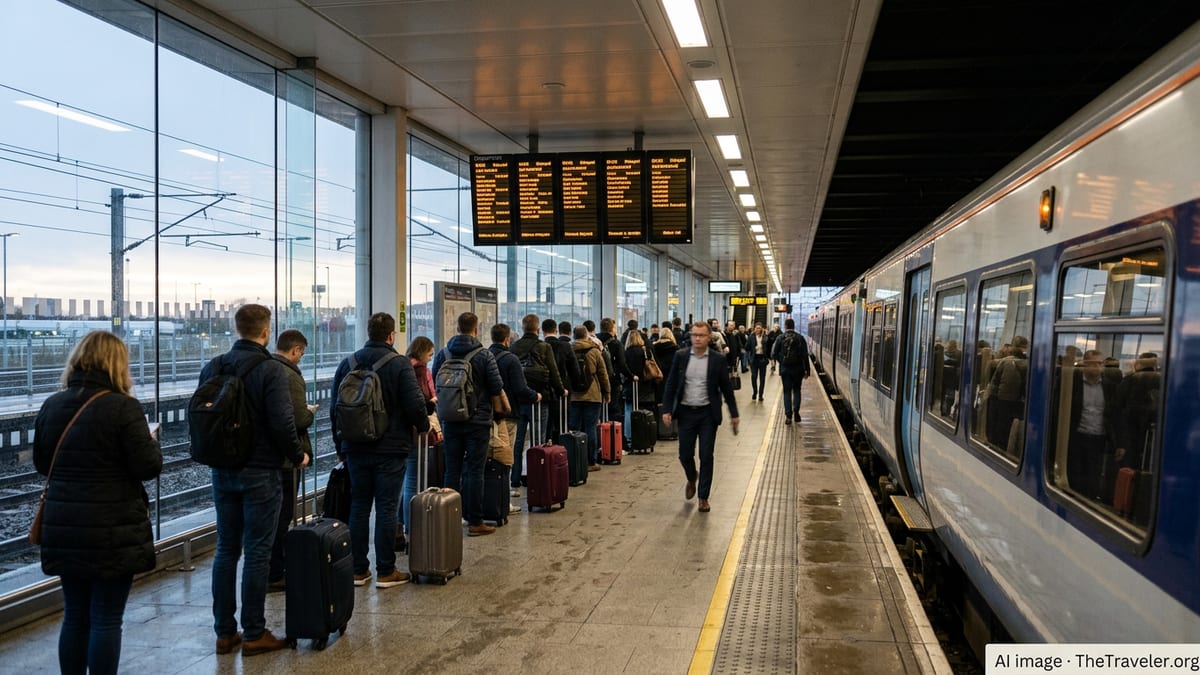
Vienna Emerges as a Flashpoint in Wider European Disruption
Recent operational data from aviation analytics platforms indicates that Vienna International Airport has been at the center of a network-wide ripple effect, with more than one hundred flights cancelled and thousands delayed across European routes linked to the Austrian capital. The figure of 118 cancellations and 2,478 delays reflects both departures and arrivals touching Vienna and other key hubs on the same day, illustrating how quickly disruption can cascade across the continent.
Publicly available overviews of European aviation performance show that Vienna has repeatedly appeared among airports experiencing significant weather and air-traffic-related constraints, particularly during peak travel periods. When thunderstorms, fog, or airspace restrictions emerge over Central Europe, Vienna often becomes a chokepoint where minor timetable stresses turn into large-scale knock-on delays.
The latest wave of disruption did not remain contained within Austria. Once schedules at Vienna were pushed off track, outbound aircraft and crew struggled to return to rotation on time, affecting services onward to Germany, Italy, Spain, and destinations farther afield. The result was a patchwork of delayed departures, missed connections, and aircraft out of position at multiple airports.
Operational summaries for recent months already pointed to a deterioration in punctuality compared with previous years, with analysts highlighting how even small capacity bottlenecks can trigger disproportionate consequences when airports are running close to their limits. The current figures for cancellations and delays provide a real-time example of those warnings.
Weather, Air Traffic Capacity and Staffing Strains Combine
Reports from aviation monitoring bodies attribute much of the current turbulence to a combination of adverse weather patterns and air-traffic management constraints. Seasonal thunderstorms over Central and Southern Europe, together with periods of low visibility around Vienna and other airports, have required spacing out take-offs and landings, reducing the number of flights that can safely operate per hour.
Eurocontrol’s recent European aviation overviews have repeatedly noted that weather-driven flow regulations and air-traffic control capacity limits remain primary causes of delay. When those measures are activated, aircraft can face long holding times on the ground or in the air, forcing airlines to reshuffle rotations and, in some cases, preemptively cancel flights to prevent further knock-on disruption.
Staffing pressures are also a lingering factor. While many airports and air-navigation providers have rebuilt their workforces since the pandemic, industry assessments show that recruitment and training have struggled to keep pace with demand in some locations. Even limited gaps in air-traffic, ground-handling, or security staff can reduce the system’s resilience when bad weather or technical issues strike.
At Vienna, the convergence of these elements has translated into episodes of heavy delays that feed directly into the broader European network. Once departure banks are disrupted, aircraft scheduled to operate onward legs across the continent arrive late, spreading delays to airports far removed from the original weather or capacity problem.
Knock-On Effects Across Key European Routes
The wave of 118 cancellations and 2,478 delays has had a particular impact on high-frequency routes linking Vienna with major European cities such as Frankfurt, Munich, Zurich, London, Milan, Rome, and popular Mediterranean destinations. These short- and medium-haul connections are integral to many itineraries, serving both point-to-point travelers and those making onward long-haul connections.
Disruption at Vienna has been especially noticeable on flights operated by large network carriers and low-cost airlines that base multiple aircraft there. When one rotation is delayed or cancelled, subsequent services using the same aircraft and crew frequently inherit the delay, triggering a chain reaction throughout the day. In some cases, carriers have opted to cancel later flights entirely to reset schedules for the following morning.
Travelers heading for leisure hotspots have also felt the impact. Recent aviation overviews have highlighted how airports in Spain, Greece, and Portugal can become secondary bottlenecks when weather or congestion in Central Europe forces rerouting and extended turnaround times. As Vienna-based flights arrive late into these destinations, departure slots back into the heart of Europe are missed, compounding the pressure on already stretched schedules.
The interconnected nature of European air travel means that even passengers not flying through Vienna can experience consequences. Flight-tracking data shows delays spreading along aircraft rotations that touch multiple hubs during a single operating day, turning a localized issue into a network-wide challenge.
Passenger Rights and What Affected Travelers Can Expect
The disruption has again pushed European passenger-rights rules into the spotlight. Under the EU’s air passenger regulation framework, travelers departing from EU airports, or flying into the bloc with EU or UK carriers, may be entitled to assistance, rerouting, refunds, and in some cases fixed-sum financial compensation when flights are cancelled or heavily delayed.
The exact entitlements depend on factors such as the cause of the disruption, length of delay, and flight distance. If cancellations or long delays stem from circumstances considered outside an airline’s control, such as severe weather or unexpected airspace closures, compensation may not apply, although carriers are still generally required to offer rebooking or refunds and basic care, including meals and accommodation where necessary.
Consumer advocates note that large disruption events, such as the one currently affecting Vienna-linked services, often generate a surge in claims and complaints as passengers seek to understand their rights. Public information from regulators and travel organizations stresses that travelers should keep boarding passes, booking confirmations, and written notices from airlines to support any subsequent claim.
For those yet to travel, industry guidance suggests monitoring flight status closely on the day of departure, arriving early at the airport in case security or check-in lines lengthen, and considering flexible itineraries that allow additional connection time while the network remains fragile.
Outlook for the Remainder of the Summer Travel Period
Aviation analysts caution that the combination of high seasonal demand and constrained capacity means similar episodes of concentrated disruption remain possible in the weeks ahead. Forecasts from European air-traffic management bodies anticipate traffic volumes close to or exceeding pre-pandemic levels on many days, leaving limited margin to absorb shocks.
Airports and airlines in Austria and across the continent have announced operational measures aimed at stabilizing performance, including tighter schedule planning, adjusted turnaround times, and, in some cases, selective capacity reductions designed to reduce last-minute cancellations. Nevertheless, publicly accessible performance data shows that punctuality remains below historic norms at several major hubs.
For Vienna in particular, a growing mix of network and low-cost traffic continues to drive strong passenger numbers, even as recent financial reports from the airport’s operator point to the challenges of managing delays and isolated cancellations amid high utilization of facilities. The latest figures on cancellations and delays underline how sensitive that balance can be when weather and airspace constraints converge.
With peak holiday travel still underway, travelers across Europe are being urged by consumer groups and travel advisers to build flexibility into their plans, remain informed about evolving conditions, and be prepared for the possibility that further days of heavy disruption could mirror the 118 cancellations and 2,478 delays now recorded across Vienna-linked routes.