


More news on this day
Cathay Pacific is preparing to launch a new nonstop route between Hong Kong and Almaty using Airbus A330-300 aircraft in the first quarter of 2027, creating the first direct air link between Kazakhstan and the Asian financial hub.
Get the latest news straight to your inbox!
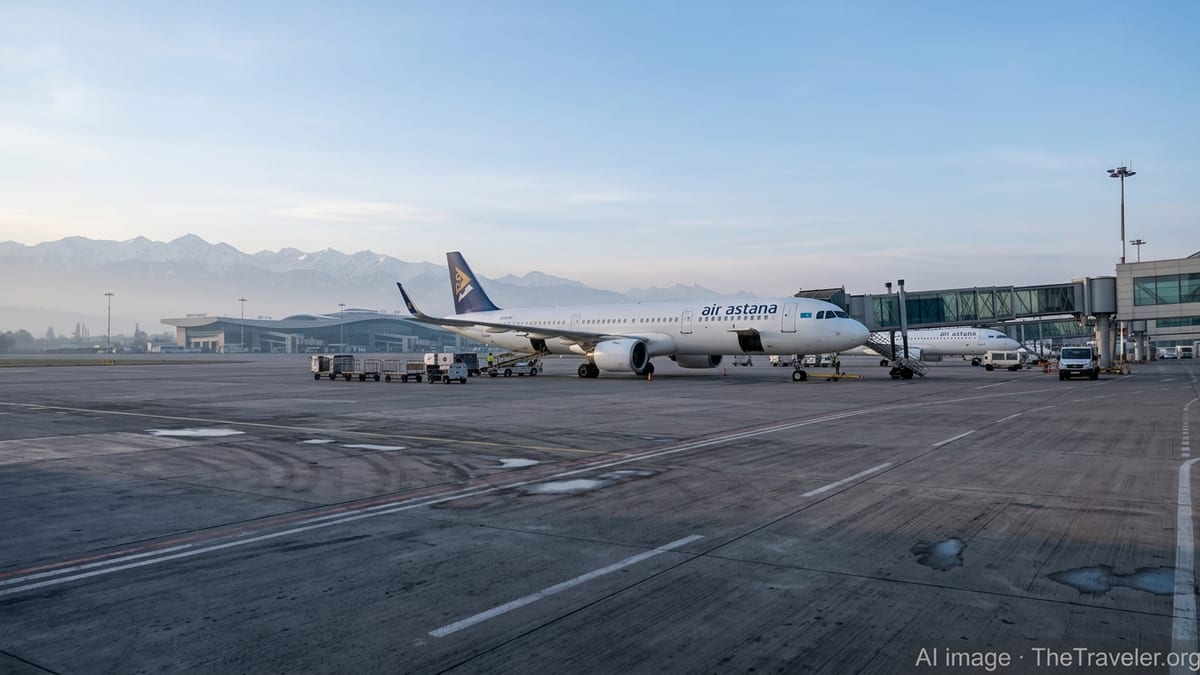
First Central Asia Route for Hong Kong’s Flag Carrier
The planned Hong Kong–Almaty service will mark Cathay Pacific’s debut in Central Asia, extending the carrier’s network into a region that has gained growing prominence in trade, logistics and energy. Publicly available information from the airline’s press materials indicates that the route is expected to operate three times per week, subject to regulatory approvals and operational readiness.
The flights are set to connect Hong Kong International Airport with Almaty International Airport, Kazakhstan’s largest city and commercial center. Aviation industry coverage notes that no other airline currently operates nonstop passenger services between the two cities, positioning Cathay Pacific as the sole carrier on the route once operations begin.
The move aligns with Hong Kong’s stated ambition to reinforce its role as a connector between China, the wider Asia-Pacific region and emerging markets. By adding Almaty to its network, Cathay Pacific is expected to offer new one-stop options for travelers from Kazakhstan accessing key destinations in mainland China, Southeast Asia and long-haul markets such as North America and Europe.
For Kazakhstan, the new route is being viewed in regional reporting as another step in diversifying international air links beyond traditional hubs in Istanbul, Dubai and major European capitals. Direct access to Hong Kong is anticipated to be attractive for both business travelers and leisure passengers seeking smoother journeys to East and Southeast Asia.
Route Details and Airbus A330 Operations
According to published scheduling outlines, Cathay Pacific intends to deploy Airbus A330-300 widebody aircraft on the Hong Kong–Almaty route. The aircraft type already forms a key part of the airline’s regional and medium-haul fleet, commonly used on services across Asia and to parts of the Middle East and South Pacific.
Industry databases and prior route launches show that Cathay Pacific’s A330-300s typically feature a two-cabin layout with Business and Economy classes tailored for flights of four to seven hours. While specific seating configurations for the Almaty service have not been detailed publicly, the use of this aircraft suggests a focus on balancing capacity with flexibility as demand develops.
The airline’s announcement indicates an initial three-weekly frequency, a common approach for new long regional routes where passenger and cargo demand is expected to ramp up over time. Aviation analysts commenting on the plan note that this structure allows Cathay Pacific to test the market while providing a regular schedule suitable for both corporate and leisure travelers.
Operationally, the timings are expected to be integrated into Cathay Pacific’s existing banks of arrivals and departures in Hong Kong to maximize connectivity. Travelers from Almaty will likely be able to connect within the same day to onward flights serving mainland Chinese cities, as well as key points in Japan, Korea and Southeast Asia.
Strategic Significance for Kazakhstan–China Connectivity
The Hong Kong–Almaty flights are being framed by regional observers as a new chapter in Kazakhstan’s air connectivity with Greater China. While services already exist between Kazakhstan and cities such as Beijing and Urumqi through other carriers, the Cathay Pacific route would bring direct access to one of Asia’s largest financial and logistics hubs.
Hong Kong’s position as a gateway for capital flows, professional services and high-value logistics is expected to be especially relevant for Kazakh companies active in mining, energy, agriculture and technology. Reports suggest that businesses in sectors ranging from commodities trading to tourism could benefit from shorter transit times and more predictable connections.
The route also reinforces links within the broader regional infrastructure and trade initiatives that have been expanding between China and Central Asia. Aviation commentators point out that Hong Kong’s hub role offers Kazakhstan an additional platform for engaging with Asian markets without relying solely on mainland Chinese airports or distant European gateways.
For passengers, the new flights should simplify travel between Kazakhstan and destinations across Asia-Pacific, reducing the need for double connections via the Middle East or Europe. This may be particularly attractive for students, medical travelers and visiting friends-and-relatives traffic, where journey time and visa requirements can strongly influence routing choices.
Tourism and Network Growth Opportunities
Tourism boards and travel trade publications have highlighted the potential for the route to stimulate two-way visitor flows. Almaty offers access to Kazakhstan’s mountain landscapes, winter sports and ecotourism sites, while Hong Kong continues to market itself as a culinary, shopping and cultural destination with easy onward connections across Asia.
Industry coverage notes that Cathay Pacific has been gradually rebuilding and expanding its network in the years following the pandemic, adding or restoring routes in Europe, North America and the Chinese mainland. The decision to commit capacity to Central Asia is being interpreted as a sign of confidence in the region’s long-term growth prospects.
For travel agencies and tour operators, the predictable three-weekly pattern is expected to support the development of new packages that combine Hong Kong with Kazakhstan or multi-country itineraries that link Almaty to other Asian destinations via Hong Kong. This could include ski and adventure trips, cultural tours or business travel programs anchored around Hong Kong’s convention and exhibition calendar.
Analysts also point to potential cargo benefits. Although the service has been announced primarily as a passenger route, widebody A330 aircraft typically carry significant belly-hold freight. This capacity could provide exporters in Kazakhstan with faster access to high-value Asian markets for perishable goods, textiles and specialized industrial components.
What Travelers Can Expect Next
With the start of operations targeted for the first quarter of 2027, the next milestones are likely to include detailed schedule publication, regulatory clearances and eventual ticket sales on Cathay Pacific’s usual distribution channels. Travel industry observers expect indicative schedules and fares to appear around a year ahead of launch, in line with common airline practice for new long regional routes.
Once open for booking, the route is anticipated to be integrated into global distribution systems and frequent-flyer partnerships, making it accessible through a range of travel agencies and airline partners. Travelers in Kazakhstan will be able to combine the Almaty–Hong Kong flights with onward sectors in a single itinerary, including connections on Cathay Pacific’s partners in the Oneworld alliance.
While precise fare levels remain to be seen, market commentators suggest that pricing will likely reflect a balance between stimulating new demand and competing with existing one-stop options via other hubs. Promotional campaigns around the launch period are widely expected, a pattern seen on other recent Cathay Pacific route openings.
As planning progresses, both Kazakhstan- and Hong Kong-based stakeholders in aviation, tourism and trade are watching closely to see how the new service will reshape travel and business flows between Central Asia and one of Asia’s most globally connected cities.