


More news on this day
Flight operations at Germany’s Leipzig/Halle Airport remain constrained after the discovery of a drone carrying explosives near a Ukrainian cargo aircraft led to the closure of one of the airport’s main runways and prompted a large security response.
Get the latest news straight to your inbox!
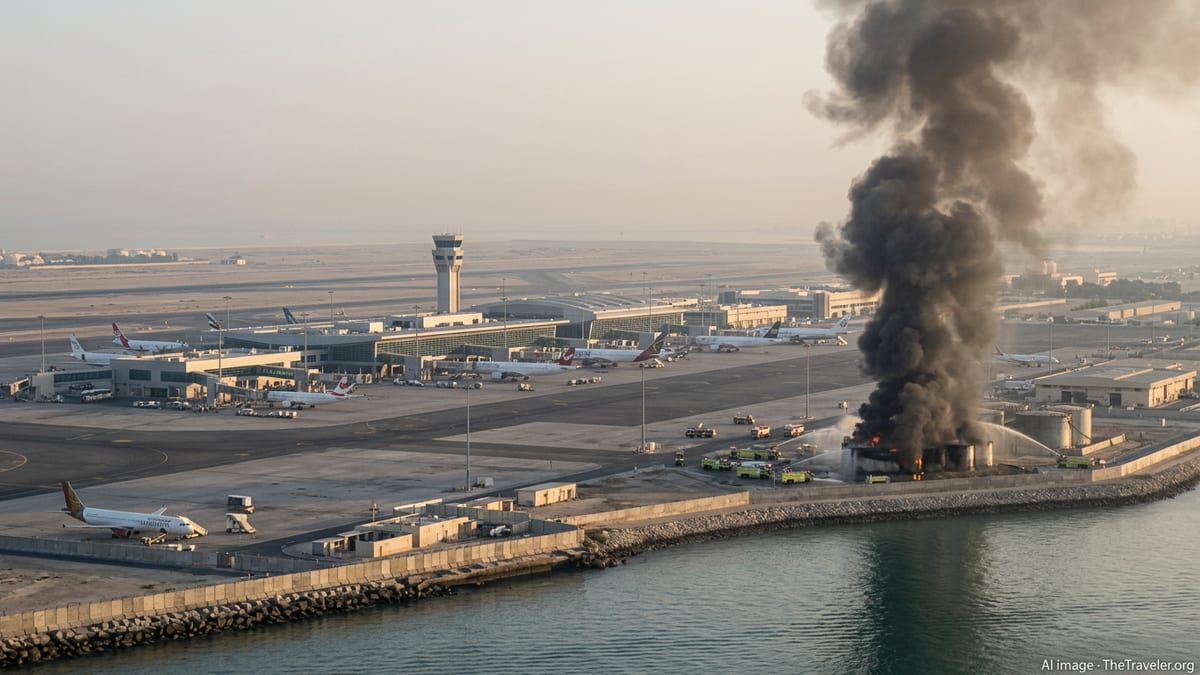
Runway closure disrupts flights at key European cargo hub
Published coverage indicates that the device was discovered late on Tuesday, 4 August, in a restricted area close to a Ukrainian Antonov cargo aircraft parked near the south runway at Leipzig/Halle Airport in the eastern state of Saxony. The drone, described in reports as a modified quadcopter carrying an improvised explosive charge and a suspected detonator, was treated as a live threat.
Bomb-disposal specialists were deployed to the scene and made the device safe, reportedly removing or neutralizing its detonator before transferring the remains for forensic analysis. As a precaution, airport management suspended movements on the nearby runway, forcing arriving aircraft to go around or divert and pushing departures onto remaining infrastructure.
Operational data and media reports show that the south runway, one of two parallel strips used at Leipzig/Halle, is still closed while investigators document the scene and technicians assess any potential damage. Cargo and passenger services continue to operate on the remaining runway, but the reduction in capacity has led to delays, diversions and schedule changes for airlines using the airport.
Leipzig/Halle is a major European freight hub, handling significant volumes of express parcels and military cargo. The airport is used by the German armed forces and NATO partners, and serves as a base for Ukrainian Antonov Airlines aircraft that shuttle equipment and humanitarian aid. The discovery of an explosive drone at such a facility has underscored the vulnerability of busy logistics centers to small unmanned aircraft.
Investigation focuses on origin and intent of the drone
German federal and Saxony state investigators have opened a case on suspicion of sabotage and possible terrorism-related offenses. According to publicly available information, officers are examining the drone’s components, flight controller and explosive charge in an effort to trace where it was built or modified and how it reached the restricted apron area.
Published accounts suggest that the drone was found at ground level rather than intercepted in flight, although some reports reference a collision between a separate flying object and a cargo aircraft that aborted its landing after the runway closure. That second incident is also under review, as authorities work to determine whether it was related to the explosives-carrying drone or a separate occurrence.
Security analysts quoted in German and international media have highlighted the location of the device next to a Ukrainian aircraft as a possible indication of motive, though investigators have not publicly named any suspects. Commentators have linked the incident to broader regional tensions and so-called hybrid tactics that combine misinformation, cyber activity and physical sabotage targeting critical infrastructure.
Technical specialists are expected to focus on radio signals, battery and propulsion systems, and any unique identifiers on the drone’s frame or electronics. The goal is to reconstruct its flight path and launch point, which could range from open land near the perimeter fence to industrial sites or residential areas within a few kilometers of the airport.
Broader pattern of drone intrusions at European airports
The discovery at Leipzig/Halle follows a series of drone-related disruptions at European airports in recent years. Records compiled by aviation agencies and news organizations show that German facilities, including Berlin and Bremen, have periodically halted operations after small unmanned aircraft were spotted near runways or approach paths.
Across Europe, similar incidents have been documented at major hubs where drone sightings have shut down airspace for hours, affecting thousands of passengers and large numbers of flights. Most of these cases involved recreational or unidentified drones without confirmed explosive payloads, but each episode has highlighted the challenge of detecting and neutralizing small low-flying objects in complex airspace.
Leipzig/Halle itself has experienced previous security scares, and analysts note that its role as a cargo gateway and military logistics node makes it a plausible target for hostile reconnaissance or disruption. The current case, involving what investigators describe in public briefings as an improvised explosive device mounted on a commercial-style drone, has been portrayed in commentary as an escalation in risk.
The incident also comes amid a documented rise in the use of first-person-view racing drones and modified consumer platforms for military purposes in nearby conflict zones. Observers suggest that experience gained on foreign battlefields may be informing new tactics and techniques for operating small explosive drones in civilian environments, including around airports.
Airlines and passengers face continuing operational impacts
With one runway still closed, airlines at Leipzig/Halle have been forced to adjust rotations and in some cases reroute aircraft to alternative airports. Flight-tracking data and local media coverage show that several cargo services have diverted to other European logistics hubs, while some passenger flights have experienced holding patterns or schedule changes.
Airport statements emphasize that safety assessments now precede every movement near the affected area, and that certain stands and taxi routes remain cordoned off while investigators work. Ground handling has been reorganized to concentrate activity around the open runway, creating occasional bottlenecks for baggage, cargo loading and refueling.
Travelers passing through the airport in recent days have reported longer security queues and additional checks on both landside and airside access points. Public information displays and airline notifications advise passengers to allow extra time at the airport, monitor flight status closely and be prepared for short-notice gate or timing adjustments as the situation evolves.
Industry observers note that freight operators are particularly sensitive to delays at Leipzig/Halle because many of their services run overnight and feed tightly coordinated delivery networks. Even relatively brief closures or capacity reductions can have ripple effects across European distribution systems, forcing companies to charter extra equipment or reroute consignments by road and rail.
Debate grows over airport drone defenses and legal framework
The Leipzig/Halle incident has intensified debate in Germany and across Europe about how to protect airports from small unmanned aircraft carrying explosives or attempting to disrupt operations. Aviation unions, security experts and policy analysts are using the episode as an example of why more robust detection and counter-drone measures may be necessary at major hubs.
Reports indicate that current systems at many airports rely heavily on visual spotting by pilots and ground staff, supplemented in some locations by radar adapted for small targets or acoustic sensors. Specialized counter-drone technologies such as jamming, spoofing and interceptor drones are still being rolled out cautiously because of concerns about interference with legitimate aviation systems and regulatory constraints on signal disruption.
Legal experts note that European and national regulations on drone use have been tightened in recent years, but that enforcement becomes difficult when hostile operators use anonymous equipment and launch from public areas far from airport fences. Calls for mandatory remote identification, geofencing and stricter penalties for operating drones near critical infrastructure have grown louder after the Leipzig case.
For passengers and airlines, the episode serves as another reminder that the rapid proliferation of civilian drones has created new layers of risk for aviation. As Leipzig/Halle works to restore full runway operations and investigators piece together how an explosive device reached the edge of an active runway, the incident is likely to feed into wider policy discussions on how Europe balances innovation in unmanned flight with the need to keep its busiest airports secure.