


More news on this day
As global temperatures climb and heat waves grow more intense, airline operations are confronting a physical limit that cannot be negotiated: when the air gets too hot, more aircraft struggle to take off on time.
Get the latest news straight to your inbox!
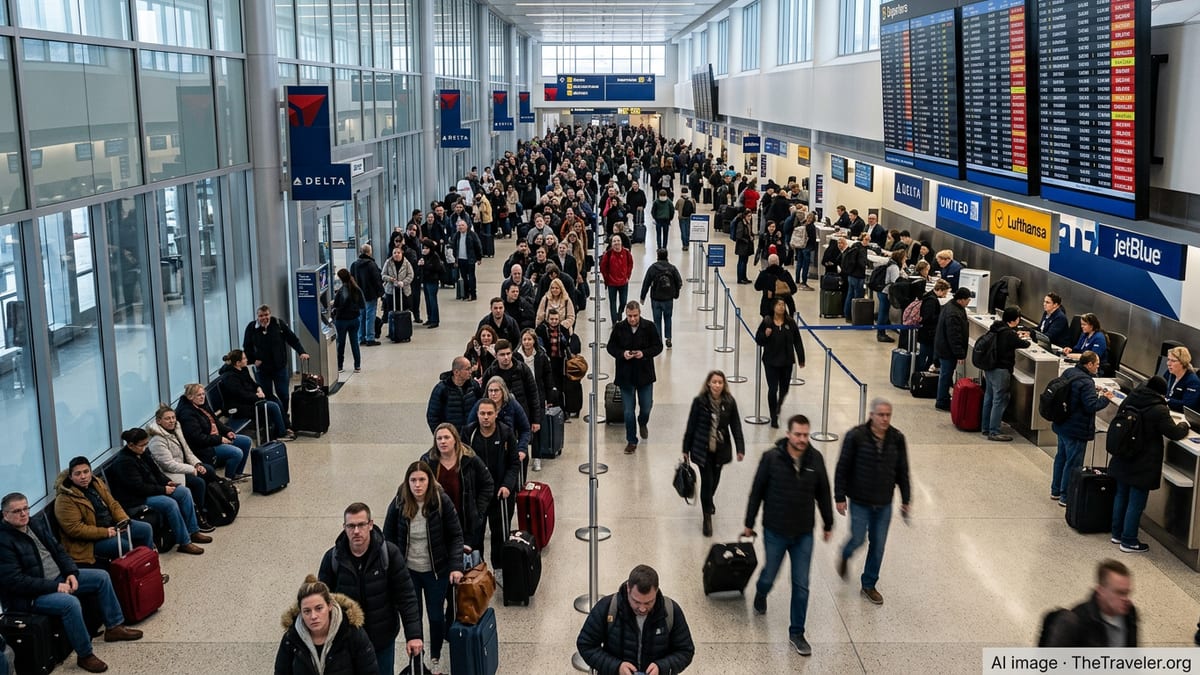
How Extreme Heat Grounds Planes
Aircraft performance during takeoff depends heavily on air density. In very hot conditions, the air becomes thinner, reducing the lift generated by the wings and the thrust efficiency of jet engines. To compensate, an aircraft needs a longer runway or a lighter load. When neither option is available, departures can face weight restrictions, delays, or cancellations.
Technical studies of aircraft performance describe this relationship in detail. Research synthesized by United States and international climate programs notes that rising air temperatures increase the likelihood that planes will reach operational limits on takeoff weight, particularly at airports with shorter runways or higher elevations. Under such conditions, crews may be required to offload passengers, cargo, or fuel, or to wait for cooler temperatures later in the day before departing.
Recent travel reporting has drawn attention to heat-related disruptions in cities such as Phoenix and Las Vegas, where summer temperatures have climbed well above 110 degrees Fahrenheit on multiple days. At those extremes, some regional jets and smaller aircraft types face especially tight margins during takeoff, leading to instances where volunteers have been asked to take later flights so that planes can depart within safe limits.
Publicly available guidance from aviation authorities underscores that there is no single universal maximum temperature for flight operations. Instead, each aircraft model has certified envelopes that determine the combination of temperature, weight, and runway length under which a safe takeoff is possible. As climate change drives both higher average temperatures and more frequent heat waves, those envelopes are being tested more often.
Climate Projections Point to More Frequent Weight Restrictions
A growing body of peer reviewed research suggests that today’s heat-related delays may be a preview of more substantial disruptions in the decades ahead. Studies published over the past decade by climate and aviation researchers indicate that, by mid to late century, between 10 and 30 percent of flights departing at the hottest time of day at major airports could require some degree of weight restriction.
Typical restrictions in these scenarios are projected to range from about 0.5 to 4 percent of an aircraft’s total payload and fuel capacity. In practical terms, that can translate to several rows of passengers, a meaningful share of cargo, or fuel reserves that limit the feasible range of a flight. The impacts are expected to be most pronounced at landlocked or high elevation airports and in regions where climate models project stronger warming and more severe heat waves.
Recent analyses focusing on the Euro Mediterranean region report similar findings, warning that rising high temperature extremes could have socio economic consequences if airports and airlines do not adapt. The studies highlight an increased likelihood of weight restricted departures, delays, and cancellations on peak heat days, especially during busy summer travel periods when runways and gate capacity are already under strain.
In the United States, climate assessment documents prepared for transportation planners likewise flag extreme heat as an emerging risk to aviation reliability. These reports point to the combined effect of warmer baseline conditions, more frequent record breaking days, and the concentration of peak temperatures in mid afternoon, when some of the heaviest long haul departures are typically scheduled.
Evidence From Recent Summers
Events over the last several summers have provided real world examples of how heat can disrupt flight schedules. During extended heat waves in the American Southwest, some commercial flights have been delayed or canceled when forecast temperatures exceeded the certified limits for certain aircraft types at specific airports. Publicly available airline statements at the time cited performance constraints related to extreme heat and runway length.
Travel coverage has documented instances where aircraft at busy desert hubs required additional time on the ground, either to wait for temperatures to drop or to complete weight and balance adjustments before departure. In a few widely reported cases, airlines sought volunteers to take later flights so that full fuel loads could be carried without exceeding takeoff limits, illustrating the trade offs operators face when the air becomes too warm.
Observers note that such events remain a small fraction of overall flight activity but are occurring against a backdrop of record global temperatures. According to widely cited climate data, recent years have been among the hottest on record, with multiple heat waves breaking long standing local records across North America, Europe, and parts of Asia. As these extremes recur more often, the aviation sector expects that what are now exceptional disruptions could become more routine during peak summer months.
Airports serving rapidly growing cities in warmer climates are at particular risk. Many of these facilities were designed decades ago for cooler conditions and different traffic profiles, leaving limited room to extend runways or upgrade surrounding infrastructure quickly. As passenger numbers rise, even modest increases in heat related delays can ripple through tightly timed networks, affecting connections and on time performance far beyond the airports directly experiencing extreme temperatures.
Operational and Infrastructure Adaptations Under Discussion
Industry analysts and climate adaptation specialists are increasingly focused on how airlines and airports can adjust operations to manage rising heat. One widely discussed strategy is shifting heavier or longer haul flights to cooler hours of the day, particularly early morning or late evening, when air density is higher. Some airports and carriers are already adjusting schedules or concentrating the most weight sensitive departures away from mid afternoon peaks during the hottest months.
Infrastructure upgrades are another avenue. Longer runways can provide additional distance for aircraft to reach the speeds required in thinner air, reducing the need for weight restrictions. However, extending runways is expensive, often constrained by surrounding development, and can take years of planning and construction. In the meantime, operators are refining dispatch procedures, performance calculations, and contingency plans for anticipated heat events.
Aircraft manufacturers are also working on designs that can maintain performance at higher temperatures, including more powerful and efficient engines and lighter airframes. Certification authorities have recently approved higher maximum takeoff weights for some long haul aircraft variants, giving airlines additional flexibility to carry more payload or fuel. These developments may help offset some of the performance loss associated with hotter conditions, although they do not eliminate the fundamental physics of thinner air at high temperatures.
Beyond runways and aircraft, airports are examining how heat affects ground operations and worker safety. Higher temperatures can stress pavements, increase cooling loads in terminals, and pose health risks for ground crews working on exposed ramps. Adaptation plans now commonly include shaded or cooled rest areas, revised work schedules during heat waves, and investments in more resilient materials for taxiways and apron areas, recognizing that operational continuity requires more than just keeping aircraft within their takeoff limits.
Economic and Passenger Implications
For airlines, the financial impacts of rising temperatures come from multiple directions. Weight restrictions can reduce revenue per flight when seats or cargo space go unused, while delays and cancellations generate additional costs tied to fuel burn, crew rescheduling, aircraft swaps, and passenger re accommodation. A recent review of climate adaptation in aviation found that network wide recovery costs could rise significantly by mid century as extreme heat becomes more frequent.
Passengers are likely to experience these trends as sporadic but increasingly familiar disruptions, especially in regions prone to heat waves. Travel experts advise that flights scheduled during the hottest part of the day, particularly from airports known for extreme summer temperatures, may carry a higher risk of heat related delay. In response, some travelers are choosing earlier departures or building longer connection times into itineraries during peak season.
At a broader scale, analysts warn that climate driven constraints on aviation capacity could intersect with growing demand for air travel, creating new challenges for long term planning. Governments and industry groups are starting to integrate extreme heat scenarios into infrastructure investment decisions, runway design standards, and airspace management strategies, recognizing that reliable flight operations are a critical component of both tourism and the wider global economy.
For now, most flights continue to depart without noticeable impact from rising temperatures. Yet the physics of flight and the trajectory of the climate system point in the same direction: as hot days become hotter and more common, keeping planes moving on time will require a mix of new technology, smarter scheduling, and significant investment on the ground.