


More news on this day
Flight operations at Germany’s Leipzig/Halle Airport were disrupted this week after an explosive-carrying drone was discovered near a cargo area and a separate flying object struck a DHL aircraft during an aborted landing, sharpening concern over drone-related risks at major transport hubs.
Get the latest news straight to your inbox!
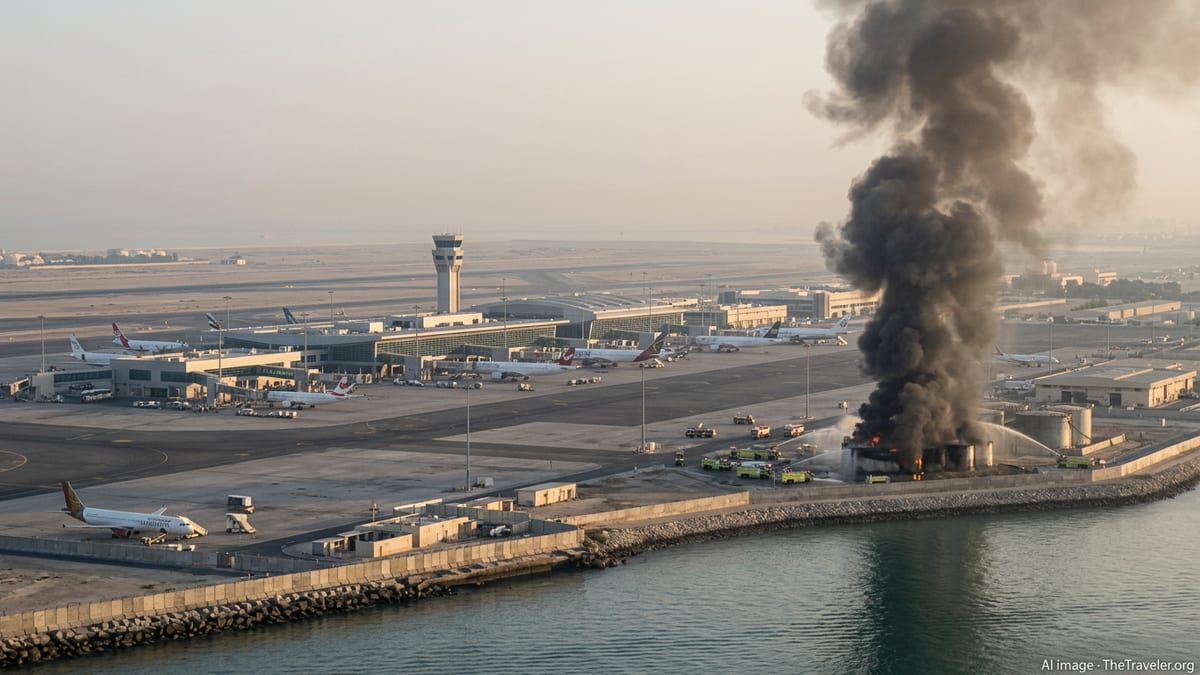
Explosive device found near Ukrainian cargo aircraft
According to published coverage, the incident unfolded late on Tuesday at Leipzig/Halle Airport, one of Europe’s key freight hubs and a major base for Ukrainian Antonov cargo operations. An airport employee reportedly spotted a small drone on or near the tarmac close to the south runway, in an area used for heavy cargo movements.
Initial reports indicate that the drone was carrying an improvised explosive device that included a detonator. Publicly available information shows that specialist teams later rendered the device safe, and investigators have been examining the modified drone to understand its construction, range and potential payload.
Media outlets in Germany describe the airport as a crucial logistics node for both civilian freight and military supplies, including shipments destined for Ukraine. The proximity of the drone to a parked Ukrainian transport plane has prompted particular scrutiny of whether the aircraft or associated cargo may have been the intended target.
Runway closures and a temporary suspension of operations followed the discovery, with flights either delayed or diverted while the immediate area was secured. Reports indicate that normal traffic gradually resumed once the device had been neutralised and an initial sweep of the grounds completed.
Flying object collides with DHL cargo plane
Separate from the discovery of the explosive-laden drone, investigators are examining a collision between a “flying object” and a DHL cargo aircraft operating near Leipzig/Halle around the same timeframe. According to multiple news accounts, the aircraft had been forced into a go-around procedure when the runway was closed, and subsequently reported an impact with an unidentified object several kilometres from the airport.
The aircraft later diverted to Hanover, where it landed safely. Visual inspections reportedly revealed damage consistent with a midair strike by a small object, though no injuries were reported among the crew. Technical checks and further analysis are underway to determine the extent of the damage and whether any structural components were compromised.
Publicly available information so far does not confirm whether the object involved in the collision was another drone. Investigators have been searching the area around the flight path for debris, seeking physical evidence that could clarify whether the incident was linked to the explosive device found on the ground or represented a separate occurrence.
Reports from German media highlight that, while near misses between drones and manned aircraft have been documented at various airports over recent years, a confirmed collision in the context of a possible security incident would represent a serious escalation in risk.
Leipzig/Halle’s role in European cargo and military logistics
Leipzig/Halle Airport has grown into one of Europe’s busiest cargo gateways, serving major express operators and handling freight that connects Asia, the Middle East and North America with the continent’s industrial heartland. The airport’s infrastructure, including extensive apron space and night-flight permissions, makes it particularly attractive for heavy cargo movements and time-critical deliveries.
In addition to commercial operations, publicly available information shows that Leipzig/Halle functions as a key logistics platform for the German armed forces and NATO partners. The site has been used for the transport of military equipment and humanitarian supplies, a role that has expanded as European governments support Ukraine with material and equipment.
The presence of Ukrainian Antonov transport aircraft at the airport underscores its importance to Kyiv’s supply chain. Reports indicate that at the time of the incident, Ukrainian cargo planes were parked in the vicinity of where the explosive-carrying drone was discovered, raising questions about whether these aircraft might have been singled out as potential targets.
For airlines and logistics operators using the airport, the security incident has revived attention on the vulnerability of large, open-air cargo aprons and the challenge of monitoring low, slow and small objects in complex airport environments.
Security investigation focuses on origin and intent
German police and federal security agencies have opened a wide-ranging investigation into both the ground discovery of the explosive drone and the midair collision with the DHL aircraft. According to ongoing media coverage, forensic teams are analysing the drone’s components, including its propulsion system, navigation electronics and explosive charge, in an effort to determine who built it and how it reached the airport perimeter.
Reports suggest that the device appeared to be professionally assembled rather than improvised from consumer parts alone, a detail that has intensified debate about whether a state-backed actor or a sophisticated non-state network might be involved. Investigators are also examining any possible links between the device and recent patterns of drone activity near sensitive infrastructure in Germany and other European countries.
At this stage, publicly available information does not point to any group claiming responsibility, and officials have been cautious about assigning blame. Commentators in European media, however, have noted that the incident fits into a broader climate of hybrid and proxy activities that seek to disrupt logistics and energy flows without crossing into open armed confrontation on NATO territory.
For travellers and air cargo customers, the immediate impact has so far been limited to localised delays and diversions. The longer-term outcome of the investigation is likely to influence how airports across Europe assess threat scenarios and invest in technology to detect and neutralise drones equipped with explosives.
Growing concern over drones in civilian airspace
The Leipzig/Halle episode comes amid a wider uptick in reported drone sightings and incursions near European airports and military facilities. Industry and regulatory reports compiled over recent years describe repeated temporary shutdowns of runways and flight paths after drones were observed close to active operations, often without the operator being identified.
Aviation safety experts have long warned that small unmanned aerial vehicles can pose disproportionate risks when operated near aircraft, particularly during takeoff and landing phases when planes are most vulnerable. At cargo hubs such as Leipzig/Halle, the combination of large aircraft, hazardous materials and tightly scheduled operations amplifies the potential consequences of a successful attack using an explosive-bearing drone.
In response, airports and air navigation service providers in several countries have begun deploying specialised radar, radio-frequency detection and optical tracking systems aimed at spotting and classifying drones at greater distances. Publicly available information indicates that Germany has also invested in mobile counter-drone units, though questions remain about how effectively current defences can intercept small, low-signature devices designed to evade conventional systems.
For travellers and travel planners, the incident underlines an evolving security landscape in which drone-related disruptions may become a more regular feature of airport operations. While large-scale diversions and closures remain rare, the Leipzig/Halle case illustrates how a single modified drone can halt traffic at a major hub and prompt a far-reaching investigation that stretches well beyond the immediate region.