


More news on this day
The Federal Aviation Administration has begun rolling out a new artificial intelligence platform designed to forecast air traffic congestion and flight delays before they occur, marking one of the most ambitious uses of predictive software yet in the U.S. aviation system.
Get the latest news straight to your inbox!
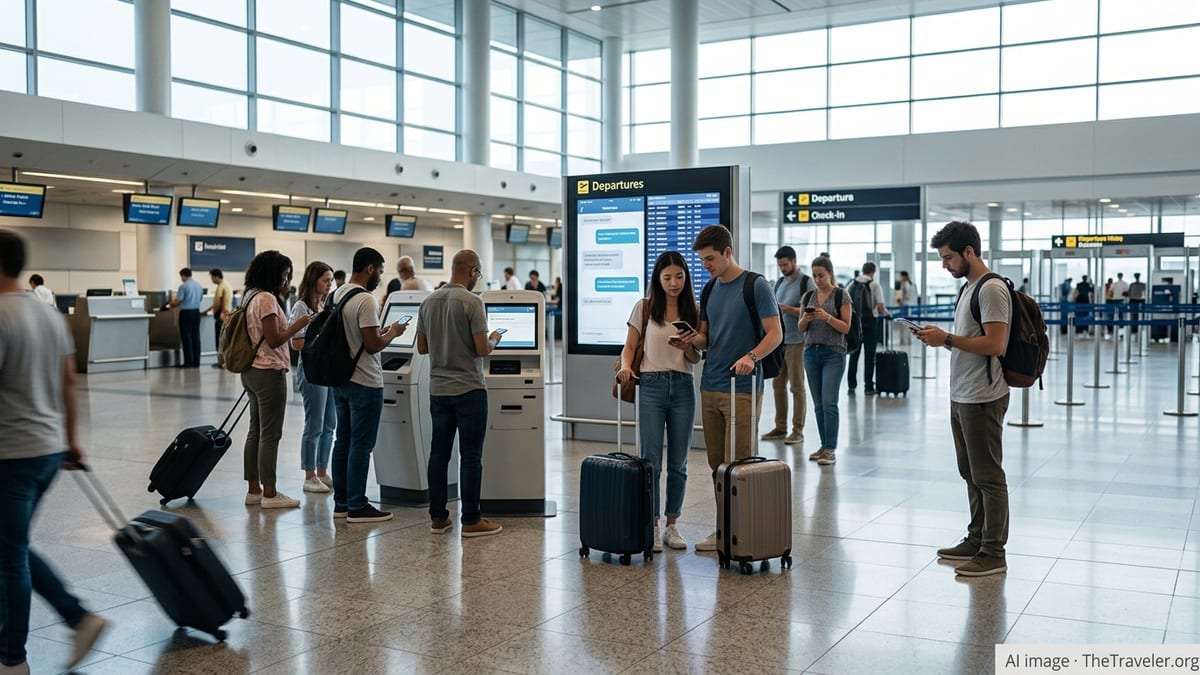
SMART launches in Washington region as first testbed
According to recent coverage in national business outlets and industry forums, the software platform, known as SMART, is being introduced first in the busy Washington, DC airspace, focusing on Ronald Reagan Washington National, Washington Dulles International and Baltimore/Washington International Thurgood Marshall airports. Initial operational use is reported to have begun around September 21, 2026, following several months of internal testing and simulations.
SMART is described in public reporting as an AI-enabled traffic management layer that ingests airline schedules, weather data, airport runway capacity, airspace conditions and other operational constraints to anticipate when and where bottlenecks will form. Instead of reacting to disruptions once they cascade through the system, the platform is intended to give the FAA’s Air Traffic Control System Command Center and airline operations teams a shared, data-rich picture of the next several hours of demand.
Publicly available information on the rollout indicates that the Washington region was chosen because it combines some of the country’s most delay-prone airspace with complex interactions among three major airports, multiple military and restricted zones, and frequent convective weather. If the system can demonstrate measurable delay reductions there, officials have signaled that a phased national deployment could follow over the coming years.
Industry briefings and news reports emphasize that SMART’s introduction does not alter core safety responsibilities. Human controllers in towers, terminal radar approach facilities and en route centers remain responsible for separation of aircraft, while the new platform is framed as a strategic planning tool that suggests adjustments to flows, routes and departure times before problems peak.
How the AI engine predicts congestion and delays
The SMART system builds on years of research into machine learning and predictive modeling carried out by NASA, the FAA and industry partners in the broader National Airspace System. NASA’s past work on tools such as integrated arrival and departure scheduling and digital departure rerouting has already shown that combining real-time surface traffic data, weather information and flight plans can reduce departure queues and save fuel in field trials at large U.S. hubs.
Technical summaries and conference papers on related projects describe AI models that continuously absorb large volumes of operational data, including historic delay patterns, changing weather forecasts, runway configurations, and airline rotation plans. By learning how these factors interact, the models can generate probabilistic forecasts of sector overloads, runway saturation and airborne holding several hours in advance, giving traffic managers time to meter flows or propose alternative routings.
Within that context, publicly available descriptions of SMART say it functions as a kind of “brain” for traffic flow management, aggregating feeds that are currently spread across multiple legacy systems. Instead of looking at airport conditions in isolation, the platform can evaluate how a thunderstorm line over one region, or a runway closure at a major hub, is likely to ripple across the national network and trigger departure or arrival delays elsewhere.
Reports indicate that, during the initial Washington deployment, SMART’s recommendations will focus on congestion and efficiency rather than introducing new safety-critical automation. For example, the tool may suggest shifting departure times within already planned schedules, favoring certain departure routes to avoid saturated sectors, or sequencing arrivals to minimize ground holds and taxi delays when weather reduces capacity.
Costs, scope and airline pushback
Business press coverage has highlighted the scale of the investment behind the new platform. The FAA awarded an approximately 875 million dollar, 12 year contract earlier in 2026 to Air Space Intelligence, a California based software firm, to provide and support the SMART system as part of a broader modernization of traffic flow management infrastructure.
Earlier discussions around the initiative reportedly envisioned a larger budget and faster expansion, but industry reporting indicates that airlines pushed back on both the pace and scope of the rollout. Some carriers expressed concern that aggressive use of predictive models could prompt preemptive cancellations or schedule changes that might not align with their own operational strategies, particularly when weather forecasts or demand projections later improved.
Subsequent accounts of the negotiations describe a compromise in which the initial release of SMART is narrower than first proposed. Rather than automatically triggering new delay programs or binding routing decisions, the tool will function as a decision support platform whose suggestions are reviewed by traffic managers and airline operations centers using established processes.
Public statements from airline trade groups have nonetheless described the underlying concept as an important step toward more collaborative planning. Industry associations have characterized advanced predictive tools for traffic management as a promising way to reduce delays and cancellations, provided airlines remain closely involved in refining the models and interpreting their outputs.
What travelers might notice during the rollout
For passengers using Washington area airports in the coming months, the early effects of SMART are expected to be subtle rather than dramatic. The system does not change boarding procedures, security screening, or in flight services. Instead, its influence will appear in how airlines and the FAA handle periods of strain on the airspace system, especially during summer thunderstorms or peak holiday travel.
Travel industry analysts note that, if the tool performs as intended, some travelers may see fewer last minute gate holds, shorter taxi queues, or rerouted flights that depart closer to schedule even when weather reduces available capacity. Some disruptions could shift earlier in the day, as predictive models encourage airlines to adjust schedules or swap aircraft in anticipation of later bottlenecks rather than waiting for delays to cascade.
However, published reporting also points out that the new platform will not eliminate the classic drivers of delay such as severe storms, ground stops at major hubs, or unscheduled runway closures. Instead, the goal is to use better forecasting to make more efficient use of the capacity that is available, and to spread unavoidable disruption across the system in a way that minimizes passenger impact.
Observers caution that, in the short term, travelers might encounter experimental traffic management patterns as the FAA and airlines tune the system. In some cases this could mean longer routings that add flight time but avoid excessive holding, or earlier decisions to consolidate lightly booked flights ahead of major weather events based on model projections of reduced capacity.
Planned national expansion and open questions
According to planning documents and research programs associated with the FAA’s broader NextGen modernization effort, Washington’s deployment is intended as a stepping stone toward nationwide predictive traffic management. Once performance is evaluated in the initial corridor, the agency is expected to consider expansion to other high density regions, such as the New York metropolitan area and key hub complexes in the central United States.
Future phases are likely to integrate SMART more tightly with other decision support tools, including advanced weather processors that can provide high resolution forecasts of convective systems several hours ahead, and airport surface management platforms that track individual aircraft and vehicles on the ground. Research supported by NASA and the FAA already points to potential reductions in fuel burn and taxi delays when such systems are combined.
At the same time, experts and advocacy groups are raising questions about transparency and oversight. Because predictive models are trained on historical data, aviation academics and data ethicists are calling for clear documentation of how the algorithms perform across different regions, seasons and traffic conditions, and how their recommendations are validated before influencing large numbers of flights.
For now, reports on the Washington rollout stress that SMART’s role is advisory and that any changes to safety critical procedures must go through established regulatory channels. As empirical performance data accumulates over the coming seasons, the aviation community will be watching closely to see whether the new AI system can meaningfully reduce flight delays before takeoff without introducing new complexities into an already intricate air traffic network.