


More news on this day
The Federal Aviation Administration is beginning to roll out an $875 million artificial intelligence-driven software system designed to predict congestion and conflicts before they trigger widespread flight delays, a high-profile technology bet as U.S. air travel demand collides with weather disruptions and aging infrastructure.
Get the latest news straight to your inbox!
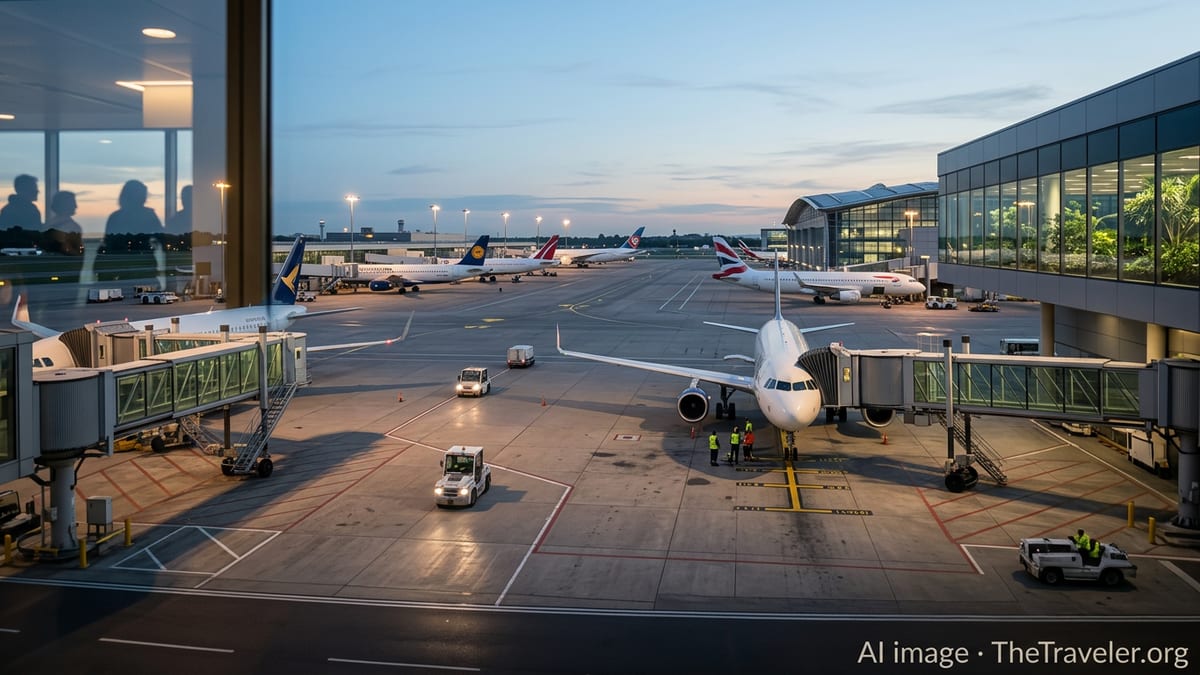
What the FAA is launching and why it matters to travelers
Published coverage indicates the FAA has selected Air Space Intelligence (ASI) for a 12-year, $875 million effort to modernize how flights are scheduled and managed across the National Airspace System. The initiative centers on a platform known as SMART, short for Strategic Management of Airspace, Routes, and Trajectories, paired with a complementary data capability called Flow Management Data & Services (FMDS).
Rather than replacing controllers, the system is intended to help traffic managers and controllers anticipate trouble earlier by synthesizing airline schedules, flight plans, real-time aircraft position updates, airspace constraints, airport capacity, and weather. The goal is to move from reactive “fix it as it happens” traffic management to proactive planning that can prevent delays from cascading across the network.
For travelers, the practical promise is fewer last-minute ground stops, fewer missed connections caused by upstream congestion, and more predictable arrival times, especially on days when thunderstorms, runway closures, or constrained airspace can ripple through multiple hubs.
How SMART and FMDS are expected to work in day-to-day operations
Reports describe SMART as an AI-supported engine that generates a unified view of traffic flows and capacity across the system, highlighting where demand may outstrip what the airspace and airports can handle. By surfacing likely pinch points earlier, the FAA can plan reroutes and traffic management initiatives before aircraft stack up in holding patterns or sit at gates waiting for airspace to reopen.
FMDS is positioned as the data backbone, aimed at improving how flight schedules and plans are analyzed and shared across stakeholders. One of the long-running challenges in U.S. air traffic management is that airlines, airports, and the FAA can be operating from different datasets and timelines; the new platform is intended to reduce those mismatches and help align decisions around the same operational picture.
Recent coverage also links this software effort to the broader modernization push already underway, where the FAA has been upgrading surveillance, communications, and automation tools. In that sense, SMART is being framed as a decision-support layer that can better exploit existing data streams and make earlier, more consistent flow decisions.
Timeline and rollout signals: testing now, broader expansion later
Recent reporting tied the rollout to real-world disruption: on a day when technical problems at a major Northeast air traffic center disrupted flights, published coverage noted the FAA also began testing a new AI-supported system meant to predict schedule conflicts and weather issues so traffic can be rerouted sooner.
Other published accounts describe the launch as an early step toward broader deployment, with the software designed to support national-scale planning across the FAA’s managed airspace. The FAA’s public materials characterize the platform as cloud-based and intended to enhance existing air traffic management systems rather than function as a standalone replacement for core control infrastructure.
Because this is a multi-year contract and a phased technology deployment, travelers should expect incremental benefits rather than an overnight shift in on-time performance. Early stages are likely to focus on flow management and scheduling decisions, with additional capabilities and coverage expanding as the platform is integrated into more facilities and operational workflows.
Where the $875 million fits into a larger modernization and delay-reduction push
The AI system is arriving amid a broader federal effort to modernize air traffic control hardware and software, with FAA materials also highlighting rising delay minutes linked to equipment issues in recent years compared with long-run averages. Published FAA fact sheets describe ambitious timelines for replacing or upgrading major components, paired with procurement approaches meant to hold integrators accountable for deadlines and performance.
At the same time, public coverage indicates the modernization push extends beyond technology alone, with parallel efforts aimed at stabilizing staffing and improving operational resilience. For passengers, this matters because the worst travel days often reflect multiple failures at once, including weather, capacity constraints, and equipment or staffing bottlenecks that magnify disruptions.
Airline industry reactions reported in public materials have generally emphasized support for modernization that improves situational awareness and reduces congestion. That alignment is notable because many delay-management measures require coordination between carriers’ schedule planning and the FAA’s traffic flow tools, particularly in constrained regions like the Northeast corridor.
What travelers can realistically expect in 2026 and how to plan around delays
Even with smarter forecasting, delays will not disappear: weather remains the dominant disruptor in many seasons, and the U.S. airspace system still depends on complex coordination among airports, airlines, and air traffic facilities. The most meaningful improvements from AI-supported flow tools typically show up as fewer extreme meltdown days and smoother recovery when disruptions do occur, rather than a constant, visible reduction in everyday minor delays.
For near-term travel, passengers can still reduce risk by choosing earlier departures during peak-weather months, building connection buffers at the most delay-prone hubs, and monitoring airline rebooking options and airport ground-delay programs as conditions evolve. The FAA’s new approach is intended to make those operational decisions earlier and more targeted, but it will take time for the effects to be consistent across the country.
The key question for the coming year will be whether the FAA can demonstrate measurable improvements in predictability without adding unnecessary conservatism that reduces capacity. Publicly available information suggests that balance, keeping traffic moving safely while avoiding avoidable gridlock, is exactly what the new system is being designed to help achieve.