


More news on this day
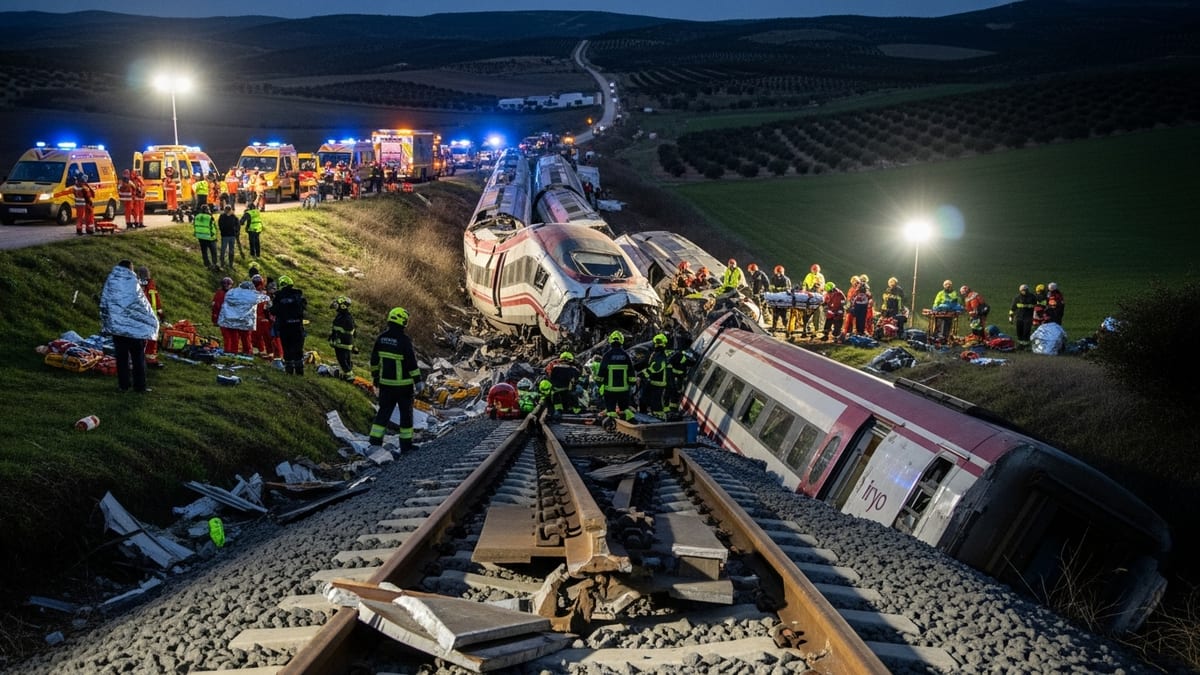
A fatal collision involving a train in York County prompted a large response from emergency crews, with initial reports indicating at least one person was killed and a multiagency investigation now underway.
Get the latest news straight to your inbox!
Emergency response and initial reports
According to early information released through regional news coverage and public safety summaries, York County dispatchers received multiple calls reporting a serious crash involving a train and at least one vehicle near a rail crossing. Fire, police and medical crews were dispatched within minutes, and responders arriving on scene described a heavily damaged vehicle and an active rail line that needed to be secured before further assessment could begin.
Publicly available information indicates that the first priority for crews was to stabilize the scene and locate any victims. Rail traffic in the area was halted while responders checked the train and surrounding right of way for additional damage or secondary hazards. Initial updates from local outlets indicated that at least one person had died as a result of the collision, triggering standard protocols that include extended on scene operations and a detailed collision reconstruction.
Regional incident logs show that additional support units were requested shortly after the first crews arrived, including specialized rescue teams and rail representatives to assist with safely moving the train once the immediate emergency phase ended. Nearby roads were closed to through traffic, with detours put in place as investigators documented debris fields, vehicle position and damage to the rail infrastructure.
While the full sequence of events remains under review, early scene descriptions suggest a high energy impact consistent with other recent train vehicle collisions in North America, where the size and speed of a train can cause catastrophic damage even at moderate speeds.
Impact on travel and local disruption
The collision quickly affected travel in the surrounding area, as emergency crews shut down road access around the crossing and temporarily restricted movements along the rail corridor. Drivers encountered detours on key local routes, while residents reported delays as traffic was redirected through residential streets and alternative connectors.
Rail operations on the affected line were suspended while investigators worked on and around the tracks. Passenger and freight services in similar incidents have typically remained paused for several hours, sometimes longer, until track inspections confirm it is safe to resume. Regional rail travelers were advised through carrier alerts and news reports to anticipate delays, cancellations or rerouted services while crews assessed potential track damage and signal system impacts.
For local communities, such closures can extend beyond the immediate crash window. Crossing equipment, gates and warning lights may require inspection or replacement, and damaged roadway approaches may need temporary repairs before normal traffic patterns resume. Residents living closest to the line also frequently experience an uptick in emergency vehicle activity, media presence and rail maintenance operations in the days following a serious collision.
Businesses near the crossing may see short term disruption from roadblocks and reduced access, particularly for locations that rely on drive up customers or commercial deliveries. In previous train related crashes, some businesses have reported reduced foot traffic on the day of the incident and during subsequent reconstruction activity, though most impacts ease as transportation links are restored.
Investigation and safety review
Following a fatal rail collision, standard procedure involves multiple overlapping investigations. Local crash reconstruction teams typically examine tire marks, signal status, sight lines and vehicle damage, while rail operators and, where applicable, federal rail safety personnel conduct their own technical reviews. Publicly available case files from earlier train incidents show that investigators often focus on whether crossing signals and gates were functioning correctly, train speed at the time of impact and any potential obstructions to a driver’s view of the tracks.
In many recent U.S. and international rail collisions, published findings have highlighted a mix of human behavior and infrastructure factors, including drivers moving around lowered gates, pedestrians using tracks as shortcuts and rural crossings without active warning systems. Those patterns have led safety advocates to renew calls for improved grade crossing protections after each serious crash, particularly when collisions occur in growing suburban areas where road traffic has increased faster than rail infrastructure upgrades.
Data compiled by rail safety agencies show that even though train related fatalities are relatively infrequent compared to highway crashes, the outcome of a train vehicle collision is often severe. The mass and braking distance of a train mean that crews have limited ability to avoid a vehicle or person on the tracks once they are spotted. As a result, investigators routinely stress the importance of prevention measures at grade crossings, from better signage and lighting to physical barriers and, where feasible, grade separation projects that remove vehicle traffic from rail lines entirely.
The York County collision is expected to generate a formal report that will document conditions at the crossing, the timeline of the incident and any recommended changes. Those findings may inform future funding applications or safety initiatives targeting crossings considered to be at higher risk because of traffic volume, limited sight distance or a history of prior close calls.
Community response and rail safety awareness
Fatal incidents along rail corridors often have an outsized emotional impact on nearby communities, particularly in areas where tracks run close to homes, schools or town centers. In York County and elsewhere, such crashes frequently prompt renewed public conversations about train speeds, whistle use and pedestrian behavior around the tracks.
Recent high profile rail collisions in North America and Europe have already raised the visibility of rail safety campaigns, with public service announcements, school based education and outreach by nonprofit groups emphasizing basic guidance such as never stopping on tracks, obeying crossing arms and treating every track as active. Community members sometimes organize informal memorials near the scene of a fatal crash, which can serve as a visible reminder of the risks associated with ignoring warning signs or attempting to beat an oncoming train.
Local governments and transportation planners may use the aftermath of a serious incident to evaluate where additional safety investments could be most effective. Options discussed in other regions after similar collisions have included installing median barriers to prevent drivers from going around lowered gates, upgrading passive crossings with flashing lights and bells, and adding better road markings to clearly indicate the area where vehicles must stop.
For residents and travelers passing through York County, the collision underscores the broader reality that rail lines remain an integral but potentially hazardous part of the transportation landscape. While the full details of this incident continue to develop, the response highlights how quickly a routine day of road and rail traffic can turn into a prolonged emergency when something goes wrong at a crossing.