


More news on this day
Rail passengers across the Netherlands and on key international routes are facing ongoing disruption after a fire near Rotterdam Centraal damaged signalling infrastructure and forced widespread cancellations and diversions.
Get the latest news straight to your inbox!
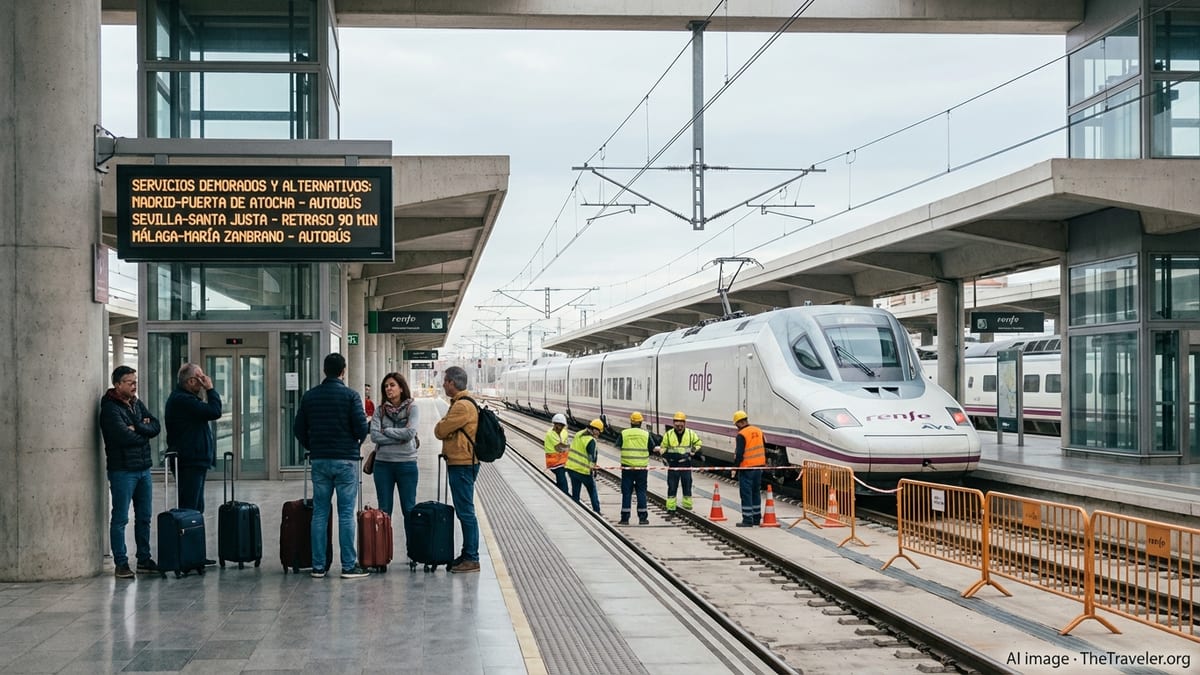
Fire near major Dutch hub triggers cascading delays
Reports indicate that the disruption began when a fire broke out in a cable duct close to Rotterdam Stadion, near the busy Rotterdam Centraal rail corridor. The blaze damaged around 200 cables that form part of the signalling and communications systems used to manage both domestic services and international trains. Dutch infrastructure manager ProRail has described repair work as extensive, with multiple lines affected and a complex programme of testing required before full services can resume.
According to publicly available information, the damage has effectively removed a key section of track from the network, forcing operators to reroute or cancel numerous services. The incident has coincided with the busy European summer travel season, amplifying the impact on leisure travellers heading to and from the Netherlands.
Initial assessments suggest that the fire was confined to infrastructure equipment rather than passenger trains or station buildings, but the location and concentration of power and signalling cables in the affected duct have led to what rail operators describe as one of the more disruptive single infrastructure failures in the region in recent years.
Domestic operators have been publishing rolling updates, with advice for travellers to check journey planners on the day of travel. Some suburban and regional links around Rotterdam have been running at reduced frequency, while others remain suspended for periods to enable engineering access.
Eurostar and international links forced to divert
The fire has had a particular impact on Eurostar services between London and the Netherlands. According to published coverage from rail industry outlets, trains that would normally run via Rotterdam Centraal towards Amsterdam have been diverted through alternative routes, including via Utrecht, where capacity allows. In some cases, services have terminated short of their planned destination or departed earlier or later than originally scheduled.
Eurostar has been advising passengers that services across the Netherlands remain limited and subject to change at short notice. Travellers have reported rebookings, extended journey times and the need to transfer to domestic operators to complete trips that would usually be direct. Rail discussion forums show cases of passengers being routed on earlier trains, standby services or alternative dates when capacity has been constrained.
Published information from Dutch sources indicates that the level of disruption has varied day by day as engineers progressively restore sections of the damaged infrastructure. Test trains have been used to verify signalling reliability before reintroducing full passenger services, which has limited the speed at which regular patterns can be reinstated.
International tour operators and travel agents have been monitoring the situation, as itineraries built around guaranteed connections at Rotterdam have required adjustment. Some have redirected customers through Brussels and other hubs to maintain onward links to Germany and beyond.
Summer travellers urged to plan for disruption
With school holidays under way in many European countries, the incident near Rotterdam has coincided with peak-season demand on popular rail corridors. Publicly available guidance from operators stresses the importance of checking seat reservations, monitoring real-time information and allowing additional time for connections, particularly for those flying in or out of Amsterdam and linking by train.
Travel planning platforms show that journey times between London and Amsterdam, as well as between Dutch cities themselves, have in some cases increased significantly. In certain periods, passengers have been advised to consider alternative departure times or even different days where flexibility is possible, to avoid the most crowded replacement services.
Airports, long-distance buses and ferries have seen some spillover demand as travellers seek backup options. However, for many journeys within the Netherlands and to neighbouring countries, rail remains the most efficient mode, making the restoration of full signalling capacity near Rotterdam a priority for the network.
Rail travellers with accessibility needs or tight onward schedules are being encouraged by travel advisories to contact operators in advance, as makeshift diversions and platform changes can increase walking distances and transfer times at unfamiliar stations.
Infrastructure resilience and climate concerns under scrutiny
The Rotterdam incident has also renewed discussion about the resilience of rail infrastructure to localised fires and other extreme events. In recent years, several European networks have experienced line-side fires in hot and dry conditions, as well as infrastructure damage linked to heatwaves. Transport analysts note that signalling and power equipment installed in surface ducts or embankments can be vulnerable when vegetation or nearby materials ignite.
Rail safety specialists and academics have long highlighted the importance of robust evacuation procedures and fire resilience, particularly in enclosed environments such as tunnels and underground stations. Research on metro evacuations has shown that people with reduced mobility can require significantly more time to exit crowded platforms, reinforcing the need for clear communication, reliable emergency systems and staff training when incidents occur.
In the case of Rotterdam, the fire occurred within infrastructure rather than on a passenger train, but the scale of the subsequent disruption has underscored how critical signalling assets are concentrated in relatively compact areas. Commentators in rail industry forums have pointed to the benefits of redundancy, distributed systems and improved real-time monitoring of cable ducts and technical rooms as ways to reduce the risk of similar large-scale outages.
As repairs continue, discussions in the Netherlands and beyond are likely to focus on how to balance the rapid expansion of rail capacity, particularly for low-carbon international travel, with investment in protective measures that can limit the impact of localised incidents such as fires, floods or extreme heat.
What affected passengers can do now
For travellers with imminent journeys through Rotterdam or on routes that usually pass the city, publicly available information suggests several practical steps. The first is to verify whether a specific train is running as booked on the day of travel, using operator apps or departure boards at departure stations. Many services are operating to revised timetables, and some tickets may be accepted on alternative trains without additional charges.
Secondly, passengers with non-flexible or advance-purchase tickets are being advised through operator updates to review refund and exchange policies. In many disruption events of this type, rail companies offer rebooking without fees or provide vouchers when journeys are significantly delayed, though specific conditions vary by operator and fare type.
Finally, travel advisers recommend building in additional time at key interchange points, especially when connecting from international rail to flights or cruises. While much of the network around Rotterdam remains operational, altered stopping patterns and longer dwell times can lengthen even short trips. Keeping itineraries as simple as possible during the repair period, with fewer tight connections, can help reduce the risk of missed onward travel.
As engineering teams continue their work and more capacity is gradually restored, observers expect a phased return to normal operations. Until then, the fire near Rotterdam Centraal stands as a reminder of how a single infrastructure failure can ripple across an interconnected European rail network at one of the busiest times of the travel year.