


Few sights in Barcelona are as instantly recognizable as the mosaic lizard and sweeping city views of Park Güell. Yet many travelers still ask whether it is really worth carving out precious hours, queuing for timed tickets, and trekking up the hill for a visit. The answer depends on your budget, interests, mobility, and how tightly packed your Barcelona itinerary is. This guide breaks down the real experience in 2026 so you can decide if Park Güell deserves a prime spot on your trip.
Get the latest updates straight to your inbox!
What Park Güell Actually Is Today
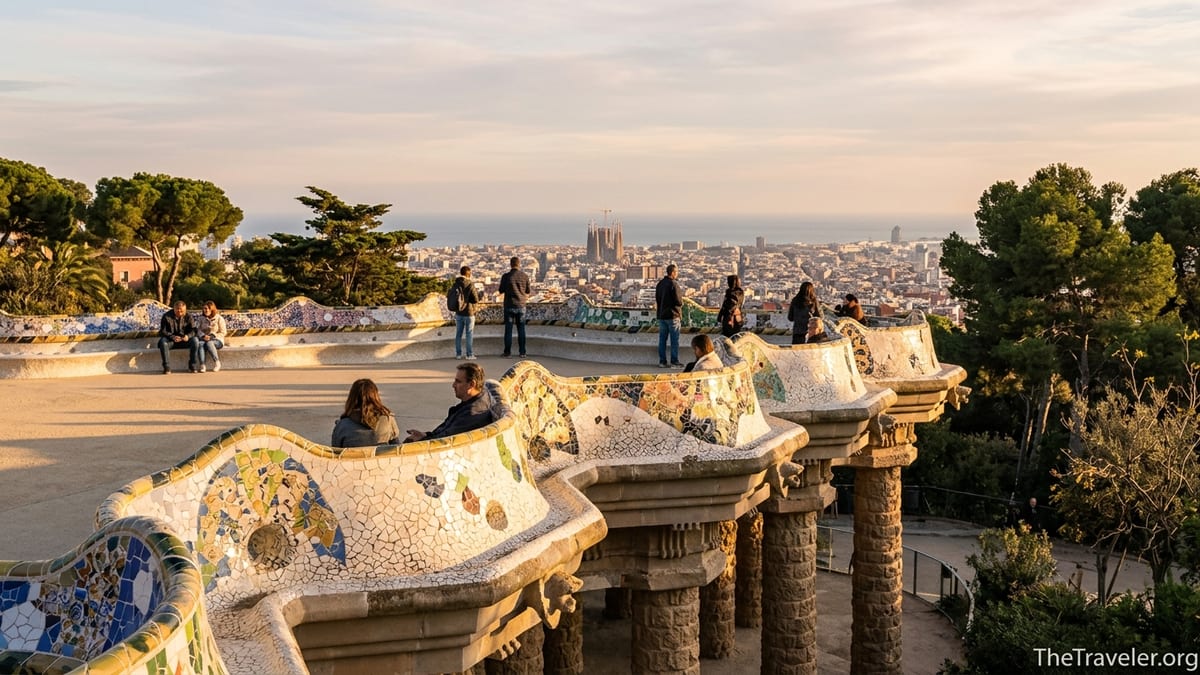
Park Güell began as an ambitious garden city designed by Antoni Gaudí and his patron Eusebi Güell in the early 1900s. Only a handful of houses were ever built, but the communal spaces they completed are now the core of what visitors come to see: the fairytale entrance pavilions, the sweeping Hypostyle Room with its forest of columns, the famous mosaic bench along the main terrace, and several stone viaducts and paths that weave up the hillside overlooking Barcelona.
In practical terms, today’s visitor experience is divided into two zones. The ticketed Monumental Zone covers the most iconic Gaudí creations, including the lizard (el drac), the mosaic plaza and bench, the entrance staircase, and the columned hall just above the gate. The surrounding hillside, with pine trees, viewpoints and walking paths, remains free to enter and feels more like a local neighborhood park.
For most first-time visitors, the Monumental Zone is what determines whether Park Güell feels “worth it.” This is where you get those classic postcard views and close-up encounters with Gaudí’s trencadís mosaics. If you skip the ticketed area and stay only in the free zone, you will still find pleasant views and greenery, but you will miss the features that make the park world-famous.
Expect Park Güell to feel like a managed heritage site rather than a casual city park. Timed tickets, capacity limits, security checks and controlled entry are all part of the experience, especially in spring and summer. This regulation helps protect the fragile architecture and, when crowds are managed well, it can make the visit more enjoyable.
Cost, Tickets and How Far Ahead You Need to Book
As of mid 2026, a standard adult ticket to the Monumental Zone of Park Güell booked directly on the official site costs around 18 euros. Children, seniors and some visitors with disabilities pay a reduced rate, and Barcelona residents can access the Monumental Zone for free with a city pass designed for locals. Babies and toddlers typically enter free, but they still require their own timed ticket, which you must reserve in advance.
Tickets are sold in timed entry slots and you must enter within a 30-minute window of the time printed on your ticket. For example, if you book 10:00, you can enter any time between 10:00 and 10:30. Once inside, you may stay until closing, but you cannot leave and re-enter on the same ticket. This matters if you are visiting with children or anyone who might need a break, as bathrooms and shade are concentrated in just a few areas.
From March through October and during Christmas and Easter holidays, prime time slots often sell out a few days in advance. Travelers who left it to the last minute during Christmas week, for instance, frequently reported that all official tickets were gone and only far more expensive third-party combos remained. If Park Güell is a priority, booking 3 to 7 days ahead for a late-morning or late-afternoon slot is a sensible buffer.
There is no longer a traditional ticket office for tourists at the park gates. You are expected to purchase online, either on the official site or via a reputable reseller, and show the QR code on your phone. If your card payment fails or you never receive a confirmation email, you may need to contact the operator’s support line, so avoid leaving ticket purchases to the hour before your intended visit.
What the Visit Feels Like on the Ground
A typical independent visit to Park Güell takes between 90 minutes and two hours. Most visitors spend about 30 minutes exploring the entrance staircase and its mosaics, 20 to 30 minutes wandering through the Hypostyle Room and up to the terrace, then another 30 minutes along the mosaic bench, viewpoints and shaded paths above the Monumental Zone. If you add the Gaudí House Museum, budget an additional 30 to 45 minutes.
Crowding is the main factor that will shape your impression. A 9:30 entry on a weekday in May might feel relatively relaxed: you can step back and wait to take photos at the lizard, and there is space to sit on the bench and enjoy the view over the Eixample grid and the Sagrada Família in the distance. A midday July slot, by contrast, often feels shoulder to shoulder in front of the dragon and along the terrace, with lines forming for photos and many people seeking limited shade.
Park Güell is built on a hillside, so be prepared for slopes, stairs and uneven stone paths. Travelers staying in the flat central districts like Eixample or El Born are often surprised by the final ascent from the nearest metro stops. Even if you take the metro to Vallcarca or Lesseps, the last 10 to 15 minutes involve significant uphill walking, sometimes on escalators but often on steep residential streets.
Most visitors who report feeling disappointed were either not expecting the climb, arrived at the hottest or most crowded time of day, or imagined a quiet garden and instead found a regulated tourist attraction. On the other hand, travelers who approached it as a major architectural site and planned their timing usually describe it as a highlight of their Barcelona trip.
Best Times to Go for Light, Heat and Crowds
In 2026, official tourist visiting hours for the Monumental Zone generally begin around 9:30 in the morning and last timed entries are about an hour before closing, which varies seasonally between roughly 5:30 and 7:30 in the evening. Before and after these hours, some time slots are reserved for residents and special passes, so tourists cannot rely on very early or very late free entry.
For photography and a more relaxed atmosphere, aim for the first time slot of the day or the last one before closing. In April and May, a 9:30 entry often gives soft light on the mosaics and cooler temperatures, while the terrace is not yet packed. In early autumn, a 6:30 or 7:00 entry can offer warm golden light over the city and an easier time taking photos at the bench and the dragon without heavy crowds behind you.
Midday in summer is the most punishing time: you will face harsh overhead sun reflecting off the pale stone and mosaic surfaces, temperatures that can climb above 30 degrees Celsius, and limited shade on the terrace. If you only have a midday slot, bring a hat, sunscreen and water, and consider spending more of your time in the shaded Hypostyle Room and tree-covered upper paths instead of lingering on the open terrace.
Weather also affects how rewarding the visit feels. On very hazy or rainy days, the famous panoramic view down to the Mediterranean and across to Montjuïc is less impressive. However, light rain can make the colors of the mosaics pop and reduce crowds as some visitors cancel. If you have a flexible schedule in Barcelona, try to pair Park Güell with a reasonably clear morning when visibility is good.
Getting There and Accessibility Considerations
Park Güell sits on the slopes of Carmel Hill in the Gràcia district, northeast of central Barcelona. The closest metro station commonly used by tourists is Alfons X on the yellow line (L4). From there, a dedicated shuttle bus often called Bus Güell runs up to a park entrance, and the shuttle ride is typically included with your Monumental Zone ticket. The ride takes about 15 minutes and saves you a steep uphill walk.
Alternative routes include taking the green line (L3) to Lesseps or Vallcarca and walking uphill for 15 to 20 minutes. Portions of these walks involve escalators and pedestrian ramps embedded in residential streets, but there are still stretches of steep pavement. Several city bus lines, such as the H6 or D40, stop within a 10 to 15-minute walk of the park, but they do not eliminate the final climb.
Inside the park, a designated reduced-mobility itinerary connects one of the main entrances to some viewpoints with gentler gradients and ramps, but many iconic spots such as the staircase with the lizard still require negotiating steps. Wheelchair users and travelers with significant mobility issues often find it challenging to reach every viewpoint, especially in peak hours when crowds funnel through narrow passages.
If accessibility is a major concern, consider whether your group would enjoy seeing Gaudí’s work in more accessible settings such as Casa Batlló or Casa Milà (La Pedrera), both of which have elevators, audio guides and relatively flat routes. Park Güell can still be rewarding with careful planning, but it demands more physical effort than most central-city attractions.
Park Güell vs Other Gaudí Highlights: Where to Spend Limited Time
Many travelers only have one or two days in Barcelona and must choose between Park Güell and other icons like the Sagrada Família, Casa Batlló and Casa Milà. In terms of pure impact, the Sagrada Família usually offers the most powerful experience: its interior, stained glass and soaring columns are unlike any other church in Europe, and most visitors describe it as unforgettable.
Park Güell is more about open-air design, playful architecture and city views. If you love parks, urban viewpoints and strolling outdoors, it may even surpass some of the house museums for you. By contrast, Casa Batlló and Casa Milà focus on domestic architecture and interior design. They are easier to slot into a central-day itinerary, as both sit on Passeig de Gràcia, a short walk from Plaça de Catalunya and many hotels.
With only one Gaudí site in your schedule, most travelers are best served by choosing Sagrada Família, then adding Park Güell if they have at least one full additional day. If you have more time and a mid-range or higher budget, a Gaudí trio of Sagrada Família, Park Güell and either Casa Batlló or Casa Milà gives a balanced picture of his work: sacred architecture, landscape design and domestic innovation.
Think also about your travel style. A family with young children might appreciate the open spaces and freedom to move at Park Güell more than a long, guided visit through an indoor museum. A design enthusiast, on the other hand, may prefer the sophisticated interior details and multimedia exhibits at Casa Batlló, even if that means skipping the park.
Who Will Find Park Güell “Worth It” (and Who Might Not)
Park Güell tends to be most rewarding for travelers who are specifically interested in architecture, urban design or Gaudí’s work, and for those who value viewpoints and outdoor time. If you have spent months dreaming of seeing Gaudí’s mosaics in person, or if aerial views over cities are always a highlight for you, the time and ticket cost are usually easy to justify.
Budget travelers need to weigh the 18 euro ticket against other experiences. A backpacker staying three nights in Barcelona might find that the combined cost of Park Güell and another Gaudí site equals a full day’s budget. In such cases, some choose to explore the free parts of the park and enjoy views from nearby public viewpoints like the Bunkers del Carmel, then invest their paid ticket in the Sagrada Família alone.
Travelers with limited mobility or who struggle with heat may not find Park Güell worth the effort, especially in July and August. The combination of uphill approaches, steps within the Monumental Zone, and strong sun can be draining. For them, an air-conditioned visit to Casa Milà’s interior followed by a rooftop view might deliver more enjoyment with less strain.
If your Barcelona stay is extremely short, such as a single full day sandwiched between travel days, you may prefer to focus on one neighborhood and its key sights rather than crossing town to the park. A compact day that includes a morning at Sagrada Família, lunch in Eixample and an afternoon around the Gothic Quarter and waterfront often feels more satisfying than rushing to fit Park Güell into a few spare hours.
The Gaudí House Museum and Other Add-ons
Inside the boundaries of Park Güell sits the Gaudí House Museum, the former residence of Antoni Gaudí during part of his life. Entry to this house is not included in the standard Park Güell ticket. You can either purchase a combined ticket that covers both the Monumental Zone and the museum, or buy a separate timed ticket just for the house.
The Gaudí House Museum is relatively small and focuses on furniture, personal objects and some models related to his projects. Visitors interested in the intimate details of his life and design process tend to appreciate it, while casual tourists sometimes find it less essential compared with the more immersive experiences at Casa Batlló or Casa Milà, which were designed from the start as grand residential showcases.
Because visiting the house requires a separate time slot, coordination matters. If you book Park Güell for 10:00 and the house for 11:30, for example, you will want to ensure you leave enough buffer to walk from the main terrace area to the museum entrance without rushing. The paths are not long, but crowds and photo stops can easily add 15 to 20 minutes.
Guided tours are another optional add-on. Small-group tours booked through established operators may include priority access and a guide who explains symbolism hidden in the mosaics and structures. These can be worthwhile for travelers deeply interested in context, but they extend the visit length and raise the effective cost. Independent travelers with a solid guidebook or audio guide on their phone often feel they gain enough understanding without a formal tour.
The Takeaway
So, is Park Güell worth visiting for your Barcelona itinerary? For many travelers, the answer is yes, provided you go in with clear expectations and a bit of planning. If you appreciate architecture, enjoy walking outdoors, and are willing to pay around 18 euros and invest two to three hours including transport, Park Güell delivers a unique combination of Gaudí’s creativity and sweeping views over Barcelona that you won’t replicate elsewhere.
On the other hand, if your time is extremely limited, your budget very tight, or you have significant mobility or heat-sensitivity concerns, you may decide that your resources are better focused on central, easier-to-reach Gaudí sites like the Sagrada Família and Casa Milà. You can still enjoy some of Park Güell’s atmosphere in the free areas or via distant viewpoints without committing to a full visit.
Ultimately, Park Güell is best seen as one distinctive chapter in the broader Gaudí story rather than the single must-see of Barcelona. Fit it into your itinerary at a time of day and season that work for you, plan your route up the hill, and you are more likely to leave with the sense that it was not only worth it, but one of the most memorable moments of your stay.
FAQ
Q1. Do I need to buy Park Güell tickets in advance?
In busy months and holiday periods, it is strongly recommended. Timed slots, especially mid-morning and late afternoon, often sell out several days ahead on the official platform, and buying in advance avoids having to use more expensive last-minute resellers.
Q2. Can I visit Park Güell for free?
You can walk through the non-monumental areas of Park Güell for free, but the famous parts with the mosaics, lizard and main terrace are inside the Monumental Zone, which requires a paid timed ticket for tourists.
Q3. How long should I plan for a visit?
Most visitors spend about 90 minutes inside the Monumental Zone and up to two hours if they take more photos or explore additional paths. When you add metro or bus travel and the uphill walk, it is wise to set aside half a day in your schedule.
Q4. What is the best time of day to visit Park Güell?
Early morning and the last slots before closing are generally best for softer light, lower temperatures and thinner crowds. Midday, particularly in summer, tends to be hottest and busiest, which can make the experience feel more rushed and tiring.
Q5. Is Park Güell suitable for visitors with limited mobility?
There is a reduced-mobility route and some ramps, but the park as a whole is hilly with many steps and uneven paths. Visitors who use wheelchairs or have difficulty with slopes may find it challenging to reach some viewpoints and iconic spots.
Q6. Is the Gaudí House Museum inside Park Güell worth adding?
The Gaudí House Museum appeals most to travelers interested in Gaudí’s personal life and original furniture designs. It is a compact visit and requires a separate ticket or combo, so it is worthwhile if you are keen on deeper context, but not essential for everyone.
Q7. Can I bring food and drink into Park Güell?
You can usually bring water and light snacks, and many people carry a reusable bottle, especially in summer. However, picnicking directly on the mosaic structures is not allowed, and you are expected to dispose of rubbish in designated bins to protect the site.
Q8. Are guided tours of Park Güell worth paying extra for?
Guided tours can add valuable background on Gaudí’s symbolism and the park’s history, which many travelers enjoy. That said, independent visitors with a good audio guide or detailed guidebook often feel they understand enough without paying for a formal tour.
Q9. What should I wear for a visit to Park Güell?
Comfortable walking shoes are important because of slopes and uneven paths, and in warm months a hat, sunglasses and sunscreen make a big difference. Layered clothing helps in cooler seasons, as the hilltop can feel breezier than the city center.
Q10. Is Park Güell a good choice for families with children?
Yes, many families enjoy Park Güell because children can move around more freely than in a traditional museum and often love the whimsical shapes and colors. Just be prepared for crowds, supervise near railings and steps, and plan water and snack breaks, especially in hot weather.