


More news on this day
More than 10,000 flight delays and at least 2,300 cancellations across Asia are disrupting summer travel this weekend, as powerful Typhoon Noul and cascading operational problems ripple through some of the region’s busiest air corridors.
Get the latest news straight to your inbox!
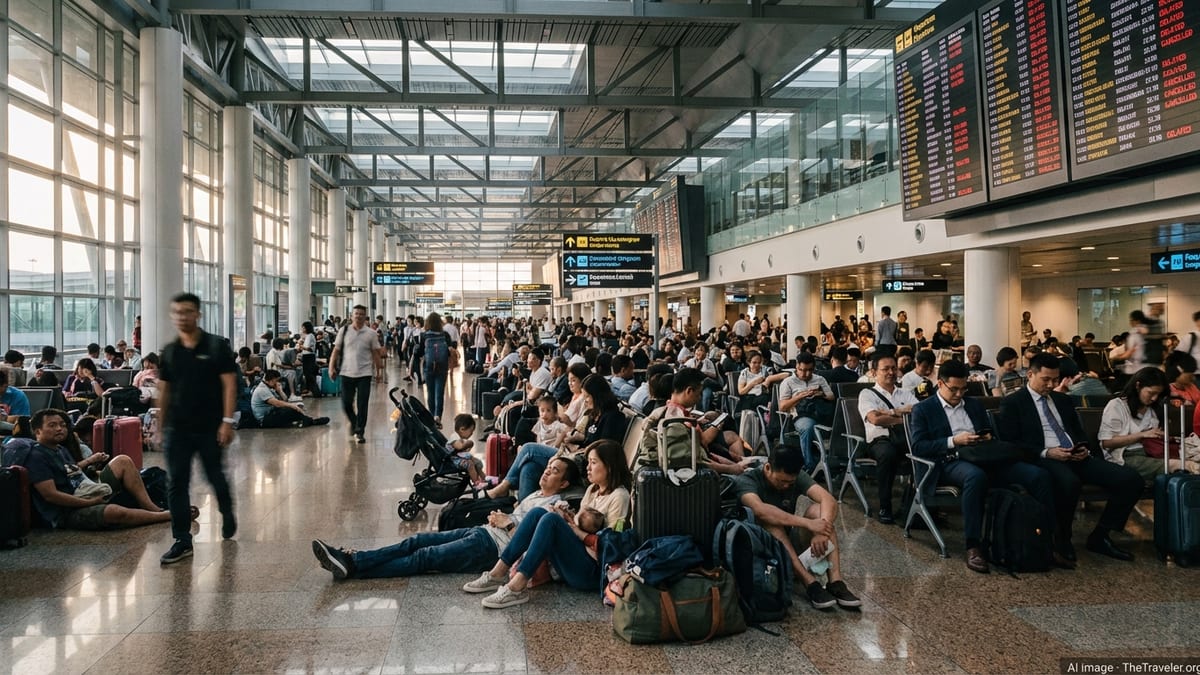
Typhoon Noul Slams Key Asian Hubs
Publicly available flight-tracking data and regional aviation reports indicate that airports in southern China, Hong Kong, Taiwan and parts of Southeast Asia are bearing the brunt of the disruption linked to Typhoon Noul. The storm is tracking between Hong Kong and Guangdong’s Lufeng area, bringing strong winds, heavy rain and low visibility conditions that complicate take-offs and landings.
According to published coverage, Hong Kong International Airport began feeling the impact on July 25, with dozens of cancellations and more than 200 delays recorded within hours as airlines pre-emptively thinned schedules. Similar patterns are emerging at major Chinese coastal hubs and at regional gateways such as Taipei, Guangzhou and Shenzhen, where congestion quickly converts weather-related schedule changes into wider knock-on delays.
Regional carriers with dense short-haul networks are particularly exposed when storms like Noul move along heavily trafficked routes. Airlines serving multiple daily frequencies between China, Hong Kong, Taiwan and Southeast Asia are finding it difficult to recover aircraft rotations once early-morning services are cancelled or heavily delayed, contributing to the fast-rising tally of more than 10,000 delayed flights and thousands of cancellations across Asia.
Hong Kong At the Center of a Widening Disruption
Hong Kong International Airport is emerging as one of the central pressure points as Noul’s outer rainbands sweep across the Pearl River Delta. Public information from the airport’s media centre shows that on July 25 alone, scores of departures and arrivals were either cancelled or delayed, even before the city’s typhoon warning signals were expected to escalate.
Flag carrier Cathay Pacific has announced the suspension of most passenger flights scheduled to arrive or depart between the early hours and late afternoon of July 26, effectively wiping out a full day’s worth of operations on many regional routes. Budget affiliate HK Express has also adjusted its timetable through the weekend, while foreign airlines are trimming Hong Kong frequencies or turning flights back to origin points to avoid aircraft and crew being stranded.
Travel-industry briefings describe lengthy queues at check-in counters and rebooking desks as carriers consolidate passengers onto the remaining services. With aircraft and crew out of position, even flights not directly in Noul’s projected path are encountering long delays. That secondary impact is one of the main reasons the number of affected flights has climbed into the tens of thousands when measured across the Asian network.
Ripple Effects From China to Southeast Asia and the Gulf
Aviation analysts note that Asia’s air traffic network is highly interconnected, with Chinese and Hong Kong hubs acting as both origin points and through-hubs for travel to South Asia, the Middle East and Europe. Once those nodes slow down because of a typhoon, terminals as far away as Singapore, Bangkok, Kuala Lumpur and Dubai feel the strain in the form of delayed arrivals, missed connections and late-night rescheduling.
Reports from regional media highlight delays in Singapore and Kuala Lumpur on flights inbound from Hong Kong and southern China, with schedule changes filtering into airline reservation systems throughout July 25 and 26. Some Middle Eastern and European carriers operating via Asian hubs are facing additional complications as they attempt to reroute aircraft around evolving security concerns in Gulf airspace, tightening the margin for recovery when weather events occur farther east.
Travel data circulated by industry trackers suggests that, when aggregated, these cascading disruptions have already pushed the total beyond 10,000 delayed flights and roughly 2,300 outright cancellations across Asia in recent days. While many of these flights operate within Asia, a significant share are long-haul services linking the region to North America and Europe, multiplying the number of passengers affected.
Airlines Adjust Schedules and Waive Fees
In response to the worsening conditions, multiple Asian carriers are publicly outlining contingency plans and flexible booking policies. Cathay Pacific, HK Express, Thai Airways and Vietnam’s VietJet are among the airlines that have published travel alerts, encouraging passengers to check flight status before leaving for the airport and offering free date changes or rerouting on selected itineraries affected by Noul.
Published airline notices indicate that some flights are being proactively retimed to operate during forecast weather windows, while others are being consolidated to optimize aircraft use once conditions improve. Low-cost carriers are attempting to protect peak-demand services on trunk routes while trimming less critical frequencies, especially during the anticipated peak of Noul’s impact over the weekend.
Where flights must be cancelled entirely, airlines are generally allowing passengers to rebook without change fees or to request refunds, according to publicly available advisories. However, travelers may still face additional out-of-pocket expenses for accommodation and meals if they are unable to secure same-day alternatives, particularly at already busy transit hubs.
What Travelers Can Expect in the Coming Days
Meteorological projections show Typhoon Noul continuing to influence weather patterns across southern China and the northern South China Sea over the next 24 to 48 hours, suggesting that operational turbulence for airlines is likely to extend beyond the initial weekend peak. Even after the storm weakens and moves inland, aircraft and crews will need time to return to normal rotations, meaning elevated delays may persist into early next week.
Travel-industry observers recommend that passengers transiting through affected hubs build in extra connection time and prepare for last-minute gate changes or rerouting. With ground-handling teams operating in challenging conditions and security queues lengthening during disruption peaks, arriving at the airport earlier than usual can reduce the risk of missed flights when services do depart on schedule.
For now, publicly accessible flight data and media reporting indicate that Asia’s aviation system remains under significant strain. As airlines work to stabilize operations and airports clear backlogs, the final tally of delays and cancellations linked to Typhoon Noul and related network pressures is expected to climb further, making this one of the most disruptive weather-related air travel episodes in the region so far this year.