


More news on this day
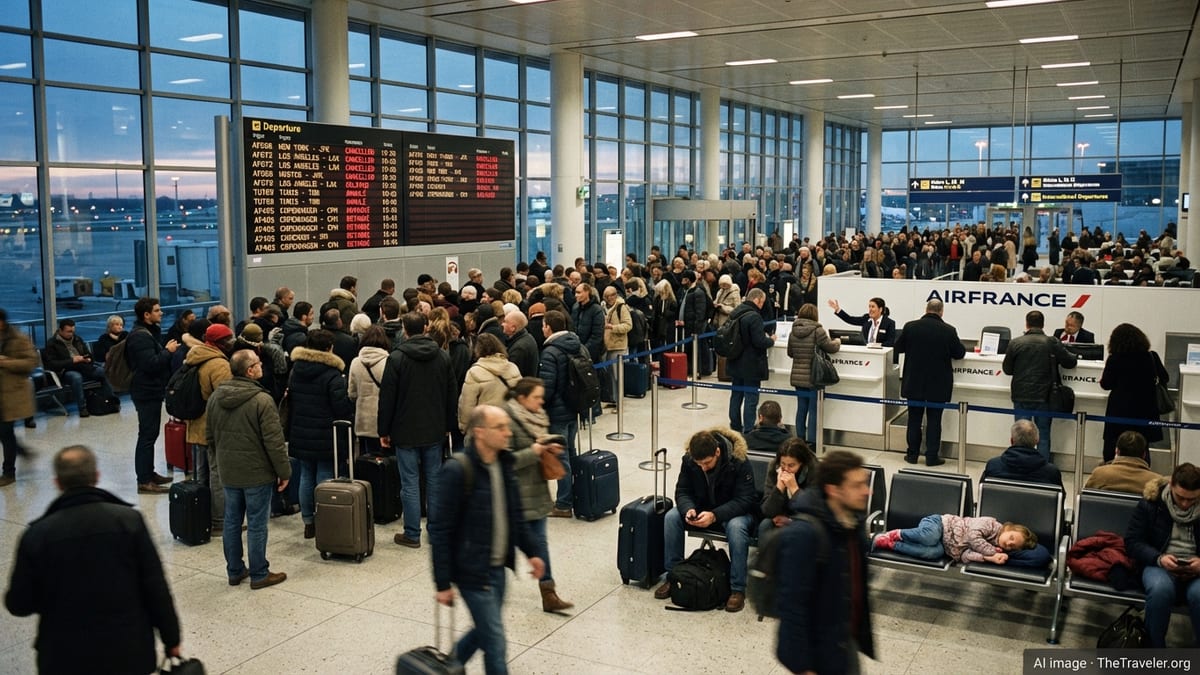
Travelers across France are facing a fresh wave of flight disruption, with publicly available tracking data showing 379 delays and nine cancellations affecting services operated by Air France, easyJet, Ryanair, Transavia and Volotea at major airports including Paris, Marseille, Nice, Toulouse and Lyon.
Get the latest news straight to your inbox!
Delays Mount at France’s Busiest Hubs
The latest disruption is concentrated at France’s busiest hubs, with Paris Charles de Gaulle and Paris Orly experiencing a high volume of late departures and arrivals. Data compiled from real time flight tracking platforms on June 9 and June 10 indicates that the majority of the 379 affected services are operating with extended delays rather than being fully cancelled, creating rolling knock on effects throughout the day.
Regional airports are also under pressure. Operations at Marseille Provence, Nice Côte d’Azur, Lyon Saint Exupéry and Toulouse Blagnac have all recorded clusters of delayed flights involving the five carriers, particularly on short haul European and domestic routes. Travelers on early morning and late evening departures appear to be the most exposed, as late arriving aircraft struggle to return to schedule.
Published coverage highlights that the disruption has hit both point to point low cost routes and core hub connections, affecting passengers traveling for business, leisure and onward long haul connections. While the number of outright cancellations remains limited compared with the scale of delays, even a small proportion of scrapped flights has left some travelers needing to rebook at short notice.
Air France and Low Cost Carriers Share the Strain
The disruption is spread across France’s flag carrier and several of Europe’s largest low cost airlines. Air France services linking Paris with cities such as Nice, Marseille, Toulouse and Lyon have seen persistent delays, according to publicly available schedules and tracker data. These routes are vital feeders for long haul connections and high frequency domestic travel, amplifying the impact when turnarounds slip.
EasyJet and Ryanair, which operate dense networks from French bases to the United Kingdom and other European countries, are also experiencing notable schedule pressures. Reports indicate that late running aircraft and constrained turnaround windows have contributed to bunching of departures at peak times, particularly at Paris, Nice and Marseille.
Transavia and Volotea, both active on French domestic and regional leisure routes, round out the list of affected operators. Their services connect secondary and regional airports to major hubs and holiday destinations, meaning that delays can quickly ripple into missed rail links, hotel arrivals and cruise embarkations for travelers nearing the start or end of their trips.
Wider Transport Pressures Add to Passenger Challenges
The latest flight disruption arrives amid a period of broader transport strain in France. Recent coverage of national rail and commuter train walkouts has highlighted significant timetable cuts and crowding on key intercity and suburban routes. Travelers attempting to switch from air to rail, or to rely on trains as a backup plan when flights are delayed, have therefore faced additional uncertainty.
In the Paris region, information from regional transport operators shows reduced frequencies and partial cancellations on several RER and Transilien lines due to industrial action and staffing constraints. This has complicated airport access for passengers flying from Charles de Gaulle and Orly, especially those with tight check in or security windows after earlier disruptions to their journeys.
Across the wider network, long distance services including TGV high speed trains and Intercités connections have also been subject to timetable adjustments on selected days. These overlapping pressures on both air and rail infrastructure have heightened the risk of missed connections and have reduced the flexibility usually available to travelers trying to re route at short notice.
Impact on Passengers and Practical Advice
The human impact of the delays and cancellations is being felt most acutely by travelers with tight itineraries or complex journeys involving multiple modes of transport. Missed onward flights, lost hotel nights and rearranged meetings are among the immediate consequences being reported by affected passengers across France and beyond.
Publicly available guidance from consumer groups and aviation watchdogs stresses the importance of monitoring flight status through airline apps and airport information screens, particularly on days when disruption appears widespread. Travelers are encouraged to arrive earlier than usual at airports in Paris, Marseille, Nice, Toulouse and Lyon, allowing extra time for congestion at check in, security and boarding.
Passengers whose flights are cancelled or significantly delayed may have rights to rerouting, care and in some cases financial compensation under European air passenger regulations, depending on the exact cause of the disruption and the length of the delay. Travelers are advised to retain boarding passes, receipts for meals and accommodation, and any written notifications from airlines to support later claims.
Outlook for the Coming Days
While the current figures of 379 delays and nine cancellations reflect a snapshot in time, the pattern of operational strain suggests that travelers in and out of French airports may continue to face uneven conditions in the short term. Weather variations, air traffic flow restrictions and ongoing staffing or industrial issues can all combine to prolong recovery from a heavy day of disruption.
Analysts following European aviation trends note that French airports have been among the most affected in recent seasons when air traffic control restrictions or strikes occur, with Marseille, Lyon and Paris among the facilities that have previously recorded high proportions of delayed flights. This background context increases sensitivity to any fresh operational challenges during the busy late spring and summer travel period.
For now, the clearest guidance for passengers remains to build flexibility into travel plans, avoid last minute airport arrivals, and consider alternative routings where possible. Those planning trips via Paris, Marseille, Nice, Toulouse or Lyon in the coming days are urged to keep a close eye on airline communications and real time trackers, as the situation can evolve rapidly from one rotation of flights to the next.