


More news on this day
Travelers at San Diego International Airport faced mounting disruptions today as data showed 51 flights delayed and four canceled, affecting major U.S. airlines across busy domestic and international routes to and from Southern California.
Get the latest news straight to your inbox!
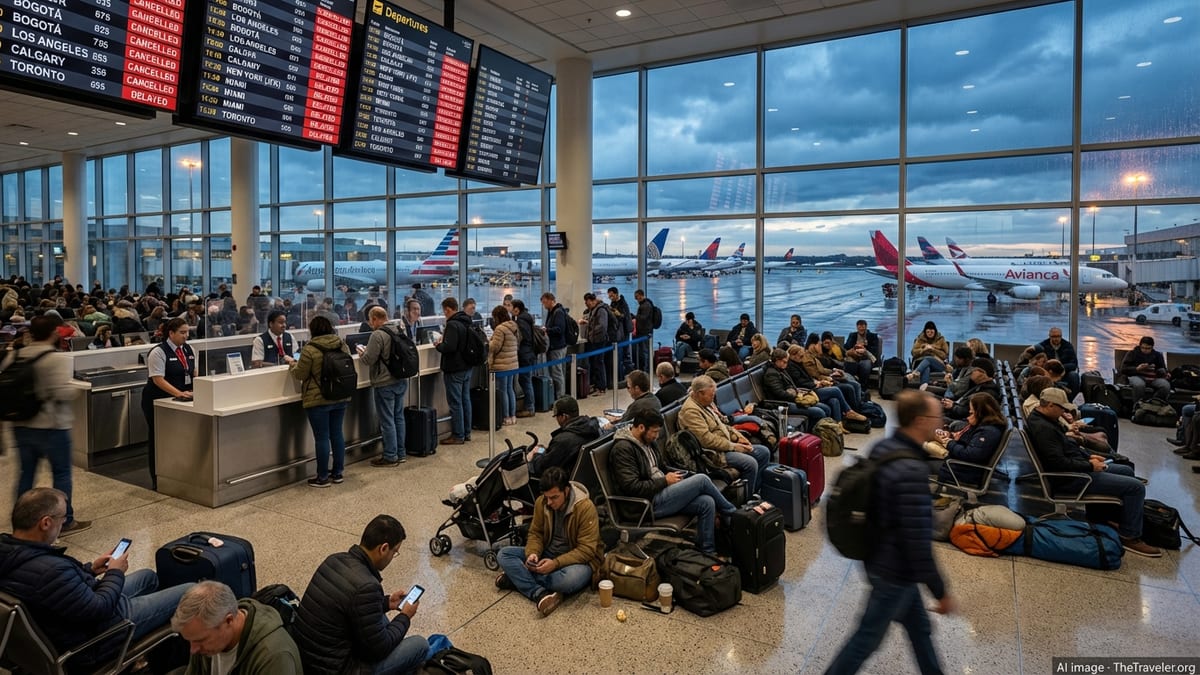
Wave of Delays Snarls Departures and Arrivals
Flight-tracking and airport data for Thursday, May 28 indicate a broad pattern of disruption at San Diego International Airport, with 51 flights recorded as delayed and four listed as canceled across the day’s schedule. The interruptions touch both departures and arrivals, creating knock-on effects for connecting passengers and aircraft utilization across airline networks.
The delays include a mix of short, rolling schedule slippages and longer ground holds, with a significant share of affected flights operating during peak late-morning and afternoon travel windows. Industry definitions generally classify a flight as delayed when it departs at least 15 minutes after its scheduled time, a threshold surpassed by many of today’s impacted services.
While operations at the airport are continuing, the number of off-schedule flights is high enough to create visible congestion at gates and check-in areas. Passengers are encountering longer lines at security and rebooking counters, and a higher volume of standby and missed connections as disrupted flights ripple through the day’s timetable.
Publicly available operational data for San Diego International Airport also show that the facility handles hundreds of daily movements, so an elevated cluster of delays can quickly affect both inbound and outbound legs, particularly for aircraft that turn around rapidly on short-haul routes.
Major U.S. Carriers Among Those Affected
The disruption is impacting many of the airport’s largest operators, including Southwest Airlines, Alaska Airlines, United Airlines and American Airlines. Flight-status information shows these carriers accounting for a substantial share of the day’s delayed movements, reflecting San Diego’s role as a key West Coast station within their networks.
Southwest, which operates a dense schedule of short-haul flights linking San Diego with other California and Western U.S. cities, appears prominently in today’s delay logs. Disruptions to short sectors are particularly prone to snowball, as any late arrival can push the same aircraft behind schedule on multiple subsequent legs.
Alaska Airlines services have also experienced delays from San Diego on recent days, with recent flight-status records citing late inbound aircraft and air-traffic-related ground stops among the contributing factors. Similar patterns are evident for United and American, whose mainline and codeshare flights connect San Diego with major hubs such as Denver, Chicago, Dallas, Phoenix, and other national and international gateways.
Smaller and foreign carriers are not immune. Published data on San Diego’s route map indicate that the airport maintains nonstop links to nearly a dozen international destinations, including cities in Mexico, Canada and Europe, meaning today’s disruptions have the potential to affect cross-border itineraries and onward long-haul connections.
Operational and Weather Factors Behind the Disruptions
While precise causes vary by flight, the pattern at San Diego today appears consistent with a blend of air-traffic management constraints, residual weather impacts across parts of the western United States and the ongoing sensitivity of tightly scheduled networks. Some recent flights into and out of San Diego have recorded delays linked to ground stops and traffic control measures, underscoring the role of the broader National Airspace System in local disruptions.
At various points in recent months, publicly accessible airport and media reports have documented periods in which high winds, rain and low clouds around San Diego contributed to reduced arrival and departure rates. When those conditions coincide with busy periods or staffing constraints in regional control centers, airlines can be instructed to slow their operations, leading to departure holds and extended taxi or gate times.
San Diego International Airport’s configuration also plays a role in how quickly irregular operations can escalate. The airport operates primarily with a single main runway and a constrained airfield layout close to downtown, which can limit flexibility when traffic backs up. Planning documents for the airport’s modernization projects explicitly highlight taxiway improvements and terminal redevelopment as tools intended to help reduce congestion-related delays in the years ahead.
Once delays begin to accumulate, carriers can face difficult choices in balancing their networks. Four cancellations recorded today at San Diego appear to be part of wider schedule adjustments, with airlines sometimes opting to consolidate lightly booked or heavily delayed flights to reposition aircraft and crews where they are most needed.
Impact on Domestic and International Connections
The disruption is being felt most sharply by travelers with time-sensitive connections through major domestic hubs and international gateways. San Diego’s nonstop flights link the city to key nodes such as Los Angeles, San Francisco, Denver, Phoenix, Dallas, Chicago and New York, which in turn feed extensive transcontinental and overseas networks.
According to published route and schedule information, San Diego International Airport supports nonstop services to nearly 90 destinations, including popular international cities in Mexico, Canada and Europe. When departures on these routes are delayed by even modest margins, passengers risk missing subsequent long-haul departures whose schedules are less flexible and often operate once daily.
Disruptions to short flights between San Diego and Los Angeles can be particularly consequential, as these links often serve as connectors into long-haul international departures at Los Angeles International Airport. A late departure or cancellation on the short San Diego to Los Angeles sector can sever a passenger’s entire onward itinerary, requiring complex rebooking across multiple carriers or alliance partners.
The knock-on effects of today’s delays are likely to continue into the evening, as aircraft and crews arrive late into their overnight stations. When aircraft are unable to return to their intended bases, early-morning departures on the following day can also be at risk, especially on routes with limited backup capacity or tight aircraft rotations.
Advice for Affected Travelers
Air travel analysts frequently note that days with elevated delays and cancellations highlight the importance of real-time information and flexible planning. For those flying in or out of San Diego today, carrier websites, mobile apps and airport information displays remain the primary tools to confirm whether a specific flight is operating on time, delayed or canceled.
Publicly available guidance from airlines emphasizes the value of enrolling in flight-alert services and enabling notifications, since carriers typically push schedule changes directly to passengers through text messages, email or app alerts. When delays exceed certain thresholds, many airlines also begin to offer standardized rebooking options online, which can reduce the need to wait in physical lines at customer service counters.
Travelers connecting through Los Angeles or other hubs on international itineraries face particular risk when originating in San Diego on a disrupted day. Industry guidance suggests that passengers in this situation check whether same-day alternatives via other hubs are available and consider speaking with airline representatives about rerouting options that preserve long-haul segments, such as rebooking through Phoenix, Dallas, Denver or San Francisco when capacity allows.
As San Diego International Airport continues to experience intermittent waves of congestion and delay, today’s disruptions illustrate how quickly local operational challenges can spread across national and international networks, reminding travelers of the need to build extra time into itineraries and to stay closely informed as conditions evolve.