


More news on this day
Canada’s already strained aviation network faced another wave of disruption today, as data from flight-tracking and industry reports showed 84 cancellations and 604 delays across major hubs and regional airports, snarling travel plans from Edmonton and Toronto to Vancouver, Calgary and Sept-Îles.
Get the latest news straight to your inbox!
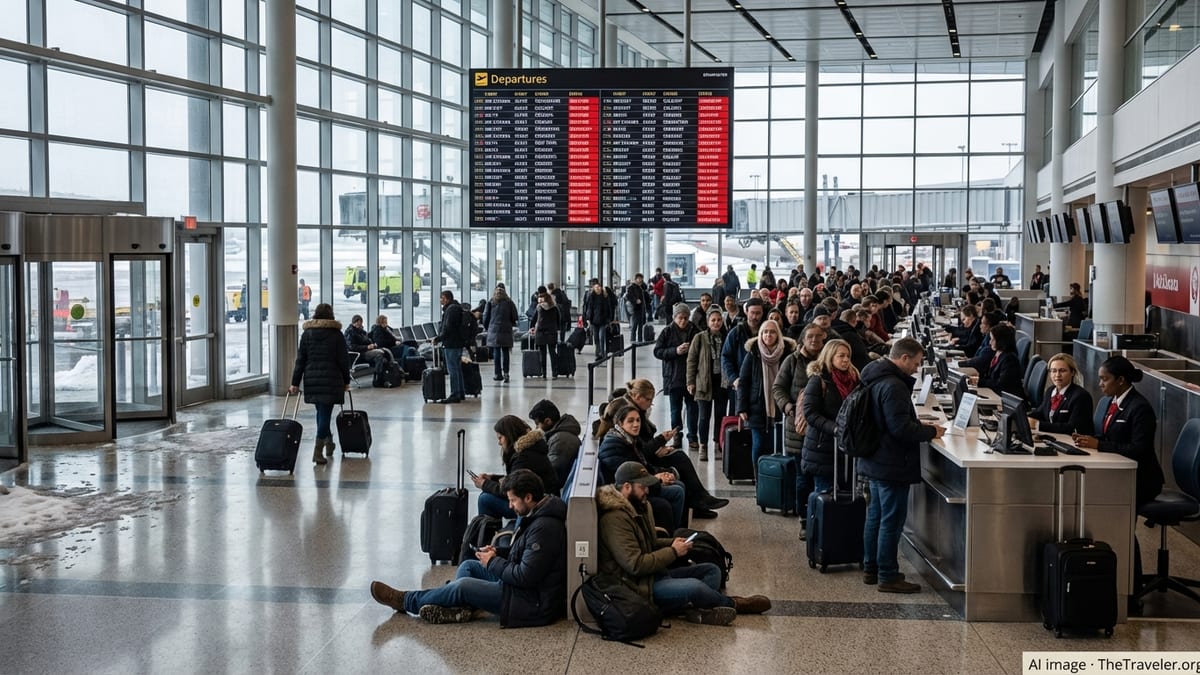
Nationwide Disruptions Hit Major Hubs and Remote Communities
The latest figures highlight how fragile Canada’s air travel system remains during periods of operational stress. Large hubs such as Toronto Pearson, Vancouver International and Calgary International saw a heavy concentration of delayed departures and arrivals, while Edmonton International and other mid-sized airports also recorded significant hold-ups and cancellations.
Beyond the country’s biggest gateways, disruption rippled into more remote communities. Sept-Îles and smaller northern and Atlantic airports reported aircraft held out of position as delays cascaded through airline networks. When turnaround times lengthen at major hubs, regional sectors are often the first to be trimmed or cancelled, leaving smaller communities with few or no same-day alternatives.
The imbalance is particularly acute on routes where only one or two carriers operate. When a single Jazz or Air Inuit service is cancelled on a remote trunk, local passengers can find themselves stranded for 24 hours or more, especially where aircraft and crews cannot be quickly redeployed.
Today’s totals of 84 flight cancellations and 604 delays add to a series of recent disruption spikes in Canada, including weather-related waves earlier this month and repeated high-impact days that have tested both airline recovery plans and airport capacity.
Air Canada, WestJet and Regional Partners Under Strain
The latest disruption has hit a broad mix of operators, from full-service airlines to regional and northern carriers. Publicly available tracking data and industry coverage indicate that Air Canada and its regional partner Jazz bore a substantial share of the delays at the country’s largest hubs, where aircraft cycles are dense and turnaround windows are tight.
WestJet also faced widespread schedule pressure, particularly on domestic transcontinental and Western Canada routes that rely on precise connection times. When flights out of Calgary or Vancouver depart late, downstream services into smaller Alberta and British Columbia markets often incur further delays as aircraft arrive and turn later than planned.
Regional and northern operators, including Inuit- and Indigenous-serving airlines such as Air Inuit and Air Borealis, experienced knock-on impacts as they depend heavily on feed from larger carriers. When mainline flights into gateway cities are disrupted, passengers miss onward regional connections, and the resulting rebooking demand can quickly exceed available capacity on thinly served routes.
The pattern echoes previous disruption episodes in recent months, when national and regional carriers were simultaneously affected by storms, staffing imbalances and tight fleet utilization. While today’s event is smaller in scale than the most severe national disruption days reported this year, it continues a trend of frequent, network-wide schedule volatility.
Weather, Congestion and Network Complexity Drive Delays
The precise mix of causes behind today’s 84 cancellations and 604 delays varies by airport and airline, but recent operational data across Canada point to familiar drivers. Periodic bouts of severe weather, particularly thunderstorms and low visibility in busy airspace near Toronto and Montreal, have repeatedly slowed departures and arrivals, creating backlogs that can take hours to unwind.
Once aircraft and crews slip out of their planned rotations, the complexity of Canada’s east west network often magnifies the effect. A late morning departure from Toronto or Vancouver can force adjustments across multiple subsequent legs, eventually resulting in cancellations where aircraft cannot make legal duty windows or scheduled maintenance slots.
Air traffic control flow restrictions and congestion at key hubs compound the challenge. When runway capacity is reduced or ground movements are slowed, airlines must prioritize certain flights over others. Regional feeders and late-evening departures are often chosen for cancellation so that carriers can preserve long-haul or high-demand trunk services.
Industry analysts note that high aircraft utilization, lean staffing and tightly timed connections leave limited margin to absorb even short-lived disruptions. The result is that relatively small triggers such as a band of storms or a brief ground hold can generate the kind of system-wide pattern seen again today across Canadian airports.
Impact on Passengers and Their Rights
The latest wave of delays and cancellations has once again drawn attention to passenger rights under Canada’s Air Passenger Protection Regulations. The rules set out minimum standards for rebooking, refunds, care and, in some cases, compensation when flights are disrupted, although entitlements depend on the cause and duration of the delay and the size of the carrier.
Under the framework, travellers whose flights are significantly delayed or cancelled for reasons within an airline’s control may be eligible for meals, accommodation, ground transportation and financial compensation, particularly when delays extend beyond three hours or require an overnight stay. When disruptions result from severe weather or air traffic control constraints, airlines are usually required to provide rebooking and basic assistance but not monetary compensation.
Consumer advocates regularly urge passengers to document their experiences, keep boarding passes and receipts, and make formal claims directly with airlines if they believe they qualify for support. Independent claim services have reported spikes in Canadian cases following major disruption days, reflecting the difficulty many travellers face in interpreting the rules and navigating airline processes.
For those currently affected, travel experts emphasize checking flight status frequently, considering alternative routings or nearby airports, and monitoring airline notifications for gate changes and rebooking offers. Given the scale of today’s delays, re-accommodation options may be limited on some routes, particularly to and from smaller communities served by a single daily flight.
Outlook for Canada’s Summer Travel Season
The scale and frequency of disruption events in 2026 are raising concerns about the resilience of Canada’s aviation network heading into the peak summer travel period. Airlines have expanded schedules to capture strong leisure demand, while ongoing aircraft delivery delays and tight labour markets limit the available buffer in fleet and crew resources.
Airport operators and carriers are working within a system that remains highly interconnected, with Toronto, Montreal, Vancouver and Calgary acting as pivotal hubs for domestic, transborder and international traffic. When those hubs operate smoothly, passengers in smaller cities such as Edmonton, Quebec City or Sept-Îles see frequent and reliable service. When they do not, disruptions can swiftly spread nationwide.
Industry observers expect that further weather-related events and episodic congestion days are likely through the remainder of the season. Many advise travellers to build additional connection time into itineraries, avoid the latest departures of the day where possible and pay close attention to airline communications in the 24 hours before departure.
While today’s count of 84 cancellations and 604 delays does not match the most extreme disruption days seen in Canada this year, it underscores an ongoing reality for travellers. Even routine journeys between major cities now carry a heightened risk of significant delay, and trips involving remote or regional airports can be particularly vulnerable when irregular operations ripple through the national network.