


More news on this day
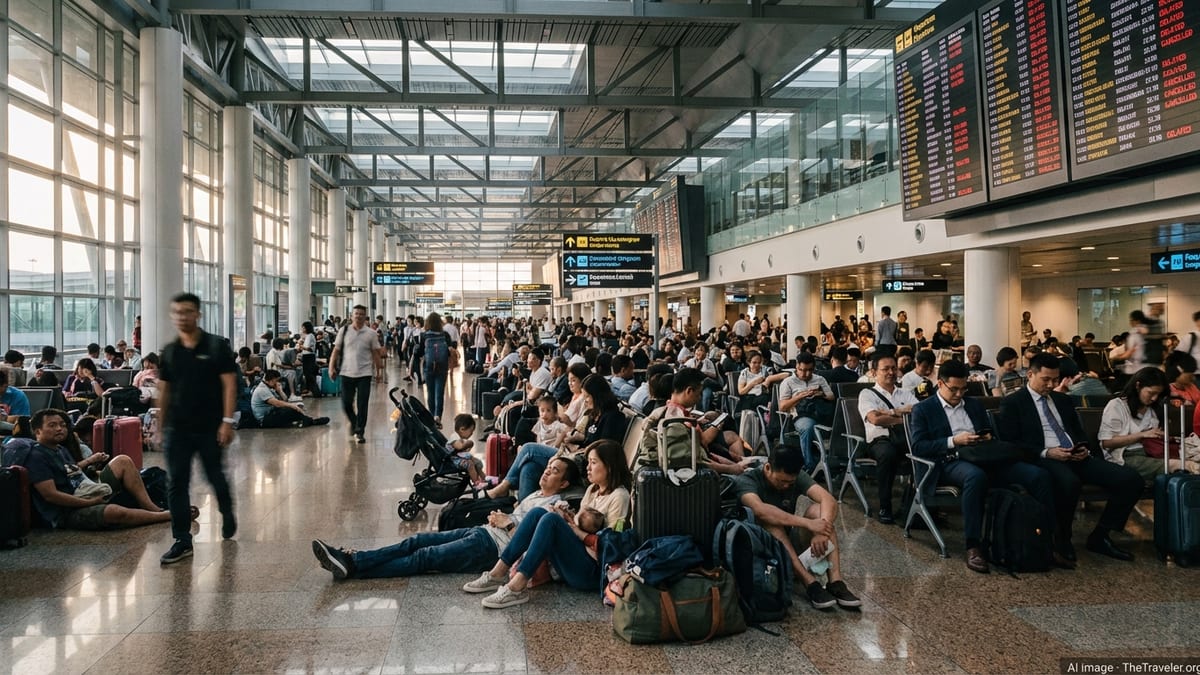
Hundreds of travelers across Canada are facing long waits and unexpected overnight stays as a fresh wave of flight cancellations and delays ripples through major hubs and remote regional airports, disrupting connections on Jazz, Air Canada, Air Inuit, PAL Airlines, WestJet and several smaller carriers.
Get the latest news straight to your inbox!
Nationwide Disruptions Hit Major Canadian Hubs
Publicly available tracking data and aviation reports indicate at least 20 cancellations and 286 delays across the Canadian network over the past day, affecting flights into and out of Toronto, Vancouver, Montreal and Halifax as well as key regional links in Quebec and Atlantic Canada. The figures span mainline operations at Air Canada and WestJet as well as regional services marketed as Air Canada Express and flights by Jazz and PAL Airlines.
At Toronto Pearson and Vancouver International, the country’s two busiest gateways, knock-on effects from early-morning disruptions quickly cascaded into the afternoon schedule. Multiple departures were pushed back by more than an hour, while selected frequencies were consolidated or scrubbed entirely as airlines attempted to reset aircraft and crew rotations.
Montreal and Halifax also reported elevated levels of late-running flights, creating particular challenges for passengers attempting to connect between domestic services and onward transborder or international departures. Travel forums and social media posts describe long lines at customer-service counters and rebooking desks, with some travelers reporting missed weddings, cruises and work commitments as their itineraries unraveled.
Operational data suggest a familiar pattern for Canadian air travel in 2026: tight schedules, thin staffing margins and persistent weather and air-traffic constraints leave little room to recover when early flights go off-plan, leading to a surge of delays that radiate outward from the country’s largest hubs.
Regional Routes Leave Communities Isolated
While major-city passengers often have alternative flights or carriers to fall back on, the latest wave of disruptions has been particularly acute for smaller communities dependent on a handful of daily services. Flight-status platforms show cancellations and substantial delays on routes touching Quebec City, St. John’s and the North Shore community of Sept-Îles, where regional carriers Air Inuit and PAL play a vital role in linking remote towns to the national network.
In Sept-Îles, delays affecting flights to and from Wabush, Kuujjuaq and other northern points left travelers with limited options. When a single daily service is scrubbed or significantly delayed, passengers can find themselves effectively stranded for 24 hours or more, especially where ferry or long-distance road alternatives are either impractical or nonexistent at this time of year.
Reports from recent days highlight that disruptions on Air Inuit’s northbound services and PAL’s intra–Atlantic Canada routes can have outsize consequences, not only for leisure travelers but also for medical passengers, students and workers rotating in and out of mining and energy projects. For many of these travelers, a missed connection in Quebec City or Montreal can mean days of delay before the next available seat.
Regional aviation observers note that even small schedule adjustments at a big hub can ripple through to remote communities as aircraft are reassigned or held back, illustrating how tightly coupled Canada’s mainline and regional systems have become.
Complex Mix of Causes Behind Cancellations and Delays
The precise causes of the latest disruptions vary by airport and carrier, but publicly accessible information points to a familiar combination of weather, airspace constraints and operational pressures. Earlier in the season, winter storms and strong crosswinds in central and eastern Canada produced widespread cancellations and created a backlog that some airlines have struggled to clear fully before the busy summer period.
Separate industry reporting over recent months has also highlighted ongoing challenges with air-traffic management capacity at major hubs, particularly Vancouver, where staffing levels for controllers have periodically forced flow restrictions and ground delays. When arrival and departure rates are reduced, airlines must decide between holding flights on the tarmac or cancelling selected services outright to prevent network gridlock.
On the airline side, recent history shows that crew availability and maintenance requirements can quickly snowball into network-wide problems when schedules are tightly packed. Labour disputes and staffing shortages at several Canadian carriers over the past two years have left little slack in the system, increasing the chances that a single out-of-position crew or aircraft can disrupt multiple subsequent flights.
Aviation analysts point out that these structural issues are not new, but the combination of high demand, evolving weather patterns and lean post-pandemic staffing models has made Canadian air travel particularly vulnerable to days like this, when disparate problems converge into a single, highly visible wave of disruption.
Passengers Face Long Waits and Confusing Rules
For affected travelers, the immediate concerns are practical: finding a seat on the next available flight, securing overnight accommodation and understanding what costs, if any, will be covered. Canada’s Air Passenger Protection Regulations set out compensation and assistance requirements, but the rules differ depending on whether a disruption is within an airline’s control or linked to weather, air-traffic restrictions or security issues.
Consumer advocates and past regulatory decisions have underscored that large carriers such as Air Canada and WestJet are expected to provide reasonable accommodation and meal support when cancellations or long delays stem from controllable factors such as crew scheduling or maintenance planning. However, when airlines categorize a problem as a safety, weather or air-traffic issue, direct compensation may not apply, even if the impact on passengers is identical.
That distinction has created ongoing frustration among travelers, many of whom turn to social media to document lengthy delays and last-minute cancellations. Disputes over whether a disruption was truly unavoidable have led to formal complaints and, in some cases, court challenges testing how far carriers can limit reimbursement for hotels, meals and alternative transportation.
In the current wave of disruptions, travelers stranded in Toronto, Vancouver and Montreal have reported extensive waits at customer-service counters and difficulty reaching call centres, a recurring theme during previous episodes of widespread delay. With multiple airlines affected simultaneously, hotel inventory near airports can tighten quickly, pushing some passengers to seek last-minute accommodation far from the terminal.
Calls Grow for Stronger Resilience in Canada’s Air Network
The latest day of cancellations and delays is adding to a growing debate about the resilience of Canada’s air transport system. Business travel organizations and tourism bodies have previously warned that repeated episodes of large-scale disruption risk undermining confidence in the country’s major carriers and hubs, particularly among international visitors with tight itineraries.
Recent analyses of on-time performance have shown Canada’s largest airlines lagging behind many of their North American peers for punctuality, renewing questions about whether current infrastructure, staffing and regulatory frameworks are keeping pace with demand. Travel-industry commentary increasingly points to the need for coordinated action across airports, airlines, air-traffic management and government agencies to address bottlenecks rather than treating each day of chaos as an isolated event.
For regional communities such as Sept-Îles and other northern and Atlantic destinations, the stakes may be even higher. Persistent vulnerability to cancellations can affect everything from medical access and education to investment decisions in resource projects and tourism development, reinforcing a sense of isolation when links to the rest of the country falter.
As summer travel ramps up, the latest wave of disruptions serves as another stress test for Canada’s aviation network. With hundreds of travelers stranded across the country after just 20 cancellations and 286 delays, pressure is likely to grow on carriers and policymakers alike to show that lessons from past episodes are being applied to protect passengers from the next system-wide shock.