


More news on this day
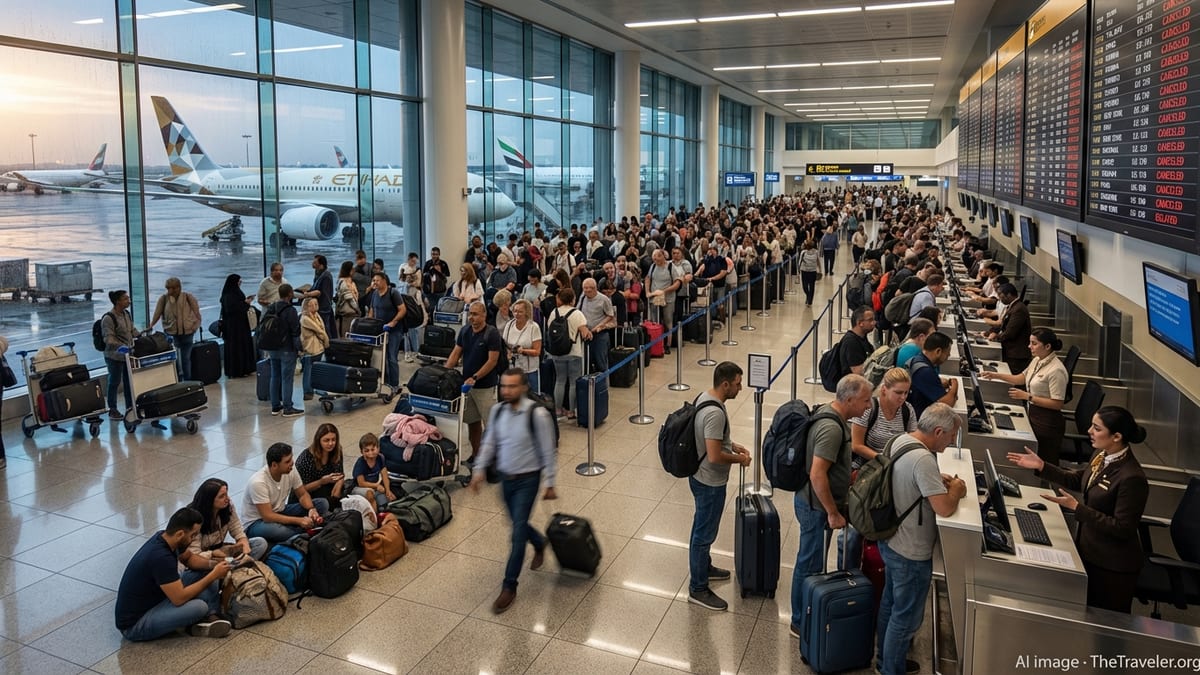
Flight cancellations and cascading delays are again hitting Middle East routes as airlines adjust to shifting airspace risk assessments, reroute around high-risk corridors, and trim schedules linking hubs such as Abu Dhabi and Riyadh with Europe, Asia, and North America.
Get the latest news straight to your inbox!
Why flights are being pulled from schedules
Published coverage and operational updates point to a familiar chain reaction: heightened regional security risk leads to more conservative flight planning, which in turn reduces the number of usable routings and time windows for some services. When aircraft and crews arrive late, airlines often cancel later rotations to reset schedules.
A key reference point for many carriers is the European Union Aviation Safety Agency’s Conflict Zone Information Bulletin covering the airspace of the Persian Gulf and Gulf of Oman. The bulletin’s validity was extended through September 30, 2026, and continues to shape how EASA-regulated operators evaluate risk and whether they overfly or avoid certain parts of the region.
Separate, publicly available FAA restrictions and security notices also remain part of the planning picture for U.S.-connected operators, especially for routings that might otherwise cross sensitive airspace. For travelers, the practical result is less schedule resilience: fewer alternative routings means delays can spread faster, and reaccommodation options may be tighter when multiple flights are disrupted at once.
Abu Dhabi: delays build even when airports remain open
In the UAE, reports in early and mid-September described periods of widespread delays at both Abu Dhabi’s Zayed International Airport and Dubai International Airport, alongside a smaller number of cancellations. Flight-tracking data has also reflected elevated delay counts at Abu Dhabi during recent disruption windows.
Even when a particular Abu Dhabi departure is not cancelled, longer flight times can still be disruptive. Detours around restricted or higher-risk corridors can extend block times, complicating connections and increasing the odds of missed onward flights for passengers using Abu Dhabi as a hub.
Travelers transiting Abu Dhabi have been advised in published coverage to monitor flight status closely, allow extra time for airport processes during peak disruption periods, and keep booking contact details current to receive schedule-change notifications. When delays pile up, some airlines may consolidate services or swap aircraft types, which can also affect seat assignments and baggage timing.
Riyadh and Saudi routes: fewer options for rebooking
Riyadh’s King Khalid International Airport remains operational, but regional disruption has made some Saudi-linked itineraries more prone to last-minute changes. In recent published operational summaries, multiple international carriers have kept selected Gulf and Saudi routes suspended into October, limiting the pool of alternative seats when flights are cancelled.
For passengers, reduced competition on certain city pairs can translate into longer waits for rebooking, especially on popular transit paths between Europe and South Asia that normally depend on frequent Gulf connections. When airlines suspend a route for weeks rather than days, reaccommodation may require rerouting through different hubs, extending total travel time and sometimes requiring overnight stops.
Where tickets are booked as separate one-way segments on different airlines, disruptions can be more costly because the second carrier may treat a missed onward flight as a no-show. Travelers with tight self-connects through Riyadh or Abu Dhabi may want to consider building in more buffer time or shifting to single-ticket itineraries where possible.
What airlines are changing: suspensions, reroutes, and reduced frequencies
Across Europe and Asia, the most visible traveler impact has been route-by-route suspensions and reduced frequencies rather than blanket shutdowns of UAE or Saudi airports. Some carriers have continued operating into Abu Dhabi or Riyadh but with longer routings, while others have paused service for defined windows and repeatedly extended those dates as conditions evolve.
Recent operational updates circulated in the logistics and aviation-risk ecosystem have listed ongoing suspensions by select European operators to multiple Middle East destinations, including Abu Dhabi and Riyadh, with some suspensions extending into late October 2026. Cargo operators and belly-freight capacity have also been affected, which can indirectly influence passenger operations through aircraft availability and network priorities.
Published reporting has also tied certain disruption spikes to specific escalations in regional tensions, including missile and drone activity in the broader area. In practice, even short-lived events can trigger airline preemptive cancellations if crews and aircraft cannot be positioned safely or if alternates and diversion plans become harder to guarantee.
Practical steps for travelers booked via Abu Dhabi or Riyadh
For near-term trips, the most useful action is to verify flight status using airline tools and major flight-tracking services before leaving for the airport, then re-check close to departure. During unstable periods, schedules can change multiple times in a day as routings and departure slots are recalculated.
When a cancellation occurs, airline rebooking systems may automatically offer an alternative; however, during multi-airline disruption waves those options can be limited. Travelers may be better positioned if they have flexibility to shift departure dates by a day or two, or to accept rerouting through different hubs when offered.
Passengers should also review ticket rules and any applicable waiver policies issued for affected travel dates and destinations. Where refunds are offered, the fastest path can depend on where the ticket was purchased (airline direct versus online travel agency) and whether the itinerary involves interline partners.