


More news on this day
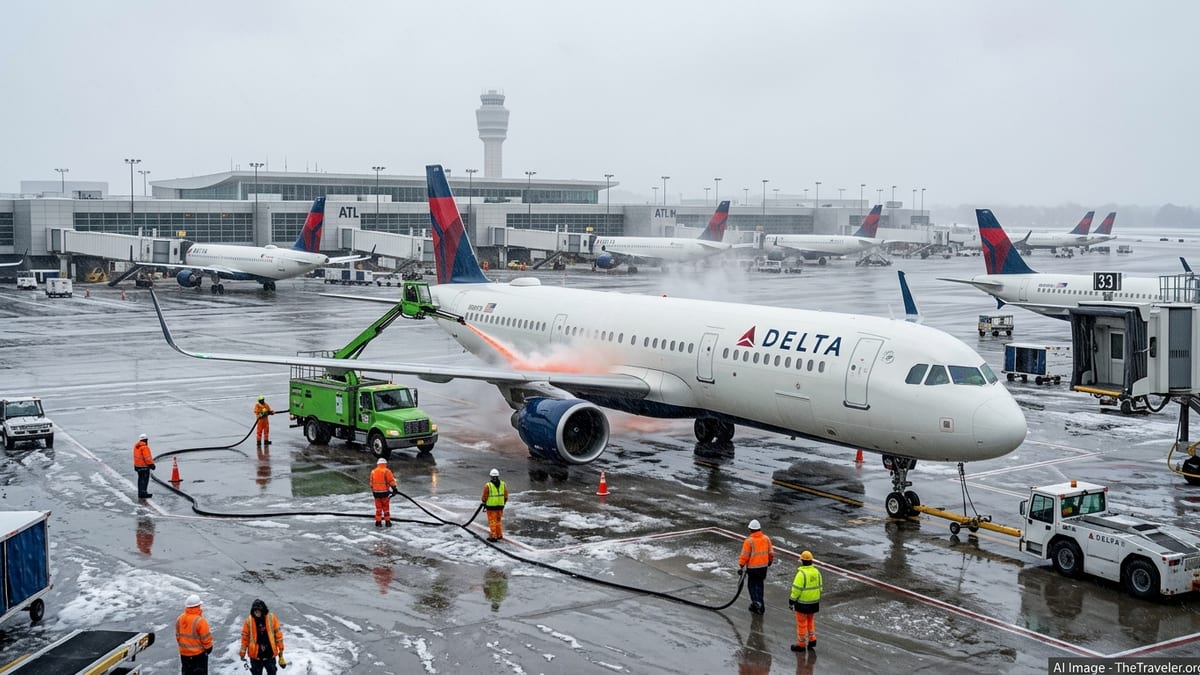
A rare freezing-rain storm that shut down runways and crippled de-icing operations at Hartsfield-Jackson Atlanta International Airport on January 11, 2025, offers one of the clearest recent examples of how weather at the nation’s busiest hub can disrupt flight connections for travelers across the United States, even if they never pass through Atlanta.
Get the latest news straight to your inbox!
How a Freezing-Rain Morning Turned Into a Nationwide Disruption
On the morning of Saturday, January 11, 2025, snow over metro Atlanta changed to freezing rain, coating aircraft and pavement at Hartsfield-Jackson Atlanta International Airport. According to local television coverage and airline statements at the time, airport officials and Delta Air Lines sharply curtailed operations as the precipitation made safe de-icing and runway use increasingly difficult.
By around 9:20 a.m. Eastern, internal updates shared among pilots and enthusiasts described all runways at ATL as effectively closed while freezing rain continued and a Delta flight with engine trouble blocked part of the south airfield. De-icing was paused on safety grounds, which meant aircraft already in queues could not depart and arriving traffic was held or diverted. Flight-tracking tallies and local TV reports cited more than 1,400 cancellations into and out of Atlanta across the core storm period, a figure that included flights from Delta and its regional and codeshare partners.
Weather data from the National Weather Service’s Atlanta office confirm that a winter storm crossed Georgia on January 10 and 11, bringing several inches of snow in parts of the state and ice to the Atlanta area. While ATL typically handles rain and occasional snow with limited disruption, the combination of active freezing rain, contaminated runways and aircraft icing conditions created a low-margin environment in which safety rules left little room for reduced-capacity operations.
Why Freezing Rain Is So Hard for Hubs Like Atlanta to Manage
Hartsfield-Jackson is the world’s busiest airport by total passengers and Delta’s primary global hub, which means a large share of U.S. domestic and international itineraries connect through its runways and concourses. The January 2025 storm did not produce record-breaking snowfall, but its timing and precipitation type exposed how a hub-and-spoke network amplifies disruption when a central node slows or stops.
Under U.S. Federal Aviation Administration rules for certificated airports, operators must maintain a Snow and Ice Control Plan under Part 139 and use the Runway Condition Assessment Matrix, or RCAM, to evaluate and report runway conditions. In practice, when freezing rain is actively falling and treatment cannot keep surfaces within acceptable friction levels, RCAM assessments and the airport’s own plan can trigger temporary closures or highly restricted use of runways and taxiways. Those measures are designed to prevent runway excursions or loss of control events but can also bring departures and arrivals to a near standstill.
Ground de-icing rules add another layer. FAA winter guidance for the 2026 to 2027 season again emphasizes that operators must ensure aircraft are free of ice and snow before takeoff and must follow holdover-time limits for anti-icing fluids. On January 11, 2025, the combination of limited de-icing positions, long taxi distances and ongoing freezing rain meant that aircraft could not be de-iced and then safely remain uncontaminated long enough to depart at anything close to normal volume. That mechanical reality, rather than an isolated decision by any single dispatcher or pilot, largely drove the shutdown.
What Passengers Experienced in Atlanta and Across the Network
Local television footage from that weekend showed travelers sleeping on the floor of ATL’s terminals, with long lines at customer service desks as passengers tried to rebook. News segments and airport statements referenced thousands of stranded travelers and repeated ground stops, as the airport cautioned customers to expect delays even as operations slowly restarted. Many passengers arriving in Atlanta on the evening of January 10 or early on January 11 were forced into unplanned overnight stays when onward connections were canceled and hotels near the airport quickly filled.
The effects extended far beyond Georgia. Because so many itineraries are built around connections at ATL, cancellations of Atlanta-originating flights disrupted journeys from cities such as Boston, Minneapolis, Dallas and numerous regional airports. Travelers who never landed in Atlanta still saw flights canceled or rescheduled because the aircraft and crews they were due to use were trapped in the ATL gridlock or timed out under federal crew duty limits after long delays.
Passengers also faced limitations on compensation. Most major U.S. airlines coded the disruptions as weather-related, aligning with Department of Transportation definitions that generally relieve carriers of obligations for hotel costs or cash compensation when nature, rather than an airline-controlled issue, is the primary cause. While carriers provided fee waivers and rebooking options, many travelers reported bearing out-of-pocket expenses for lodging and meals. Misrouted or delayed baggage was another common complaint as bags followed disrupted routings through, or around, Atlanta.
A Stress Test, Not a New Normal, for a Typically Resilient Hub
Data from flight-performance tracking services show that Hartsfield-Jackson is usually among the more resilient major U.S. hubs, with on-time performance approaching or exceeding eight in ten flights during routine periods and relatively low cancellation rates around the 2024 Thanksgiving peak. That context suggests the January 2025 freezing-rain shutdown was an outlier rather than evidence of a persistent pattern of winter paralysis in Atlanta.
At the same time, the event highlighted how concentrated traffic at a primary hub can magnify the impact of low-frequency but high-impact weather episodes. For airlines heavily reliant on ATL, including Delta and its regional partners, the trade-off for efficient hub operations in normal conditions is the risk that a rare but severe storm can disrupt thousands of itineraries in a single day. The case has since been examined by aviation commentators as a reminder that network design, not just local weather, determines how turbulence at one airport ripples across the system.
Some operational details remain opaque. Neither Delta nor the airport operator has publicly disclosed granular de-icing equipment counts, detailed staff rosters for that weekend or internal algorithms used to decide which flights to pre-cancel versus operate. Without that information, it is not possible to say precisely how much additional equipment or staffing might have changed the outcome on January 11, only that the limits in place were quickly reached when freezing rain arrived during a busy travel period.
What Has Changed Since and How Travelers Can Prepare
Since 2025, Hartsfield-Jackson and the City of Atlanta have continued to invest in airfield infrastructure, with recent council approvals covering runway works and other capital projects. Federal regulators have also refreshed guidance on winter operations and de-icing programs ahead of the 2026 to 2027 season, reinforcing procedures for runway condition reporting and aircraft ground de-icing. Public documents do not yet detail any specific new de-icing pads or ice-mitigation systems at ATL directly tied to the January 2025 storm, but they indicate ongoing efforts to modernize airfield equipment and operating practices.
For travelers planning winter trips in the 2026 to 2027 season, the January 2025 episode offers practical lessons. It may be prudent to build longer connection times when itineraries route through Atlanta during forecast cold snaps, favor earlier departures in the day when possible and monitor airline travel advisories for the issuance of weather waivers that allow fee-free changes before a storm peaks. Booking nonstop flights that bypass hubs altogether, when available and affordable, can further reduce exposure to hub-specific disruptions.
Passengers connecting through ATL or similar hubs should also pay close attention to how airlines classify disruptions in their communications. If an airline later attributes a cancellation to a non-weather cause such as crew availability or mechanical issues, passengers may have additional options for assistance under carrier customer-service commitments. Given the experience of January 11, 2025, travelers who understand both the operational constraints and the policy landscape are better positioned to navigate the next rare but disruptive winter storm.