


Every Kilimanjaro climb starts long before you reach the park gate. For most trekkers, it begins in the arrivals hall at Kilimanjaro International Airport, juggling jet lag, baggage, and the excitement of finally seeing the mountain. The choices you make in the 24 to 48 hours after landing can strongly influence how well you sleep on night one, how your body acclimatizes, and ultimately how you feel on summit day. This guide walks you through the practical logistics from the airport to Moshi or Arusha, what to expect from your tour operator, where to stay before the climb, and why slowing down at the start is often the smartest move.
Get the latest updates straight to your inbox!
Understanding Kilimanjaro International Airport and Its Location
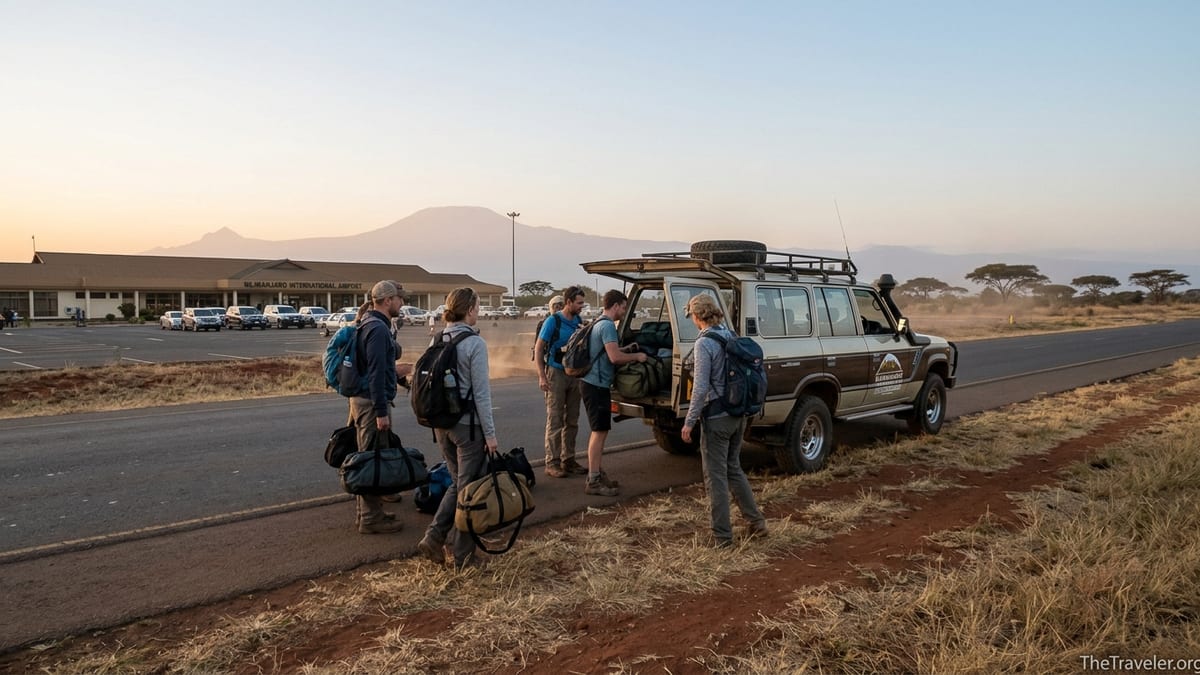
Kilimanjaro International Airport, known by its code JRO, is the main gateway for trekkers heading to Mount Kilimanjaro. The airport sits in open countryside between the towns of Moshi and Arusha rather than in a city. It is roughly 35 kilometers from Moshi and about 45 to 50 kilometers from Arusha, which translates into a drive of around 45 minutes to Moshi and up to 90 minutes to Arusha depending on traffic and time of day. You will not walk out of the terminal into a bustling city center, but into a compact airport with a single main building, a small parking area, and views of the savannah.
JRO is busy in short bursts when international flights arrive, especially from European hubs like Amsterdam and Doha and from regional connections through Nairobi, Addis Ababa and Dar es Salaam. Outside those windows it can feel surprisingly quiet. There is basic infrastructure including currency exchange booths, ATMs that usually dispense Tanzanian shillings, a few small cafes and shops, and mobile network desks where you can purchase a local SIM. Free airport Wi-Fi can be inconsistent, so it is wise to have your operator’s phone number written down as well as saved on your device.
Because the airport is some distance from both Moshi and Arusha, there is no city-style public transport hub at the door. You will not find a metro, ride-hailing apps, or a fleet of modern buses waiting outside. Instead, most visitors rely on pre-booked transfers via their trekking company or hotel, airport taxis, or limited shared shuttles. Planning this segment of your journey in advance is far more comfortable than trying to sort it out after a long overnight flight.
For most Kilimanjaro climbs, your operator will base you in Moshi, which is closer to popular trailheads like Machame and Marangu. Arusha is a better base if you are combining your trek with a safari to Tarangire, Ngorongoro or the Serengeti. When you book your climb, confirm exactly where your pre-climb hotel is and how long the drive from JRO will take, so you can schedule flights that allow for delays, immigration queues and baggage collection without creating unnecessary stress.
Getting from JRO to Moshi or Arusha: Transfers, Taxis and Shuttles
By far the easiest option for most trekkers is a pre-arranged airport transfer organized by their Kilimanjaro operator or hotel. Many mid-range and reputable climbing outfits such as Go Kilimanjaro Treks and Kili Team Adventures include airport pickup and drop-off in their package price. In practice this means that once you clear customs, you walk into the arrivals area and look for a driver holding a sign with your name or the company name. The driver will lead you to a private vehicle and take you directly to your hotel in Moshi or Arusha. This option avoids on-the-spot negotiations and is ideal if you are arriving at night.
If you do need to arrange your own transport on arrival, official airport taxis line up directly outside the terminal. Recent local guides and transfer services quote around 30 to 50 US dollars for the journey from JRO to Moshi and approximately 55 to 75 US dollars to Arusha, depending on the time of day, your bargaining skills and the size of the vehicle. Payment is usually in cash, with US dollars widely accepted, although having Tanzanian shillings can make transactions smoother. It is worth confirming the total price clearly before you put your bags in the car and starting the journey.
Another option, particularly for budget-minded travelers, is the limited shared shuttle services that run between the airport and the two towns. Some local companies and hotels operate small buses or minibuses that depart after major incoming flights, typically charging the equivalent of 8 to 15 US dollars per person to Moshi or Arusha. These shuttles may not be heavily advertised at the airport, so securing a seat often requires pre-booking through your hotel or operator. Departure times can also be flexible rather than fixed, as drivers wait to fill seats from a particular flight.
Because there is no straightforward public bus route directly into Moshi or Arusha from the airport door, hitching a ride on local minibuses or dala-dalas via the main highway junction is only advisable for experienced, independent travelers who are not carrying a lot of gear. For almost all Kilimanjaro trekkers arriving with duffel bags, trekking poles and cold-weather clothing, the most practical and reliable approach is either an included transfer or a clearly negotiated taxi. When planning your budget, remember that these transfer costs stack on top of your climb price, but they buy you a calmer start to the trip.
How Tour Operators Handle Airport Pickups and Briefings
Most reputable Kilimanjaro operators see the transfer from JRO as the first stage of your trek rather than a separate chore. When you book with a recognized company, whether a local Tanzanian outfitter or an international brand working with local guides, airport pickup is commonly built into the package. For example, some Moshi-based operators advertise that their climb prices include return airport transfers, a pre-climb briefing at your hotel, and one or two nights of accommodation before and after the trek. This means the same company that will guide you on the mountain is usually responsible for getting you safely from the airport to your first night’s bed.
In practical terms, you can expect a driver to meet you at arrivals, help you load your bags into a minivan or 4x4, and bring you straight to your lodge. Many companies carry a list of arriving clients with flight numbers and times, and will track delays. It is still important to email or message your operator if your connection changes at short notice, but local drivers are used to late-night arrivals and will frequently be waiting even if your flight is an hour or two behind schedule.
Once you reach your hotel, most operators will schedule a pre-climb briefing either later the same day or the following morning. During this session, often led by your lead guide, you will go through your day-by-day itinerary, discuss expected weather conditions on the mountain, and review safety protocols and altitude sickness symptoms. The team will also check your personal gear against a recommended kit list. If they notice gaps, such as missing gaiters, a down jacket or a proper four-season sleeping bag, they will usually arrange rentals from their own store or from one of the several gear-rental shops around Moshi or Arusha.
This briefing is your chance to ask detailed questions. For example, you might clarify whether your operator will provide a separate duffel bag for the porters, how they handle drinking water purification, or what snacks are available on summit night. Completing this session while you are rested and no longer in transit makes it far easier to absorb information. If your itinerary proposes to drive from the airport to the park gate on the same day, ask whether it is possible to build in a hotel night and full briefing first.
Managing Gear, Luggage and What to Leave in Town
Most commercial Kilimanjaro climbs operate on a clear division between what you carry on the mountain and what stays in town. Typically, you will hike each day with a daypack of about 25 to 35 liters containing water, snacks, extra layers, rain gear, and personal items like a camera. A larger duffel bag of up to 12 to 15 kilograms is carried by a porter and contains your sleeping bag, spare clothing and other overnight gear. Airlines may allow more than this in total luggage weight, so the question becomes what to do with excess baggage that you do not need on the trail.
The solution in most cases is hotel or operator storage. Almost all trekking hotels in Moshi and Arusha, such as Parkview Inn, Chanya Lodge, Kilimanjaro Wonders Hotel and similar properties, provide secure luggage storage in a locked room or behind reception. You can leave a suitcase with travel clothes, a laptop in a padded case, or souvenirs for the safari you might take after the climb. Many operators also maintain their own storage facilities and will tag and log your bags before you depart for the mountain. It is good practice to keep valuables in a small lockable bag inside your stored luggage and to photograph the bag before you hand it over.
On the way to Tanzania, think about how you pack for an airport-to-mountain transition. For example, many trekkers choose to travel with a soft-sided duffel for mountain gear and a small hard-shell suitcase for everything else. When you reach Moshi, you remove only the trekking items from the suitcase, transfer them into the duffel that will go to the mountain, and leave the suitcase in storage. Bring a small pouch or waist pack for important documents like your passport, insurance details and some emergency cash, and keep it on your person, not in a bag that will go with porters.
Gear rental is widely available in Moshi and Arusha, which is helpful if you want to cut down on what you carry on your flight. Items commonly rented include heavy down jackets, sleeping bags rated for sub-zero nights, trekking poles, gaiters, and sometimes even boots if your size is in stock. Prices vary between operators and shops, but many climbers find they can rent a full set of cold-weather extras for a fraction of the cost of buying new gear at home. The critical point is to schedule enough time in town before your climb to visit the rental shop, try everything on and swap out anything that does not fit properly.
Why You Should Not Rush Straight from the Airport to the Mountain
It is theoretically possible to land at Kilimanjaro International Airport in the morning and arrive at a trailhead like Machame or Marangu Gate a few hours later. In practice, this is rarely wise. Many flights from Europe, the Middle East and North America involve at least one overnight leg, multiple time zones, and long layovers. Piling a multi-day high-altitude trek directly on top of that travel is a recipe for poor sleep, low appetite and an increased risk of altitude-related problems, especially on summit night.
Most experienced guides and medical advisors recommend at least one, and preferably two, nights in Moshi or Arusha before starting your ascent. That buffer gives your body time to recover from travel fatigue, adjust slightly to the local climate, and settle into a more regular eating and drinking pattern. Even though Moshi sits at only around 800 to 900 meters above sea level, which does not provide significant acclimatization on its own, being well rested and hydrated makes a real difference once you are hiking above 3,000 meters.
There is also a safety and organization argument for not rushing. Using your first full day in town for a thorough gear check, a face-to-face meeting with your guide, and a calm repacking session reduces the chance that you will forget essential items like prescription medication, spare headlamp batteries, or your passport for park registration. If something is missing or broken, local shops and rental services can substitute. If you go straight from the baggage carousel to the park gate, you lose that margin for error.
Finally, building in a pause allows you to get a feel for the local environment before you step onto the mountain. A relaxed afternoon exploring Moshi’s central market, having a simple meal at a local restaurant, or sitting by the pool at your lodge listening to the evening call to prayer can be a memorable part of the journey in its own right. Many travelers look back later and realize that these low-altitude days were essential to the overall experience, not wasted time.
Where to Stay Before Your Climb: Moshi and Arusha Options
Moshi is the traditional pre-climb base for Kilimanjaro and offers a wide range of accommodation geared toward trekkers. Budget-conscious climbers often choose simple guesthouses or affordable hotels close to the town center, where rooms can start from around 30 to 50 US dollars per night for a basic en-suite. Parkview Inn, for example, is a popular mid-range choice offering comfortable rooms, a pool, and rooftop views of the mountain on clear mornings. Many operators bundle one or two nights here into their climb packages so that clients stay together and can be briefed easily.
For travelers looking for a bit more comfort, there are several boutique lodges a short drive from Moshi’s center. Properties such as Chanya Lodge and Weru Weru River Lodge typically sit in quieter, leafy areas with gardens, pools and mountain views. Recent rates for a standard double room in this category often fall in the 80 to 150 US dollar range depending on the season and booking platform. These lodges frequently partner with trekking companies and are accustomed to early breakfast times, luggage storage, and last-minute gear requests the night before departure.
Arusha, around an hour or more from JRO, serves as a hub for northern Tanzania safaris and therefore has a broader mix of city hotels and lodges. Some climbers choose to base here if they are joining a group that leaves from Arusha or if their post-climb plan is to head straight out on safari. You will find international-brand hotels alongside locally run guesthouses, with a similar price range to Moshi but generally more urban surroundings. When deciding between Moshi and Arusha, consider where your route starts. For instance, Marangu and Rongai gates are typically reached more easily from Moshi, while some Lemosho and Shira departures may originate closer to Arusha or pass through it.
Whichever town you pick, it is smart to reserve your pre-climb hotel well in advance if you are traveling in peak seasons such as July to October or late December to February. During these windows, rooms at in-demand hotels that cater specifically to trekkers can sell out weeks ahead. When booking, ask whether airport transfers are available, whether breakfast is included on your departure day, and whether the property offers quiet rooms away from late-night noise so you can get solid rest before your first day on the trail.
Timing Your Arrival, Dealing with Jet Lag and Last-Minute Prep
Putting all the pieces together starts with your international flight itinerary. A common pattern for trekkers from Europe or North America is an overnight flight to a regional hub such as Amsterdam, Doha, Addis Ababa or Nairobi, followed by a shorter leg into JRO that arrives in the late morning or evening. If you can, aim to land at least one full day before your first trekking day, and two days before if you are flying across many time zones. For example, if your climb departs for the park gate on a Monday morning, try to reach JRO by Saturday evening so that Sunday can be a recovery and briefing day.
Once in town, use that buffer day strategically. Start by checking in with your operator for the exact time of your pre-climb briefing and gear check. Then, walk through your packing with fresh eyes. Lay everything out on the bed or floor and separate it into three categories: items for your daypack, items for your porter-carried duffel, and items that will stay in hotel storage. Confirm that you have easy access to essentials like sun protection, a warm hat and gloves, personal medications, and a water bottle or hydration system from the first hour on the trail.
Jet lag can be managed, but not ignored. Try to adapt quickly to local time by getting daylight exposure during the morning and avoiding long naps, even if your body is telling you it is the middle of the night. Hydration starts here too, not on the first slope. Begin sipping water regularly while in town, and ease into local food with simple dishes on the first day. Many trekking hotels can prepare plain rice, grilled chicken or vegetables on request if your stomach feels delicate from travel.
This pre-climb window is also a good time to handle practicalities like drawing local currency from an ATM, buying a Tanzanian SIM card for data, and sharing your hotel address and local contact numbers with family at home. If there is something you forgot, from spare camera batteries to a pair of flip-flops for camp, Moshi and Arusha both have small outdoor stores and markets geared to trekkers. Prices may be higher than at home for imported goods, but they are often acceptable for last-minute fixes compared with the alternative of going without.
The Takeaway
Kilimanjaro is not just a mountain trail; it is a journey that begins the moment you step off the plane. Understanding that Kilimanjaro International Airport lies in open country between Moshi and Arusha, and that transfers require forethought, removes a layer of stress from your arrival. Choosing a pre-climb hotel that understands trekkers, whether a simple guesthouse in Moshi or a comfortable lodge on the edge of town, gives you a base where you can repack, rest and mentally shift from long-haul travel mode to expedition mode.
The most important principle is not to rush. Building in at least one or two nights between landing and reaching the park gate pays off in better sleep, clearer organization and a more relaxed start on the mountain. During that time you can meet your guides, sort your gear, test any rented equipment, and take in a glimpse of Tanzanian life at street level, rather than just through a car window on the highway to the trailhead.
Handled well, the logistics from Kilimanjaro International Airport to the base of the mountain become part of the adventure rather than an obstacle. Treat those first days with the same respect you give to route choice and summit strategy, and you will step onto the trail better prepared, more confident and with a stronger foundation for the climb ahead.
FAQ
Q1. How long does it take to get from Kilimanjaro International Airport to Moshi or Arusha?
In normal traffic it takes around 45 minutes to reach Moshi and between 60 and 90 minutes to reach Arusha, as the airport is located between the two towns.
Q2. Should I book my Kilimanjaro airport transfer in advance?
Yes, it is strongly recommended. Most trekking companies and many hotels include or can arrange transfers, which is safer and easier than negotiating on arrival when you are tired.
Q3. How much does a taxi from the airport to Moshi or Arusha cost?
Recent quotes suggest about 30 to 50 US dollars for a private taxi to Moshi and roughly 55 to 75 US dollars to Arusha, with final prices depending on time, vehicle and negotiation.
Q4. Is there public transport from the airport to town?
There is no straightforward city-style public bus or train from the terminal to Moshi or Arusha. Limited shared shuttles exist, but most trekkers rely on pre-booked transfers or airport taxis.
Q5. How many nights should I stay in Moshi or Arusha before starting my climb?
Plan on at least one night and preferably two. This gives time to rest after your flight, complete your briefing and gear check, and deal with any missing equipment or luggage delays.
Q6. Where can I store luggage that I do not need on the mountain?
Most trekking hotels and operators offer secure luggage storage in town. You can leave suitcases with travel clothes, electronics and other non-trekking items until you return from the climb.
Q7. Can I rent gear like a sleeping bag or down jacket in Moshi or Arusha?
Yes. Many operators and local gear shops rent high-quality sleeping bags, down jackets, trekking poles and other items, allowing you to travel lighter and fill gaps after your pre-climb gear check.
Q8. Is it safe to arrive at night at Kilimanjaro International Airport?
Night arrivals are common. With a pre-arranged transfer, it is generally considered safe, as your driver will meet you in the arrivals area and take you directly to your hotel.
Q9. Should I go straight to the trailhead on the same day I land?
In most cases, no. Combining long-haul travel and an immediate start to a high-altitude trek increases fatigue and stress. Building in a rest day in Moshi or Arusha is a better strategy.
Q10. Is Moshi or Arusha better as a base for Kilimanjaro?
Moshi is closer to many popular trailheads and feels more focused on Kilimanjaro climbs. Arusha works well if you are combining your trek with a safari, as it is a major safari hub.