


More news on this day
North America’s passenger rail network is entering a new phase in 2026 as Philadelphia becomes a quiet focal point for German-engineered trains, with Siemens-built equipment flowing through the city for testing, crew training, and future service across the continent.
Get the latest news straight to your inbox!
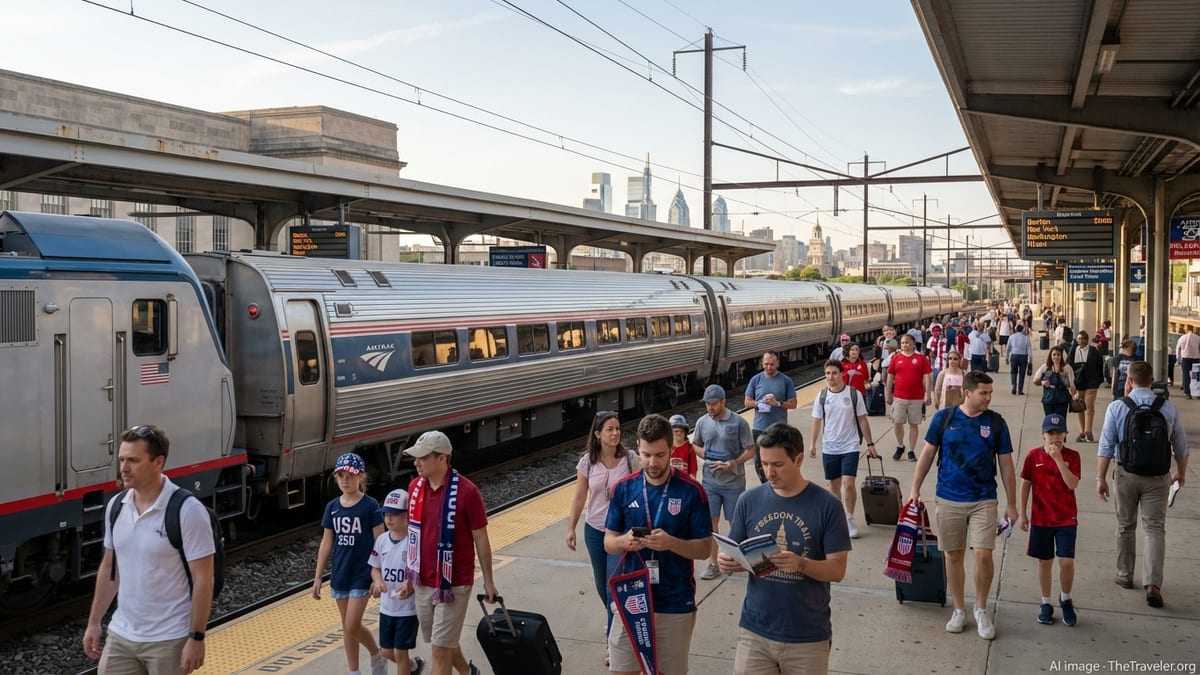
Philadelphia’s Strategic Role in a Continent-Wide Rail Upgrade
Publicly available movement logs and enthusiast reports show new Amtrak Airo trainsets, built by Germany-based Siemens Mobility at its Sacramento, California, factory, transiting through Philadelphia in 2026 for testing on the Northeast and Keystone corridors before entering service elsewhere in the United States. One of the early Cascades-branded Airo sets was documented arriving in the city after a cross-country delivery run, underscoring the importance of Philadelphia’s rail yards and electrified infrastructure as a proving ground for the next generation of North American equipment.
According to Amtrak’s service and asset planning documents, the Airo program is part of a multibillion-dollar fleet renewal launched in 2021, with 83 trainsets on order and initial entries into service expected in 2026 on the Cascades route in the Pacific Northwest. The same Siemens platform is slated to appear on multiple electrified and non-electrified corridors, including Keystone Service and the Pennsylvanian, both centered on Philadelphia. These deployments position the city as a key operating and maintenance base for a technology package adapted from German and European intercity design for U.S. conditions.
Rail-sector coverage indicates that Philadelphia also benefits from earlier Siemens involvement. The city’s regional railroad, SEPTA, already runs ACS-64 electric locomotives derived from Siemens designs used on the Northeast Corridor. Those locomotives, introduced during the last decade, formed an initial bridge between European engineering practice and the dense commuter environment of the Philadelphia region, laying groundwork for the more comprehensive changes now tied to the Airo fleet.
German Engineering Footprint Expands Across North America
The trainsets linked to Philadelphia’s testing and training activities are one element of a broader Siemens Mobility manufacturing network that has expanded rapidly in North America. Corporate reporting and press material describe substantial investments in U.S. rail factories, including a major passenger railcar plant in Lexington, North Carolina, scheduled to build coaches for domestic operators, and a forthcoming high-speed rail production facility in Horseheads, New York. These sites, together with the established Sacramento rolling stock facility, represent a layered industrial base using German-developed platforms and software tools for local assembly.
Siemens shareholder and investment reports emphasize the role of digital engineering, including digital twin technology and advanced propulsion research, in new rail product lines for North America. The same research streams underpin ventures such as the planned American Pioneer high-speed train platform and are reflected in the Airo trainsets’ multi-power operation, energy efficiency features, and modern passenger amenities. While individual fleets vary by customer and route, the underlying engineering lineage is increasingly visible from high-speed concepts to corridor trainsets and commuter locomotives.
Industry analyses suggest that this growing German-engineering footprint aligns with long-term U.S. policy priorities for decarbonization and corridor-based intercity rail. Siemens Mobility’s projects, ranging from signaling and electrification contracts to new rolling stock orders, appear closely tied to federal infrastructure funding streams that favor electrified or low-emission passenger rail. With Philadelphia sitting on one of the country’s most heavily traveled electrified corridors, the city stands to receive early exposure to these platforms as they enter testing and eventual revenue service.
SEPTA and Amtrak: Philadelphia’s Dual Rail Modernization Tracks
Within the Philadelphia region, the transformation is visible on two overlapping layers: commuter-focused SEPTA Regional Rail and Amtrak’s intercity operations. SEPTA documentation and historical records show that the authority ordered Siemens ACS-64 locomotives beginning in 2015 to haul push-pull trains on its Regional Rail network. These locomotives, similar to Amtrak’s Northeast Corridor power, brought regenerative braking, modern electronics, and European-inspired safety systems into daily commuter use around Philadelphia.
For intercity passengers, Amtrak’s adoption of Siemens Airo trainsets represents the next major step. According to Amtrak planning documents and subsequent updates, the Airo fleet combines Siemens Venture passenger cars with Charger locomotives in semi-permanently coupled trainsets. The sets are slated to replace aging Amfleet coaches and many ACS-64-hauled formations on routes such as Keystone Service and the Pennsylvanian over the coming years. The concept is to provide faster boarding, more efficient operation, and improved accessibility, all framed by a common engineering platform tailored to corridor service.
Reports from enthusiast communities tracking delivery and testing timelines indicate that Airo sets have been moving through Philadelphia in 2025 and 2026 as part of a structured program of test runs on the Northeast and Keystone corridors. These movements allow Amtrak and Siemens technicians to validate train performance under dense traffic and varied power conditions, while local crews gain familiarity with the new equipment. As the first sets enter revenue service in the Pacific Northwest and elsewhere, Philadelphia’s role is expected to shift from test hub to early adopter on East Coast routes.
Testing, Training, and Technology Transfer Through Philadelphia
Available routing data and publicly shared sightings point to Philadelphia as a critical midpoint in a coast-to-coast testing chain for Siemens-built trainsets. Airo sets have been documented traveling from Sacramento to Pueblo, Colorado, for high-speed and systems trials, then onward to the Northeast Corridor for further testing under real-world dispatch conditions. Philadelphia’s Race Street and associated facilities provide access both to the electrified Northeast Corridor and to lines used by Keystone Service toward Harrisburg, making the area suitable for mixed-environment trials.
This process effectively turns Philadelphia into a live technology transfer zone, where German-designed equipment meets legacy American infrastructure. Reports describe testing that covers not only speed and braking, but also interoperability with older signaling, platform geometry, and yard procedures. The pattern mirrors earlier experiences with the SEPTA ACS-64 fleet, in which imported design elements were incrementally adapted for local operating rules and passenger expectations.
Observers note that the city’s rail geography gives it a unique role in this transition. As Airo sets and other Siemens products cycle through, maintenance forces and operations personnel gain multi-system experience that can later be applied as additional trainsets roll out on regional and long-distance corridors. In this sense, Philadelphia’s participation in 2026 is less an isolated event than a preview of broader operating practices that could be replicated at other hubs across North America.
North American Rail Market Reorients Around New Corridors
Beyond Philadelphia, the Siemens-led push reflects a wider repositioning of North American passenger rail around corridor-based service. Federal planning documents and Amtrak’s multiyear strategies describe a network of medium-distance routes, many radiating from major metros, where new rolling stock is expected to deliver shorter travel times and more frequent departures. The Airo program, supported by funding from the federal Infrastructure Investment and Jobs Act, is a central component of this strategy, tying together services from the Northeast Regional to the Downeaster and the Carolinian.
In parallel, Siemens Mobility’s upcoming high-speed production facility in Horseheads, New York, and its North Carolina railcar plant indicate expectations that U.S. demand for advanced intercity and regional rail equipment will remain strong over the next decade. Company materials link these investments to trends in urbanization, decarbonization, and digitalization, suggesting that software-driven maintenance, predictive diagnostics, and more automated operations will become standard features of new fleets serving American cities.
As 2026 unfolds, Philadelphia’s experience with Siemens-built trainsets offers an early illustration of how these continental shifts may look on the ground. The city’s combination of dense commuter operations, heavy intercity traffic, and established technical workforce gives it a front-row position in North America’s rail realignment, where German engineering increasingly underpins the trains that connect cities and regions.
Siemens Mobility North America investments