


Germany offers a mature, highly regulated financial system that is central to Europe’s economy. For expatriates, the quality of financial infrastructure directly affects how quickly everyday money management becomes frictionless and how safely savings and investments can be held. This briefing evaluates Germany’s financial infrastructure from an expat usability perspective, focusing on bank account access, payment systems, digital tools, credit availability, and consumer protection. It is intended as decision-grade input for individuals and employers assessing Germany as a relocation destination.
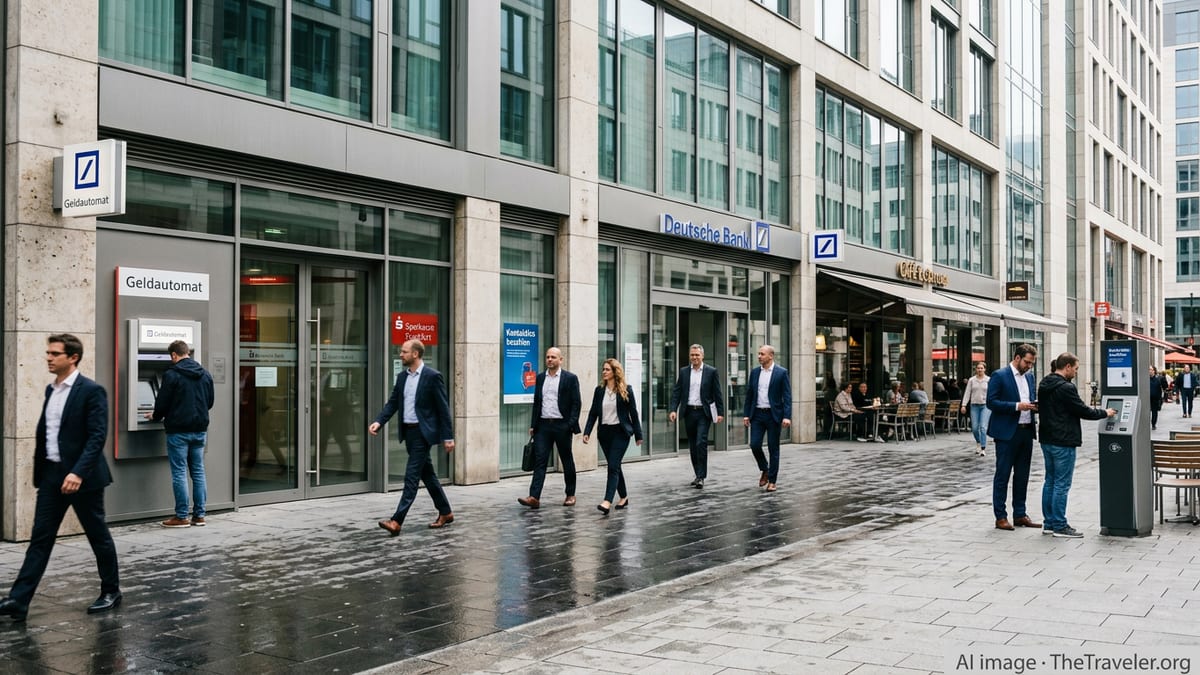
Overall Assessment of Germany’s Financial Infrastructure for Expats
Germany is one of Europe’s largest and most stable financial markets, with a dense network of banks, established payment systems, and strong supervisory institutions. For expatriates, this translates into high systemic reliability, robust deposit protection, and relatively predictable financial regulation. The environment suits risk-averse individuals who prioritize safety and regulatory clarity over cutting-edge financial experimentation.
From an expat-centric perspective, the financial infrastructure can be summarized as high-grade but occasionally rigid. Banking penetration is nearly universal among residents, cash and card systems coexist smoothly, and digital banking options have grown rapidly. At the same time, legacy processes, documentation expectations, and cautious risk policies can create onboarding friction for newcomers, especially those without an established European financial footprint.
Consequently, Germany’s financial infrastructure score for expats can be described as strong on stability, moderately strong on everyday usability, and mixed on initial accessibility. Individuals relocating with formal employment contracts and clear documentation will generally experience a smoother integration than those arriving as freelancers, students, or with unconventional income profiles.
Banking Access and Account Opening Conditions
Access to a basic current account is central to financial integration for expatriates. In Germany, opening a bank account typically requires proof of identity, proof of address in Germany, and in many cases evidence of local registration with municipal authorities. Banks tend to apply strict know-your-customer standards, and remote onboarding requirements may be more demanding than in some other European jurisdictions.
Traditional retail banks, cooperative banks, and savings banks maintain extensive branch networks and offer German-language interfaces as standard, with English support varying significantly by institution. Expat-focused or digital-first banks provide more user-friendly English interfaces and app-based onboarding, but may still require a German address or local registration before activating full account functionality. As a result, expats often experience a lag period between arrival and complete access to local banking facilities.
Nonresident or pre-arrival account opening is more limited than in some neighboring countries and is often confined to specific digital banks or specialized international providers. For salaried expats with employment contracts from German entities, banks are generally receptive once documentation is in order. Those with non-standard employment or income abroad may face more extensive checks and occasional rejections. Overall, Germany provides reliable banking access but not frictionless entry, and expats should anticipate administrative lead time.
Payments Ecosystem, Cards, and Cash Usage
Germany’s retail payments ecosystem combines well-established card networks with a still-visible role for cash. Debit cards linked to current accounts are the primary payment instrument in daily life, and contactless functionality is widely supported. Credit card penetration is moderate compared to some other advanced economies, and merchants may selectively accept specific card schemes, so reliance on one foreign credit card can be impractical for ongoing daily expenses.
Cash remains accepted and socially normal in many contexts, particularly in smaller establishments and some service providers. However, the trend toward card and contactless payments accelerated in recent years, and expats can expect to use bank cards for the majority of transactions in urban areas. Point-of-sale terminals are generally reliable, and network outages are rare, contributing positively to the overall financial infrastructure score.
Domestic bank transfers are highly standardized and typically processed through Europe-wide payment rails, which allows for efficient salary payments, rent transfers, and bill settlements. Standing orders and direct debits are widely used, and once a local account is established, routine payments can be automated with relative ease. From the perspective of an expat, the payment system offers high reliability and integration but assumes that the user has successfully cleared the initial account-opening hurdle.
Digital Banking, Fintech Services, and Cross-Border Transfers
Digital banking penetration in Germany has increased significantly, with many banks offering full-feature mobile apps for balance checks, transfers, and card management. App quality and language options vary, but major institutions and newer digital banks generally provide stable, secure applications. Two-factor authentication and transaction security standards are stringent, leading to a secure but sometimes procedure-heavy user experience.
Fintech services addressing budgeting, savings automation, and online investments are widely available, although some platforms restrict access to residents with full German registration. International money transfer options are diversified, including traditional banks, specialized remittance companies, and digital cross-border payment services. Transfer fees and spreads vary widely, so expats benefit from comparing providers rather than relying solely on default bank offerings for international transfers.
For cross-border relocation scenarios within Europe, the harmonized account identification framework facilitates transfers between German and other European accounts with relatively low friction. For transfers outside Europe, expats encounter the usual currency conversion and compliance checks, but the infrastructure supports predictable, trackable transfers. The digital finance landscape is therefore sufficiently developed to support most expat use cases, though it may feel conservative relative to the most fintech-forward markets.
Credit Availability, Mortgages, and Consumer Finance
Credit in Germany is available but conservative, and expats often find that access depends heavily on residency status, employment stability, and credit history within the country. Many banks rely on data from domestic credit reporting agencies to assess risk, and a newcomer with no local history may initially be treated as high-risk or unscored. This can limit access to unsecured credit cards, overdraft facilities, and personal loans in the early phases of relocation.
For consumer credit products, banks and finance providers typically demand regular employment income, verified through payslips and employment contracts, and may reserve their best terms for citizens and long-term residents. Expatriates with temporary contracts or short intended stays may face stricter limits, higher collateral expectations, or simple ineligibility for certain products. Credit cards, when granted, may start with modest limits that increase over time as a repayment record is established.
Mortgage access for property purchases is more complex for expats. Lenders usually require permanent or long-term residence, stable employment, and substantial down payments, often in the range of 20 percent or more of the property value. Nonresident buyers and those with income primarily abroad may face significantly more stringent documentation and risk assessments. The core mortgage infrastructure is solid and regulated, but it is oriented toward long-term residents rather than mobile professionals planning short or medium-term stays.
Deposit Protection, Financial Regulation, and Consumer Safeguards
Germany maintains a layered system of deposit protection and financial supervision that provides a strong safety net for retail customers. Statutory deposit insurance at the national level typically covers individual deposits up to a defined ceiling per bank and per depositor, and many institutions participate in additional voluntary protection schemes that further extend coverage limits. For ordinary expatriate savers with standard current and savings accounts, this framework offers a high degree of security against bank failure.
Financial regulation is designed to align with broader European standards, emphasizing stability, prudential oversight, and consumer protection. Retail financial products such as savings accounts, investment funds, and insurance offerings are governed by transparency and disclosure rules, though the complexity of documentation can be high. For expats, the key implication is that products are generally well-regulated but may require careful reading and, in many cases, professional interpretation to fully understand their risk and cost structures.
Dispute resolution mechanisms and ombudsman structures exist for banking and financial services, allowing customers to escalate complaints beyond individual providers. While processes can be formal and language barriers may arise, the institutional framework for consumer protection is established and functional. From a relocation decision standpoint, this contributes positively to Germany’s financial infrastructure score, particularly for individuals concerned with long-term safety of deposits and investments.
Practical Usability for Non-German Speakers
Language accessibility is an important practical dimension of financial infrastructure for expats. While English proficiency in major cities and among younger banking staff is increasingly common, not all branches or institutions guarantee English-language service. Official documents, contracts, and regulatory disclosures are predominantly in German, and legally binding versions are usually not provided in other languages.
Many digital banks and some large retail banks offer English-language interfaces in their apps and online banking portals. This eases everyday use for balance checks and transfers, but account agreements, fee schedules, and legal notices may still appear primarily in German. For complex products such as mortgages, investment portfolios, or tailored insurance solutions, expats often require translation assistance or professional advice to ensure full understanding.
In practical terms, Germany’s financial infrastructure is technically accessible to non-German speakers, but the user experience is optimized for German speakers. This does not significantly undermine systemic quality but introduces an additional layer of effort in documentation review and problem resolution. Expats planning relocation should factor in time and possible cost for translation and advisory support, particularly when entering long-term financial commitments.
The Takeaway
Germany’s financial infrastructure for expats is characterized by structural strength, regulatory robustness, and high reliability of core banking and payment systems. Once an expatriate has secured a local address, completed municipal registration, and supplied the necessary documentation, the system delivers secure day-to-day banking, predictable transfers, and solid protection for deposits and standard investments.
However, the same regulatory caution and legacy processes that underpin systemic stability also generate entry friction for newcomers. Account opening can be documentation-heavy, credit access can be constrained by the absence of local history, and the financial language environment is primarily German. For expats who value safety and long-term predictability over maximum convenience and rapid, flexible credit, Germany scores highly as a relocation destination in financial infrastructure terms.
Overall, Germany can be assessed as offering a high financial infrastructure score for expatriates, particularly suited to salaried professionals, long-term assignees, and families seeking a secure environment for savings and transactions. Short-term or highly mobile individuals, and those reliant on flexible unsecured credit, may experience more constraints and should plan accordingly when evaluating a move.
FAQ
Q1. How easy is it for expats to open a bank account in Germany?
It is generally straightforward for expats with a local address, registration certificate, and employment contract, but the process can be documentation-heavy and may take several days.
Q2. Do German banks provide services in English for expatriates?
Many digital and major banks offer English interfaces for apps and online banking, but contracts, disclosures, and some in-branch services are often primarily in German.
Q3. Is my money protected if a German bank fails?
Deposits in German banks are protected by statutory deposit insurance up to a defined ceiling per bank and per person, with some institutions offering additional voluntary protection.
Q4. How common are card payments compared with cash in Germany?
Card and contactless payments are widely accepted, especially in cities, but cash is still commonly used and remains a normal option in many everyday situations.
Q5. Can expats obtain credit cards easily in Germany?
Newcomers without a German credit history may face limited initial credit limits or rejections, with access improving over time as stable income and repayment records are established.
Q6. Are international money transfers from Germany efficient for expats?
Yes, the system supports reliable cross-border transfers, with multiple banks and specialist providers available, though fees and exchange rate margins vary by provider.
Q7. How developed is digital banking in Germany for everyday use?
Digital banking is well developed, with secure mobile apps common across major and digital banks, offering convenient access to balances, payments, and basic account management.
Q8. Is it realistic for expats to obtain a mortgage in Germany?
It is possible but often requires long-term residence, stable local employment, and a significant down payment, with stricter conditions for nonresidents or temporary workers.
Q9. Are there strong consumer protections for financial products in Germany?
Yes, financial services are subject to robust regulation and disclosure requirements, and customers can escalate disputes through formal complaint and ombudsman channels.
Q10. What are the main financial challenges expats face when relocating to Germany?
The main challenges are initial account opening, limited credit access without local history, and navigating German-language documentation for contracts and complex financial products.