


More news on this day
Germany’s rail industry is positioning itself for a new phase of modernization as preparations gather pace for InnoTrans 2026 in Berlin, where power specialist RECOM is expected to highlight compact, rail‑compliant converters that support more efficient, digital and climate‑friendly train operations.
Get the latest news straight to your inbox!
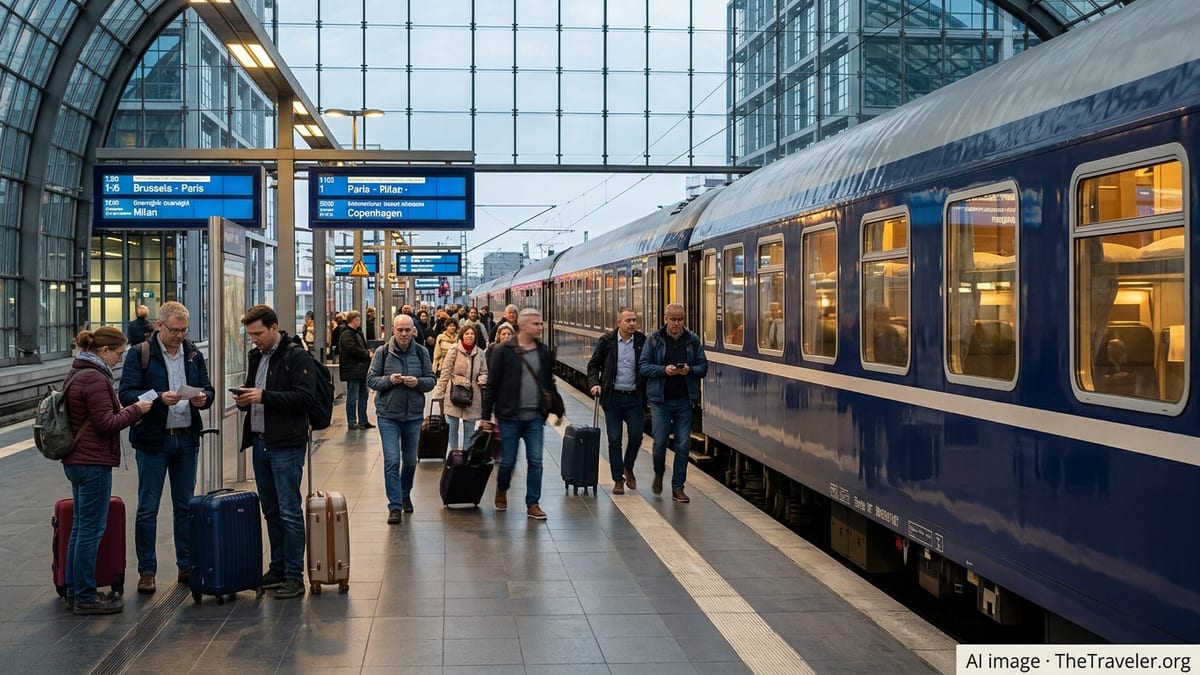
InnoTrans 2026 sets the stage for Germany’s rail ambitions
InnoTrans 2026 is scheduled to return to the Berlin Exhibition Grounds from 22 to 25 September 2026, once again serving as one of the largest global showcases for rail and transport technology. Organizers describe the event’s guiding theme as mobility on a global scale, with a strong emphasis on projects and growth opportunities that can accelerate the shift from road and air to rail in Europe.
The trade fair is structured around five core segments: Railway Technology, Railway Infrastructure, Public Transport, Interiors and Tunnel Construction. Exhibitors use the platform to unveil new rolling stock, digital signaling systems, infrastructure components and operational concepts that can raise network capacity while reducing lifecycle costs. Germany’s central role as host reflects the country’s ambition to anchor a broader European rail renaissance.
Publicly available information on the 2026 edition indicates that discussions will focus on improving reliability and resilience of networks that are under pressure from rising passenger numbers and freight demand. German federal commitments to invest heavily in restoring, digitalizing and expanding the national rail network provide a policy backdrop that makes energy‑efficient equipment and standardized components particularly relevant.
RECOM highlights compact power for demanding rail environments
Within this wider context, Austria‑based RECOM, a specialist in AC/DC and DC/DC power conversion, is positioning its railway portfolio as an enabler for safer and more efficient trains. Company documentation shows that RECOM has expanded its range of EN 50155‑certified power modules in recent years, addressing both on‑board and trackside applications. The focus has been on converters that can tolerate extreme voltage fluctuations, temperature swings and mechanical stress typical of rail environments.
Technical literature from RECOM describes families such as the RMD series, which offers high‑power DC/DC modules designed as ready‑to‑use building blocks for traction auxiliaries, braking systems, door controls, HVAC, passenger information, data logging and safety electronics. These products are engineered to comply with key railway standards covering input voltage ranges, electromagnetic compatibility, isolation, shock, vibration and fire safety.
Industry reports note that compact 300 to 500 watt EN 50155‑compliant converters have attracted attention because they allow designers to simplify boards and reduce the amount of external circuitry previously needed to meet rail specifications. For train manufacturers and system integrators preparing announcements around InnoTrans 2026, such off‑the‑shelf compliance can shorten development cycles and ease certification workloads.
Power solutions underpin Germany’s rail digitalization drive
Germany’s broader rail strategy increasingly rests on digital signaling, predictive maintenance and more automated operations, including concepts that move toward driver‑assist or eventually autonomous train control. Materials published ahead of InnoTrans 2026 indicate that themes such as digital automatic coupling, European Train Control System roll‑out and future radio standards are all expected to figure prominently in Berlin.
These innovations depend on stable and resilient power delivery to sensors, communication devices, wayside electronics and on‑board control units. Power interruptions or noisy supplies can compromise data integrity and reduce the availability of safety‑critical systems. By offering converters that handle wide input swings, transient events and harsh temperatures without derating, suppliers like RECOM aim to support the continuous uptime required by digital rail operations.
The push to modernize Germany’s rail network also includes retrofitting legacy rolling stock. Here, compact plug‑in modules that meet current standards can make it easier to upgrade older fleets with new control systems, condition‑monitoring hardware or passenger‑facing technology, without extensive redesign of existing electrical cabinets. Power solutions tailored to these constraints are positioned as a key piece of the retrofitting puzzle that German operators must solve over the coming decade.
Climate targets drive interest in efficient on‑board energy
Germany’s climate objectives place rail at the center of efforts to shift passengers and freight away from more carbon‑intensive modes. Policy documents and trade‑fair previews point to the importance of cutting energy losses in traction systems and auxiliary equipment, particularly as operators add new services and run more frequent trains on congested corridors.
Efficient DC/DC and AC/DC conversion contributes to this agenda by minimizing wasted power inside trains and railway infrastructure. When multiplied across national fleets and thousands of vehicles, incremental efficiency gains in auxiliary systems such as heating, ventilation, air conditioning, lighting and information displays translate into significant energy savings. This, in turn, can lower operating costs and help operators meet emissions reduction targets tied to electricity consumption.
Manufacturers like RECOM are responding by emphasizing high efficiency at partial load, broad input ranges suited to different catenary voltages and robust thermal performance that allows converters to operate at high ambient temperatures without forced cooling. These characteristics align with the priorities of German and European operators seeking to keep maintenance overheads low while maintaining reliable service in challenging climatic and operating conditions.
Berlin fair underscores Germany’s role in Europe’s rail ecosystem
As preparations advance for the 2026 edition, InnoTrans remains a symbol of how Germany’s rail industry interacts with a larger European ecosystem that includes research institutions, suppliers and infrastructure managers. Publicly available event information confirms that European bodies and joint undertakings devoted to rail innovation plan to use the Berlin venue to present technology roadmaps and demonstration projects.
For component suppliers such as RECOM, participation in this environment offers an opportunity to align product development with evolving technical specifications and cross‑border interoperability requirements. Rail electronics increasingly must function seamlessly across multiple countries, voltage systems and climatic zones, making standardized, certified power modules a strategic asset.
Against this backdrop, the focus on power solutions at InnoTrans 2026 illustrates how seemingly small components can have system‑wide implications. By abstracting complex standard compliance into modular, ready‑to‑integrate products, companies active in the power segment contribute a foundational layer to Germany’s push for a more innovative, digital and climate‑aligned rail network.