


Punta Sur Eco Beach Park on Cozumel’s wild southern tip is one of the easiest places in the western Caribbean to glide through mangroves, watch crocodiles in a natural lagoon, and still have time for a classic lighthouse climb and a lazy afternoon on a broad Caribbean beach. The park’s Colombia Lagoon, tucked just inland from the surf, is the centerpiece for wildlife watching and a highlight for many travelers who want a nature-focused break from the island’s busy cruise piers and in-town reef tours.
Get the latest updates straight to your inbox!
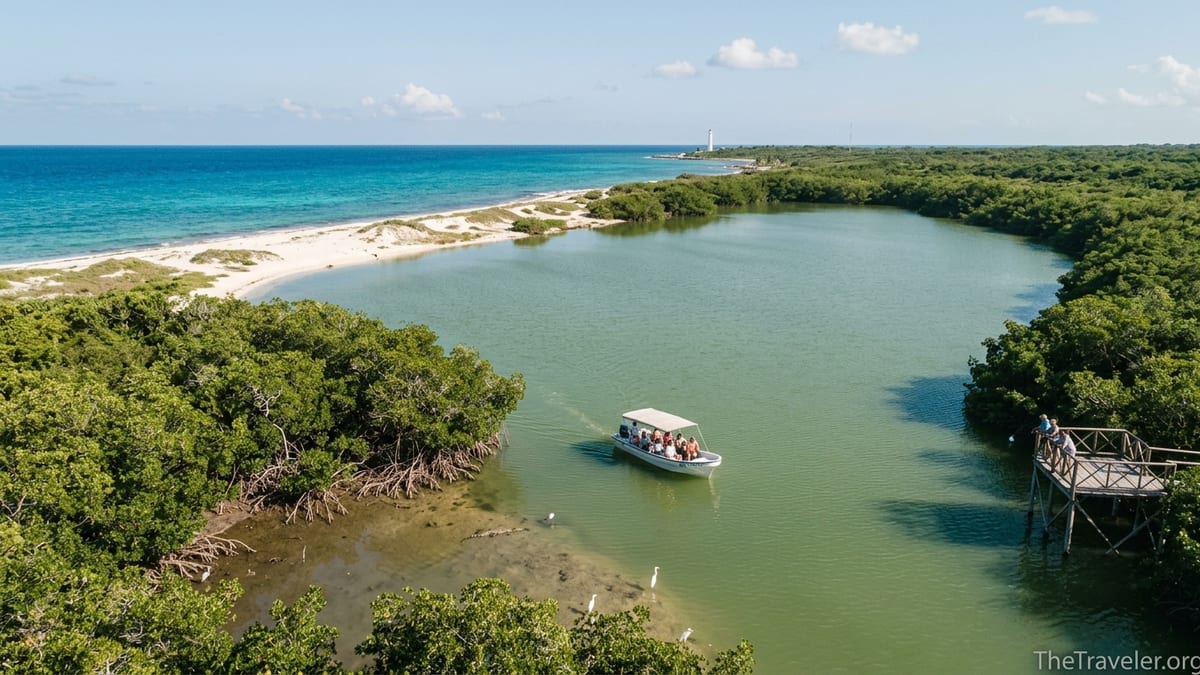
Understanding Punta Sur and the Colombia Lagoon
Punta Sur Eco Beach Park occupies the southernmost point of Cozumel, a protected reserve of beaches, dunes, mangroves and lagoons managed as a conservation area. Within this mosaic of habitats lies Laguna Colombia, the brackish lagoon where American crocodiles, egrets, herons and migratory shorebirds congregate. A narrow barrier of sand and low vegetation separates the lagoon from the open Caribbean, creating a quiet, wind-sheltered water body that contrasts sharply with the surf just a few hundred meters away.
The park’s entry fee, which for most of 2026 has been in the range you would expect for a major island attraction, covers access to the lighthouse, beaches, small museum and the lagoon area. For independent visitors arriving by rental car, jeep, or organized tour, the lagoon is roughly halfway between the park entrance and the long south-facing beach zone. Signposts direct you toward a wooden observation platform and small pier, where rangers and boat captains coordinate short interpretive trips out into the mangrove channels.
Most travelers experience the lagoon via a guided boat ride included in day tours or sold as an optional activity by local operators that market Punta Sur excursions. A typical program might combine snorkeling at Anemona or another nearby beach, a stop at Celarain Lighthouse, and a 25 to 40 minute ride on the lagoon. Because boat capacity is modest and departures limited, timing your visit to the lagoon matters if seeing crocodiles and birds is a priority.
Punta Sur sits far from downtown San Miguel and the main cruise docks, which helps keep the area relatively quiet compared with more commercial beach clubs. The distance also means that once you are inside the park, you are committed for several hours. For many, that is part of the appeal: a day that mixes gentle wildlife viewing with low-key beach time, without having to juggle multiple separate bookings around the island.
The Lagoon Boat Ride: What to Expect
The Colombia Lagoon boat ride is designed as a slow, observational trip rather than a high-speed thrill. Boats are typically small, shallow-draft vessels with bench seating and a canopy for shade. They follow a fixed loop from the wooden dock out into the main body of the lagoon and through one or more narrow mangrove channels, with frequent stops so the guide can point out wildlife. Engines are run at low speed to minimize wake and disturbance, and in some narrower sections the captain may idle or drift.
On most days, departures cluster in late morning and early afternoon, which aligns with common cruise excursion schedules. Visitor reports in recent seasons indicate that the last public departures for the lagoon are often around mid-afternoon and can sell out or be closed to late arrivals if wind conditions deteriorate. Travelers who reached the park entrance after early afternoon have described missing the final boat of the day and having to settle for views from the observation tower instead, so it is sensible to ask about the next departure time as soon as you enter the park or arrive at the lagoon area.
During the ride, guides usually provide a low-key commentary in both Spanish and English, highlighting the difference between saltwater crocodiles and other reptiles in the region, explaining the role of mangroves in coastal protection, and identifying birds on the fly. The atmosphere is quiet rather than scripted. There are no loudspeakers or music, and most captains encourage passengers to speak in low voices when approaching basking crocodiles or roosting birds.
Because space on each boat is limited and departures are not continuous, those visiting independently often find it easiest to head to the lagoon first, before lingering at the lighthouse or beach. Arriving at the park not long after opening, then working through lighthouse, lagoon and beach in that order, generally provides the best odds of catching a morning or early afternoon departure with fewer people on board.
Crocodiles and Other Wildlife You Might See
The star of the Colombia Lagoon is the American crocodile, a large but generally shy species that favors quiet estuaries and mangrove-fringed lagoons. Locals and recent visitors consistently report seeing one or more crocodiles on most boat trips, often resting near the edge of the water or gliding just below the surface with only eyes and nostrils exposed. On cooler or cloudier days, they are more likely to be seen basking on muddy banks or low mangrove roots, while on hot, bright afternoons they may remain partially submerged.
Birdwatchers are drawn to the lagoon for its mix of resident and migratory species. Commonly spotted birds include great and snowy egrets, reddish and great blue herons, osprey and frigatebirds patrolling overhead. In the cooler months, especially from roughly November to March, there can be additional flocks of shorebirds and occasional roseate spoonbills around the shallows. The exact mix changes week to week, but most casual visitors report seeing at least several species of wading birds and raptors during even a short ride.
Beyond crocodiles and birds, the mangroves shelter schools of small fish and, with some luck, visitors may glimpse turtles surfacing in the deeper parts of the lagoon. Iguanas sometimes sun themselves on exposed branches along the edges, and crabs scuttle among the roots at low tide. Your guide’s local knowledge matters; regular captains know which stretches have been favored by particular crocodiles or birds in recent days and will position the boat accordingly to offer good but respectful views.
Because wildlife is unpredictable, it is worth setting expectations realistically. Even in a protected area with healthy populations, there is no guarantee of close encounters on any particular outing. Some travelers enjoy dramatic sightings, like a crocodile surfacing near the boat or an osprey snatching a fish from the water, while others may only see distant silhouettes. Choosing earlier or later parts of the day, when temperatures are less intense and activity can be higher, may gently improve your chances.
Inside the Mangroves: Landscape, Seasons and Photography
The mangroves fringing the Colombia Lagoon are low and dense, dominated by species that tolerate the slightly salty, brackish mix of lagoon and seawater. Root systems rise like interlocking stilts from the shallows, creating shelter for fish and birds while stabilizing the shore against erosion. As the boat threads through channels, the canopy closes overhead in places, reducing wind and softening the light to a diffuse, green-tinged glow that photographers find forgiving for wildlife shots.
Seasonal differences subtly change the feel of the lagoon. During the drier months, typically late winter and early spring, skies are often clearer and water levels may be a little lower, revealing more exposed banks where crocodiles can bask. The wetter, warmer months bring richer greens in the mangroves, more insect activity and sometimes hazier skies. Rain showers are usually brief, but when storms pass nearby, operators may pause departures or shorten itineraries for safety, so flexible timing helps.
For photography, a mid-range zoom lens or the telephoto mode on a modern smartphone is often enough to capture crocodiles and birds without needing to stand or lean over the gunwale. Because the boats are small and passengers sit close together, large tripods and oversized camera bags are impractical. A soft-sided dry bag or simple waterproof pouch for your phone is a practical way to hedge against spray or short showers, especially if you are visiting during the wetter season.
Light on the lagoon can be surprisingly bright once you leave the shelter of the mangrove tunnels, particularly late in the morning when the sun reflects from the pale water surface. Polarized sunglasses help cut glare when scanning for reptiles near the surface and also make it easier to detect fish below. Many travelers appreciate a lightweight long-sleeved shirt or breathable sun layer, as you are still largely exposed to the tropical sun even if the boat has a central canopy.
Timing Your Visit, Safety and Practical Tips
Timing is one of the most important considerations for enjoying the Colombia Lagoon. Independent visitors who rent a small car near the main cruise pier or in central San Miguel often aim to reach the park within an hour or so of opening. This early arrival allows time for a relaxed visit to the Celarain Lighthouse and small maritime museum, followed by a lagoon boat ride before the midday heat and the largest tour groups. Those arriving on organized excursions may have less flexibility but still benefit from walking straight to the dock when the schedule allows.
Safety around the lagoon is straightforward but non-negotiable. This is genuinely wild crocodile habitat, not a petting zoo. Guides will emphasize staying seated in the boat, not dangling hands or cameras over the side, and never attempting to feed or lure animals closer, a practice that is strictly prohibited. On observation platforms and boardwalks near the lagoon, posted signs remind visitors to keep behind railings, supervise children closely, and avoid throwing food or waste into the water, which can alter animal behavior and attract opportunistic species.
Life jackets are typically provided and either worn or kept within arm’s reach depending on conditions and local regulations at the time of your visit. If you are traveling with young children or anyone who is not a confident swimmer, do not hesitate to request that they wear a properly fitted jacket from the start of the trip. Footwear that can handle wet or slightly uneven surfaces, such as sturdy sandals or water shoes, makes it easier to board and disembark at the simple wooden dock and to move along the sometimes irregular planks of the viewing platforms.
Heat, sun and insects are the main environmental factors to manage. A broad-brimmed hat, reef-safe sunscreen and a refillable water bottle are standard essentials for Punta Sur as a whole. In the mangrove zone, particularly near dusk or after recent rains, mosquitoes and other biting insects can be noticeable. A biodegradable insect repellent applied before you board the boat usually suffices; spraying over the water or directly onto railings is discouraged to protect the lagoon’s delicate ecosystem.
Fitting the Lagoon Into Your Lighthouse and Beach Day
Most travelers do not come to Punta Sur only for the lagoon. They combine it with a climb up the Celarain Lighthouse and a few hours on the park’s broad southern beaches, where low-key beach clubs offer shaded loungers, simple restaurants and calm water closer to the reef. Thoughtful sequencing can prevent backtracking and help you avoid the hottest, most crowded moments of the day, especially when cruise calls bring in multiple buses at once.
One efficient pattern for independent visitors is to drive from the park entrance directly to the lighthouse first. The short climb to the top rewards early arrivals with relatively cool temperatures, fewer people on the spiral staircase, and panoramic views across the reef, dunes and the interior lagoons. After exploring the small maritime museum at the base, you can continue by car or park transport toward the lagoon, aiming to join a late-morning boat departure when crocodiles may still be active near the surface.
After the lagoon, most travelers head to the beach zone for lunch and swimming. Beach clubs within the park typically offer shaded palapas, loungers and simple menus that lean on fresh fish, shrimp tacos and grilled dishes. Snorkeling just offshore provides a contrast to the lagoon environment, with shallow coral heads, small reef fish and, in good conditions, long views through clear water. Because the park generally closes in the late afternoon, and beach clubs wind down a bit earlier, it is wise to plan your return toward the entrance by mid to late afternoon to avoid feeling rushed.
Organized tours offered through cruise lines or local agencies usually package these same elements into a set schedule. For example, a common format includes transport from the pier to Punta Sur, time at a designated beach for snorkeling, a brief lighthouse stop, and a lagoon boat ride where available. If the lagoon experience is your top priority, ask the operator in advance whether it is included that day and how much time is allocated, as some shorter “beach break” style tours minimize or omit the lagoon stop in favor of more time by the sea.
How the Colombia Lagoon Compares to Other Regional Wildlife Experiences
Cozumel’s Colombia Lagoon sits in a broader regional context of mangrove and lagoon-based wildlife experiences found along the Caribbean and Gulf coasts of Mexico and Central America. Compared with more specialized crocodile sanctuaries or large estuary reserves on the mainland, Punta Sur offers a compact, family-friendly introduction to this environment rather than an intensive, all-day safari. This accessibility is part of the appeal for cruise passengers and short-stay visitors who want to step briefly into a wild setting without major extra logistics.
Unlike heavily commercialized animal attractions that enclose crocodiles or stage predictable shows, the Colombia Lagoon remains a functioning ecosystem where animals move freely. This comes with trade-offs. Sightings can be less predictable, and guides must sometimes keep a greater distance to avoid stressing wildlife, particularly during breeding seasons. For travelers who value authenticity and a lighter footprint, this natural variability is often a positive feature rather than a drawback.
For birders or photographers planning a dedicated nature-focused trip, the lagoon can be a pleasant half-day addition rather than the sole focus of an itinerary. It pairs well with offshore snorkeling or diving on Cozumel’s famous reefs, offering a change of pace from open-water activities. Some visitors coordinate their Punta Sur day with other eco-oriented stops on the island, such as quieter beach zones further east, to build a mixed program of sea and land-based nature experiences.
Families, especially those traveling with school-age children, often find that the combination of a short, guided wildlife outing and plenty of free play time at the beach keeps everyone engaged. The lagoon boat ride gives children a tangible sense of what mangroves and crocodiles look like in real life, which can connect nicely with classroom lessons about wetlands and conservation. Because the experience is self-contained within a larger park day, it also feels less pressured than standalone wildlife excursions that hinge on a single long boat trip far from other amenities.
The Takeaway
Punta Sur’s Colombia Lagoon offers a rare combination for Cozumel visitors: a simple, guided window into a mangrove and crocodile ecosystem that still fits comfortably within a relaxed beach and lighthouse day. The boat ride itself is short and calm, but it opens up a quieter side of the island that many travelers overlook in favor of reef tours and busy beach clubs closer to town.
By arriving earlier in the day, asking about boat departure times as soon as you reach the park, and following guides’ safety instructions around the water, you can maximize your chances of seeing American crocodiles, wading birds and the intricate root systems that hold the lagoon’s shoreline together. Thoughtful clothing, sun protection and a small telephoto-capable camera or phone round out the practical side of the outing.
Whether you visit on a cruise excursion or independently with a rental car, the lagoon should be seen not as a standalone attraction but as one element in Punta Sur’s broader mosaic of dunes, beaches and historic navigation points. When you climb the Celarain Lighthouse after a morning in the mangroves, the sweeping view of the lagoon complex inland and the reef offshore makes it easier to appreciate how interdependent these habitats are. For travelers who want their day at the beach to include at least one moment of wildness, the Colombia Lagoon delivers quietly but convincingly.
FAQ
Q1. Do I need to book the Colombia Lagoon boat ride in advance?
In most cases independent visitors do not book the lagoon boat separately; rides are coordinated on-site by park staff and guides. However, during busy cruise days and high season it is wise to arrive earlier in the day and ask about departure times as soon as you enter the park, since the number of trips and seats is limited.
Q2. How likely am I to see crocodiles on the lagoon tour?
Recent visitor reports suggest that crocodile sightings are common but never guaranteed. On many outings at least one crocodile is seen basking on the banks or swimming near the surface, while on others they may remain hidden among the mangroves. Cooler mornings and late afternoons can offer slightly better viewing conditions than the hottest hours of midday.
Q3. Is the lagoon boat ride suitable for young children?
The ride is generally calm and slow, with all passengers seated and life jackets available, so many families find it suitable for school-age children. Parents should be prepared to supervise closely, ensure children stay seated and keep hands inside the boat, and may wish to request that life jackets be worn throughout the trip for extra peace of mind.
Q4. What should I wear for the lagoon and mangrove areas?
Lightweight, breathable clothing that covers shoulders, a hat with a brim, and comfortable sandals or water shoes work well. Because boarding and disembarking happen at a simple wooden dock, closed-toe shoes or sturdy sandals provide better footing than flimsy flip-flops. A long-sleeved sun layer and a small amount of insect repellent are also helpful.
Q5. Can I swim or kayak in the Colombia Lagoon?
No, the lagoon is managed as a wildlife viewing area and is inhabited by wild crocodiles, so swimming and recreational paddling are not permitted. All access is through guided boat rides and designated viewing platforms designed to keep both visitors and animals safe.
Q6. How much time should I plan for the lagoon within a Punta Sur day?
The boat ride itself typically lasts less than an hour, but you should allow extra time for waiting, walking from the parking area, and pausing at the viewing platform. In practice, setting aside about two hours in your day for the lagoon portion gives you a relaxed margin while still leaving ample time for the lighthouse and beach.
Q7. What if the weather is bad on the day of my visit?
Light rain often does not stop lagoon tours, and sometimes overcast skies can make wildlife more active. However, strong winds, thunderstorms or rough conditions may cause operators to suspend or shorten rides for safety. If the lagoon is temporarily closed, you can still explore the lighthouse, museum and beach areas, and check back with staff later if conditions improve.
Q8. Are there bathrooms and food options near the lagoon?
Basic restroom facilities are usually available within the park but may not be directly at the lagoon dock, so it is sensible to stop before or after your boat ride. Food and drink options are concentrated around the beach clubs and main facilities, not in the heart of the mangrove zone, so carry water with you when you head toward the lagoon.
Q9. Do I need special camera gear to photograph the wildlife?
You do not need professional equipment; a good smartphone or compact camera with a modest zoom is usually sufficient to capture crocodiles and birds from the boat. If you own a camera with interchangeable lenses, something in the short telephoto range is ideal. Because space is limited, it is best to keep your kit simple and use a small dry bag to protect electronics from spray.
Q10. How does a lagoon visit fit into a cruise port stop in Cozumel?
For cruise passengers, Punta Sur and the Colombia Lagoon usually work best as part of an organized shore excursion that includes transport, a lighthouse visit and beach time. Independent travelers can also hire a taxi or rent a car, but should keep an eye on ship departure times, the drive to and from the park, and the fact that lagoon boat departures are limited and may not align perfectly with tight port schedules.