


More news on this day
Germany’s river towns are welcoming a growing wave of cruise passengers who arrive not only to sail, but to cycle, as luxury operators such as Riverside expand bike-focused itineraries along the Rhine, Danube and other key European waterways.
Get the latest news straight to your inbox!
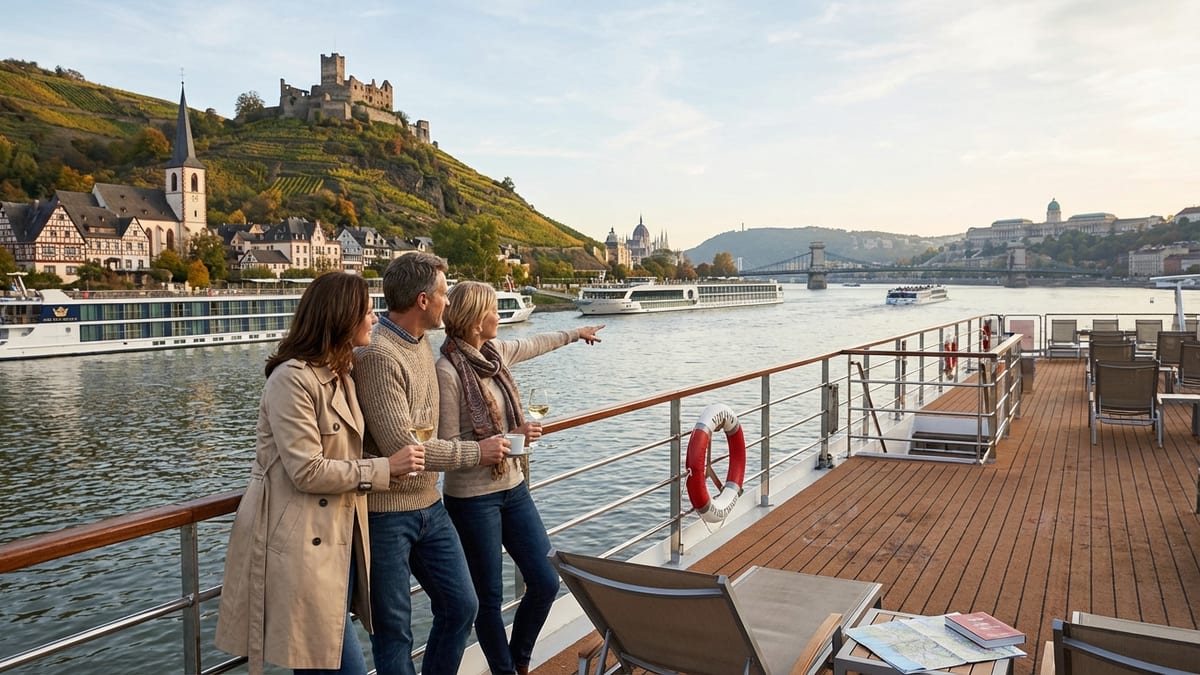
Germany Emerges as a Magnet for Active River Cruisers
Recent tourism intelligence from the German National Tourist Board indicates that Germany is increasingly perceived as a particularly strong destination for river cruises, with the Rhine, Main and Danube corridors standing out as core draws for international visitors. Publicly available data highlight that river trips are benefiting from the country’s dense network of historic towns and well-maintained paths that run parallel to major waterways, making it easy to combine time on the ship with time in the saddle.
Industry monitoring by inland navigation bodies shows that the wider European river cruise market has grown steadily between the 2023 and 2024 seasons, with passenger numbers on Europe’s rivers rising in double digits year over year. Germany, as one of the central nodes of the Rhine and Danube systems, is a key beneficiary of this momentum, drawing ships that now routinely market hiking and cycling as headline activities rather than niche add-ons.
According to cruise trade analysis in Europe, Germany’s cruise sector also plays an expanding role in the broader tourism economy, contributing billions of euros in direct and indirect value. While ocean cruising still dominates overall volume, river itineraries that call at German ports are gaining ground by targeting travelers who want slower travel, more time in port and a more active style of exploration.
Reports from travel advisors and consumer-facing coverage suggest that this shift is particularly visible among North American and European guests in the 40-plus age bracket who are looking for soft-adventure options. For these travelers, cycling along a riverside path to meet a ship further downstream offers a way to see castles, vineyards and villages at human speed while keeping the comforts of a premium vessel within easy reach.
Riverside Pivots to Cycling-Centric Luxury on the Danube and Rhine
Riverside Luxury Cruises, which operates boutique river ships such as Riverside Mozart and Riverside Debussy, has become one of the most visible names attaching high-end cruising to active sightseeing. The line’s published material emphasizes customizable excursions that range from city walking tours to e-bike outings, positioning cycling as a core part of the onboard experience rather than an occasional shore option.
Specialist travel features have recently spotlighted Riverside’s cycling-focused sailings along the Danube, describing how guests can ride key sections of the famed Danube Cycle Path during the day while the ship repositions to the next port. One such itinerary links German embarkation points like Passau with Austrian and Hungarian cities, allowing riders to follow river-hugging bike paths through vineyard regions such as the Wachau Valley before rejoining the vessel.
On the Rhine, Riverside has introduced programs on ships like Riverside Bach that foreground landscapes in western Germany, pairing scenic segments in the Upper Middle Rhine Valley with opportunities for guided cycling. Marketing materials highlight castles, wine villages and UNESCO-listed stretches of river, while giving guests the choice between staying aboard for slow cruising or joining small-group bike outings on shore.
Industry overviews from luxury travel networks describe Riverside as a top-tier river operator focused on high service levels, multiple dining venues and upscale suites, characteristics that help it attract travelers who might previously have considered only ocean itineraries. With that audience increasingly open to active experiences, dedicated cycling departures and e-bike options give the brand a way to differentiate itself in a crowded European river market.
Competing Lines Amplify Bike and Barge-Style Products Across Europe
Riverside’s strategy sits within a wider European trend in which river cruise companies and bike-and-barge specialists are adapting classic itineraries for cyclists. Established river operators such as Uniworld have long collaborated with cycling tour firms to offer bike-intensive sailings, and their current program lineups continue to feature departures in Germany, Austria, France and the Low Countries that devote significant time to guided rides ashore.
Meanwhile, dedicated bike-and-barge providers have expanded their catalogs of itineraries along the Rhine, Moselle, Saar, Neckar and connected canals, many of which either start or end in Germany or pass through German territory as part of longer routes linking the Netherlands, Belgium and France. These products typically combine relatively short daily cycling distances on flat towpaths with overnight stays aboard compact river vessels, a format that has broadened the appeal of cycling holidays to less experienced riders.
Travel media roundups of Rhine and Danube cruises increasingly highlight onboard bike fleets, e-bike rentals and cycling shore excursions as standard features across multiple river lines. In ports such as Breisach on the Upper Rhine or various Danube towns, passengers are now as likely to see organized bike groups setting off from the quay as they are to encounter traditional coach tours heading to castles or museums.
This convergence between classic river cruising and cycling tourism is also visible in the way itineraries are branded. Brochures and online listings emphasize themes such as “bike and wine,” “castles and cycling” or “active discovery,” signaling that time spent pedaling through countryside, vineyards and small towns is central to the promise of the trip rather than a peripheral diversion.
Growing Cycling Tourism Underpins Demand Along Europe’s Rivers
The boom in cycling-oriented cruises aligns with broader growth in European bike tourism. Research compiled by cycling advocacy groups and regional tourism networks in Germany shows that multi-day bike trips and short cycling breaks represent a substantial and growing share of domestic and inbound leisure travel. Analysts note that new survey methodologies introduced for 2024 now capture a wider range of cycling behavior, from long-distance tours with several overnight stays to shorter rides undertaken during general vacations.
Germany’s extensive system of signposted long-distance bike routes, many of which trace riverbanks, gives river cruise companies and tour operators a ready-made infrastructure on which to build. The Danube, Rhine and Moselle routes in particular are frequently cited in cycling travel guides as accessible options for riders of varying abilities, thanks to their generally gentle gradients and frequent access to rail stations and river ports.
Financial and destination reports from cruise trade associations observe that river lines are responding to this demand by investing in equipment, staffing and itinerary design. Ships sailing in Germany and neighboring countries are increasingly equipped with dedicated bike storage areas, charging points for e-bikes and shore teams able to manage guided rides and route logistics.
Travel advisors and cruise-focused publications also point to the appeal of these itineraries for multigenerational groups and mixed-ability travelers. Because guests can choose each day between cycling, walking, coach sightseeing or remaining onboard, families and groups of friends can share a single cruise while tailoring their level of activity individually, a flexibility that is harder to achieve on point-to-point land-based bike tours.
Future Outlook: More Bikes on Decks From the Rhine to the Danube
Looking ahead to upcoming seasons, market observation reports from inland navigation authorities suggest that the European river cruise fleet remains stable in vessel numbers but is evolving rapidly in terms of product mix. Operators are under pressure to stand out in a maturing market, and active travel continues to be identified as one of the most promising segments for growth.
In Germany and neighboring markets, that trend is likely to translate into further refinement of cycling cruise offerings, including more themed departures, expanded e-bike capacity and closer collaboration with local tourism boards along river corridors. As more regions along the Rhine, Danube and Moselle invest in riverfront paths and cycling-friendly infrastructure, itineraries can add new ports of call and route variations without requiring major changes to ship deployment.
Consumer-facing travel coverage has already begun to reflect this shift, highlighting river cruises that combine traditional wine tastings and city tours with guided rides through vineyards or to seasonal events such as festivals in German river towns. In this environment, Riverside and its competitors are expected to continue fine-tuning their cycling products to appeal both to committed riders and to cruise guests trying bike touring for the first time.
With Germany at the heart of Europe’s inland waterway network and cycling more popular than ever, the sight of bikes lining river ship decks from Cologne to Passau is set to become an increasingly common symbol of how river cruising is changing. Instead of choosing between a cycle tour and a cruise, growing numbers of visitors can now realistically plan to do both at once along Europe’s storied rivers.
Germany Travel: River Cruise Market Insights
CCNR Market Observation: European River Cruise Trends
Riverside Luxury Cruises: Official Site