


Punta Sur Eco Beach Park is where Cozumel turns wild: a protected headland of white-sand beaches, lagoons filled with crocodiles and birds, and a historic lighthouse watching over the reef. For first-time visitors, especially cruise passengers with only a few hours ashore, it can be the most rewarding place on the island, but only if you understand the logistics. This guide walks you through everything you need to know, from tickets and transport to snorkeling, wildlife, and timing your visit so you make it back to the ship with time to spare.
Get the latest updates straight to your inbox!
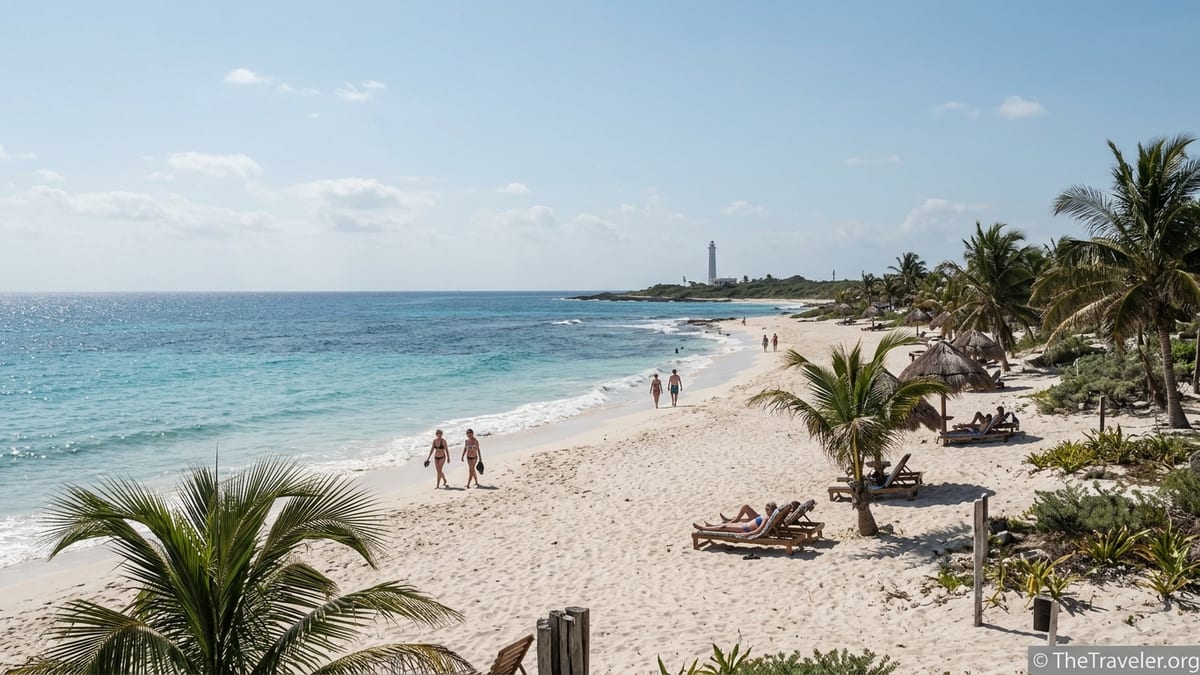
Where Punta Sur Is and What Makes It Special
Punta Sur sits at the very southern tip of Cozumel in Quintana Roo, Mexico, about 27 to 30 kilometers from downtown San Miguel and roughly 16 to 18 miles from the main cruise piers. It forms a large ecological reserve known as Punta Sur Eco Beach Park, stretching from the open Caribbean on the east side of the island to the calmer lagoon and reef areas on the west. You feel the distance as you ride down: the hotel strip and beach clubs thin out, the traffic fades, and mangroves and low coastal forest take over.
The park protects beaches, dunes, coastal jungle, and the Colombia Lagoon system, which is home to crocodiles, herons, and other wildlife. Visitors enter through a gated park entrance where staff checks tickets and give a quick orientation. Inside, a network of sandy roads connects the lighthouse area, lagoon lookout points, and the main beach clubs. That internal distance is part of why planning matters: from the entrance gate to the far beaches is several kilometers, and walking the whole way in tropical heat is not realistic for most visitors.
Punta Sur also marks the southern edge of the Arrecifes de Cozumel National Park, the protected marine zone that includes some of the island’s best-known reefs. Just offshore you will find advanced dive sites such as Devil’s Throat, but snorkelers can still enjoy healthy shallow reef areas closer to the beach, with far fewer crowds than at many west‑coast beach clubs near town.
For a first-time Cozumel visitor, Punta Sur balances scenic, low-key beach time with a clear sense of place: you are not in a generic resort zone, but in a nature reserve where you might spot coatis on the roadside, frigatebirds circling above, and crocodiles patrolling the lagoon while you climb a lighthouse built to guide ships around this exposed headland.
Tickets, Opening Hours, and What Your Entry Includes
Punta Sur operates as a paid eco-park, with a single per-person entry fee at the main gate. As of mid 2026, published prices are typically in the range of about 18 to 22 US dollars per adult, with somewhat lower rates for children. Families often budget around 70 to 90 dollars for two adults and two kids before food, rentals, or taxis. Because prices can change seasonally, it is wise to confirm the latest cost on Cozumel’s official tourism channels or directly at the park entrance the week of your trip rather than relying on older blog posts.
The park usually opens around 9 a.m. and closes in the late afternoon, often near 4 or 5 p.m. Last entry is typically well before closing to give staff time to clear the internal roads and beaches before dark. Cruise visitors on ships that depart Cozumel by 5 or 6 p.m. should plan to visit Punta Sur in the morning to early afternoon, both to enjoy cooler temperatures and to avoid pushing against those afternoon closing times.
Your entry fee covers access to the entire reserve, the Celarain Lighthouse and its small maritime museum, Mayan ruins at El Caracol, internal eco-bus or shuttle service on the main route, restrooms, showers, and basic beach facilities like loungers and hammocks at the park-run beach clubs. Many visitors are pleasantly surprised to learn that the short boat trip on the lagoon to view crocodiles is often included in entry during set midday departures, although exact schedules can change with weather and staffing.
What is not included are optional extras such as snorkel gear rental, kayaks or paddleboards, alcoholic drinks, and full restaurant meals at the beach clubs. For example, renting a basic snorkel set with fins and life jacket will often run around 15 to 20 US dollars for a half-day, while kayak or paddleboard rentals commonly run around 20 US dollars per hour for one or two people. These prices are comparable to west‑coast beach clubs but feel more worthwhile when you can paddle past mangroves or over uncrowded reef.
Lighthouse, Museum, Lagoon, and Wildlife Highlights
Most visitors make their first major stop at Faro Celarain, the park’s historic lighthouse built in the early 1900s. It rises above the dunes on the eastern side of the park and is visible from far out at sea. Inside the base is a compact maritime museum with displays on regional navigation, shipwrecks, and lighthouse history, with labels in both Spanish and English. The museum itself is a quick 15 to 20 minute visit, but the real draw is climbing the spiral staircase to the top balcony.
The climb involves a narrow series of steps that can feel steep and warm, so those with mobility issues or a fear of heights may choose to wait at ground level. At the top, though, you are rewarded with a 360‑degree panorama over the reef, lagoon, and coastal jungle. On clear days, you can see the line of surf breaking on the eastern shore and the calmer blue gradient over the west‑side lagoon. Many cruise passengers consider this one of their favorite photos of the day, especially if they arrive before midday when the light is soft and the air less hazy.
Not far from the lighthouse is El Caracol, a small Mayan structure that likely served as a storm or navigational marker centuries ago. Interpretive signs explain how its conch-shaped elements may have produced sound when strong winds approached. It is not a large ruin like Tulum or Chichen Itza, but for history-minded visitors it provides a tangible link between the ancient maritime world and the modern lighthouse nearby.
On the lagoon side of the park, wooden observation towers and platforms look over Colombia Lagoon, home to crocodiles, herons, egrets, and occasionally ospreys. Rangers often point out crocodiles that bask on muddy banks in the morning or cruise slowly through the water. Short interpretive boat rides, typically offered around midday, take visitors across part of the lagoon to look for wildlife and learn about the mangrove ecosystem. These boat rides are usually gentle and suitable for families, though small children should be supervised closely around any water or wildlife viewing areas.
Beaches, Swimming, and Snorkeling at Punta Sur
Punta Sur’s west‑facing beaches are what many visitors picture when they think of the Caribbean: wide, pale sand backed by palms and low dunes, open views of turquoise water, and a much quieter, more natural feel than the busier cruise-oriented clubs near town. Within the park you will find official beach areas with loungers, hammocks, palapas, showers, and a restaurant and bar service. Names and operators of beach clubs can change, but in recent years popular stops have included Papito’s Beach Club and the Punta Sur Beach Club area farther along the road.
The water conditions vary by spot. Closer to the reef there are patches of coral and rock underfoot, so most people bring or rent water shoes. Snorkeling from shore can be rewarding on calmer days, with schools of tropical fish, sea fans, and occasionally rays gliding over the sand. Visitors often comment that they see as many or more fish here than at heavily marketed west‑side clubs, and with far less boat traffic. Because Punta Sur falls within a protected marine area, park staff may restrict where you can snorkel, and you are expected not to touch coral or chase wildlife.
Families with small children often choose the shallower, more sheltered sections of beach near lifeguard stations and marked swimming areas. On days with higher surf or strong current, staff may advise against snorkeling from shore and suggest sticking to wading and shallow play. Red flags and posted notices are taken seriously here; conditions at the exposed southern point can change quickly, and lifeguards are cautious about letting inexperienced swimmers venture too far.
For more confident snorkelers, a common pattern is to arrive around opening time, claim loungers at the park beach, and then rent snorkel sets for an hour or two of relaxed exploration before lunch. An example day might be renting gear for around 20 US dollars per person, snorkeling from the marked entry point to a buoy line and back, and then trading fins for a hammock while you order grilled fish tacos and a cold drink from the beach restaurant.
Getting to Punta Sur: Taxis, Rentals, and Organized Tours
Because public buses and rideshare services do not serve Punta Sur, you will reach the park either by taxi, rental vehicle, or as part of an organized tour. For first-time visitors, especially cruise passengers, the simplest option is usually a taxi from the pier. As of 2026, published taxi fare charts show prices in the rough range of 22 to 28 US dollars one way from the main cruise piers to Punta Sur for a standard taxi carrying up to four passengers. Prices are posted on boards near the taxi ranks, so always check the official chart and confirm the total fare with the dispatcher before getting in.
Independent travelers sometimes rent a car or Jeep in town, drive the west‑side coastal highway past the hotels and smaller beach clubs, visit a few east‑coast viewpoints, and then loop into Punta Sur for several hours before returning to San Miguel. This can be cost-effective for a group that plans to explore multiple stops around the island, but Cozumel’s coastal road is narrow in places, and some of the internal park roads can be bumpy. Local authorities and tour operators frequently remind visitors not to drive after dark and to avoid speeding on the curves, particularly on the east side where there are no streetlights.
Organized excursions from cruise lines and independent operators often bundle transport, park entry, and additional activities. A typical example is a Jeep caravan tour that leaves from near the pier, circles part of the island, stops at a small Mayan ruin, visits Faro Celarain, includes a guided lagoon wildlife stop, and then gives you a few hours of free time at the Punta Sur beach club with lunch. These tours may cost more per person than going independently, but they appeal to first-time visitors who want a structured day and the reassurance that someone else is watching the clock.
For hotel guests staying several days on Cozumel, a simpler plan is to have the front desk call a taxi, head down to the park shortly after opening, and arrange with the same driver to return for you at an agreed time. Many visitors negotiate a round-trip fare with waiting time included; for example, agreeing on a set price to be picked up at 9 a.m., dropped at Punta Sur, and then collected again at 3 p.m. Clarify whether payment is due at the end of the day and make sure you have cash in US dollars or Mexican pesos, as card acceptance in taxis can be inconsistent.
Wildlife, Safety, and Practical On-the-Ground Tips
Punta Sur is first and foremost a nature reserve, and wildlife encounters are a central part of the experience. It is common to see coatis along the road, iguanas sunning on rocks near the lighthouse, and a wide variety of shorebirds and waders in and around the lagoon. Crocodiles are the star attraction at the observation platforms and on the lagoon boat ride. They generally keep their distance, but you should remain behind railings, supervise children closely, and never feed any animals, including coatis or raccoons that may approach picnic areas.
Because shade is limited in many parts of the park, sun protection is essential. Wide-brim hats, UV shirts, and reef-safe mineral sunscreen applied at least 20 minutes before entering the water help protect both your skin and the coral reef. Many visitors underestimate how strong the sun is at Punta Sur, especially when reflected off the white sand; it is common to see first-time cruise passengers leaving with noticeable sunburn after only a few hours. Bringing a light long-sleeve rash guard and a sarong or cover-up can make the difference between an enjoyable day and an uncomfortable evening back on the ship.
Facilities inside the park are basic but adequate: there are restrooms and outdoor showers at the main beach areas, simple changing rooms, and a small number of gift and snack stands. Payment at restaurants and rental stands leans heavily toward cash in pesos or US dollars. Some visitors report being able to use cards at certain points, but network coverage can be unreliable. For that reason, carrying at least enough cash to cover entry, taxis, food, and rentals is prudent. If you are coming from a cruise ship, there will usually be ATM access at or near the pier, and hotel guests can plan a stop at a bank in San Miguel before heading south.
Weather-wise, the dry season from roughly late November through April generally brings calmer seas and lower humidity, ideal for beach and snorkeling days. Summer and early fall can be hotter and more humid, with a greater chance of afternoon showers or storms, as well as the broader Atlantic hurricane season. Punta Sur may close temporarily during severe weather or heavy seas. On days with strong wind, staff may limit access to certain viewpoints or water activities for safety, so it is always worth asking the rangers at the entrance what conditions are like that day.
Timing Your Visit From a Cruise Ship or Short Stay
Cruise passengers typically have between 6 and 9 hours in port, depending on the itinerary. Because Punta Sur is around 40 to 50 minutes by taxi from the main cruise piers, round-trip travel and park time must be planned carefully. A good rule of thumb is to schedule your Punta Sur visit to occupy the middle of your port day, leaving at least 60 to 90 minutes between your planned return to the pier and your ship’s published all-aboard time. This buffer accounts for unexpected delays such as slow lunch service, a sudden rain shower, or a wait for returning taxis.
A common real-world plan for a ship docking around 8 a.m. is to disembark by 8:30, be in a taxi by 9, arrive at Punta Sur close to opening around 9:40, and then spend until about 2 p.m. in the park. That gives you roughly four solid hours for lighthouse, lagoon, lunch, and beach time. Leaving the park no later than 2:15 p.m. puts you back at the pier by around 3 p.m., still leaving a comfortable margin if your all-aboard is at 4:30 or 5 p.m. Organized cruise excursions will typically build in similar or slightly larger buffers, and you simply follow the group schedule.
Travelers staying on Cozumel for several days enjoy more flexibility. Many choose to pair a Punta Sur day with a leisurely loop of the island, stopping at small bars and viewpoints along the wild east coast before or after their park visit. In that case, it makes sense to start early, reach Punta Sur before late morning heat sets in, and leave by midafternoon to enjoy a few photo stops on the return drive. Evening returns allow you to watch the sun set over the west‑side highway near the hotel zone, though you should plan to be off the more remote east‑coast road before full dark.
If you are visiting Cozumel on a short land stay and are torn between a dedicated reef-boat snorkeling tour and a day at Punta Sur, consider your priorities. Punta Sur offers a blend of moderate shore snorkeling, beaches, and wildlife interpretation, while dedicated snorkel trips from marinas near town may take you by boat to sites like Palancar or Colombia Reef for deeper drifts. Many travelers with two or three full days on the island end up doing both: one boat-based reef day and one relaxed eco-park day at Punta Sur.
First-Time Cozumel Tips That Make Punta Sur Even Better
First-time visitors to Cozumel often arrive with only a rough sense of the island’s layout: cruise piers in the west, hotel zone nearby, and reef tours departing from marinas. Punta Sur sits far enough from all of this that basic preparation goes a long way. Before heading out, check your ship or hotel’s daily schedule, take a photo of the taxi fare board at the pier, and confirm Punta Sur’s closing time that specific day. Many experienced visitors carry a simple daypack with a waterproof phone case, small first aid kit, bug repellent for the lagoon area, and a printed or offline copy of their ship’s all-aboard time in case mobile data drops.
Language is rarely a barrier at Punta Sur; many staff speak at least basic English, and signs are generally bilingual. Still, a few Spanish phrases such as “ida y vuelta” for round trip, “a qué hora cierran” for “what time do you close,” and “cuánto cuesta” for “how much does it cost” can make interactions smoother. Tipping is customary in Mexico, and visitors commonly leave 10 to 15 percent at the park restaurant and a few dollars per person for guides or boat operators who provide good service.
If you are concerned about crowds, aim for a weekday visit during standard school terms in North America, avoiding major holiday periods such as late December or Easter week. Even then, Punta Sur tends to feel less congested than compact beach clubs near the cruise piers. Multiple ships in port may increase taxi wait times in the morning, so walking a few minutes beyond the immediate pier gate can sometimes yield shorter lines at secondary taxi stands, still using the official fare chart.
Finally, remember that cell coverage in and around the park can be patchy, particularly on the lagoon side and deeper inside the reserve. Do not rely solely on ride-hailing apps or map services that require constant data. Agree in advance with your driver where and when you will meet for the return, and consider carrying a small analog watch or setting alarms on your phone while you still have a signal. Those small, practical steps allow you to relax once you are on the sand, knowing the logistics are handled and your first Punta Sur experience will end with you safely back in San Miguel or at the pier.
FAQ
Q1. Is Punta Sur worth it for first-time visitors with only one day in Cozumel?
Punta Sur is a strong choice if you want a mix of beach, nature, and light history instead of a crowded, party-style beach club. If your priority is maximum time on a boat or at a swim-up bar, you might prefer a dedicated reef tour or a club closer to the pier, but many first-timers say Punta Sur is the highlight of their short visit.
Q2. How much time should I plan to spend at Punta Sur?
Most visitors find that four to five hours is ideal. That gives enough time to climb the lighthouse, visit the lagoon lookout or boat ride, have lunch, and enjoy a couple of hours on the beach without rushing. Cruise passengers should factor in at least 90 minutes total round-trip transport on top of that.
Q3. Can I visit Punta Sur independently from a cruise ship, or do I need a tour?
You can visit independently by taking a taxi from the cruise pier and paying park entry at the gate. This offers more flexibility and can be cheaper for small groups. However, an organized tour can simplify logistics and may feel safer for those nervous about managing time, since the operator builds in the return-to-ship buffer for you.
Q4. Is snorkeling at Punta Sur good enough, or should I book a separate snorkel excursion?
Snorkeling at Punta Sur can be excellent on calm days, with healthy reef patches and fewer crowds than near-town clubs, but access is from shore and conditions depend on wind and current. If snorkeling is your top priority and you want guaranteed reef time, consider combining Punta Sur with a separate boat-based snorkel tour on another day or cruise stop.
Q5. What should I bring with me to Punta Sur?
Bring cash in pesos or US dollars for entry, taxis, and tips, along with a swimsuit, towel, reef-safe sunscreen, hat, sunglasses, water shoes, and a change of clothes. A light rash guard for sun protection, bug repellent for lagoon areas, and a waterproof phone case are also very useful. If you have your own snorkel gear, bringing it saves rental fees and ensures a comfortable fit.
Q6. Are there food and drinks available inside the park?
Yes, there are beach restaurants and bars inside Punta Sur serving typical Mexican and Caribbean dishes such as ceviche, grilled fish, tacos, and burgers, along with soft drinks, beer, and cocktails. Prices are similar to midrange beach clubs elsewhere on the island. You can also bring a small amount of your own snacks and water, but most visitors rely on the park restaurants for full meals.
Q7. Is Punta Sur suitable for children and older travelers?
Yes, Punta Sur is generally family-friendly. Children enjoy the wildlife viewing and wide sandy beaches, while older travelers appreciate the quieter atmosphere. That said, the lighthouse climb involves steep, narrow stairs, and internal paths can be uneven, so those with limited mobility may prefer to enjoy the ground-level museum, lagoon views, and beach areas rather than attempting the full climb.
Q8. Will my phone work at Punta Sur, and can I use mobile payments?
Cell coverage at Punta Sur is patchy and can drop entirely in some sections of the park, especially around the lagoon and deeper inside the reserve. Do not count on mobile payments or messaging working consistently. Some vendors may accept cards, but cash is safer. Arrange return transport and meeting times in advance rather than relying on calls or messages from inside the park.
Q9. What happens if the weather is bad on the day I plan to visit?
On days with heavy rain, strong wind, or rough seas, Punta Sur may close certain areas or reduce activities such as snorkeling and lagoon boat rides. Light rain usually does not stop operations, but lightning or storm warnings can lead to temporary closures. If you are on a cruise-organized excursion, the line will either adjust the schedule or offer alternatives. Independent visitors should check conditions that morning through their hotel or by asking taxi drivers, who are usually up to date on local closures.
Q10. How does Punta Sur compare with other Cozumel beaches and parks?
Punta Sur feels more like a nature reserve with added comforts, while many west‑side beach clubs closer to town focus on pools, inflatables, and all-inclusive drinks. Parks like Chankanaab combine snorkeling with dolphin programs and botanical areas, whereas Punta Sur emphasizes wild coastline, wildlife, and a historic lighthouse. If you value space, scenery, and a quieter atmosphere, Punta Sur stands out among Cozumel’s major beach destinations.