


More news on this day
Glasgow Airport is warning passengers to allow extra time for their journeys as the summer peak approaches, citing the risk of longer security queues, heavier road traffic and knock-on disruption from wider European travel pressures.
Get the latest news straight to your inbox!
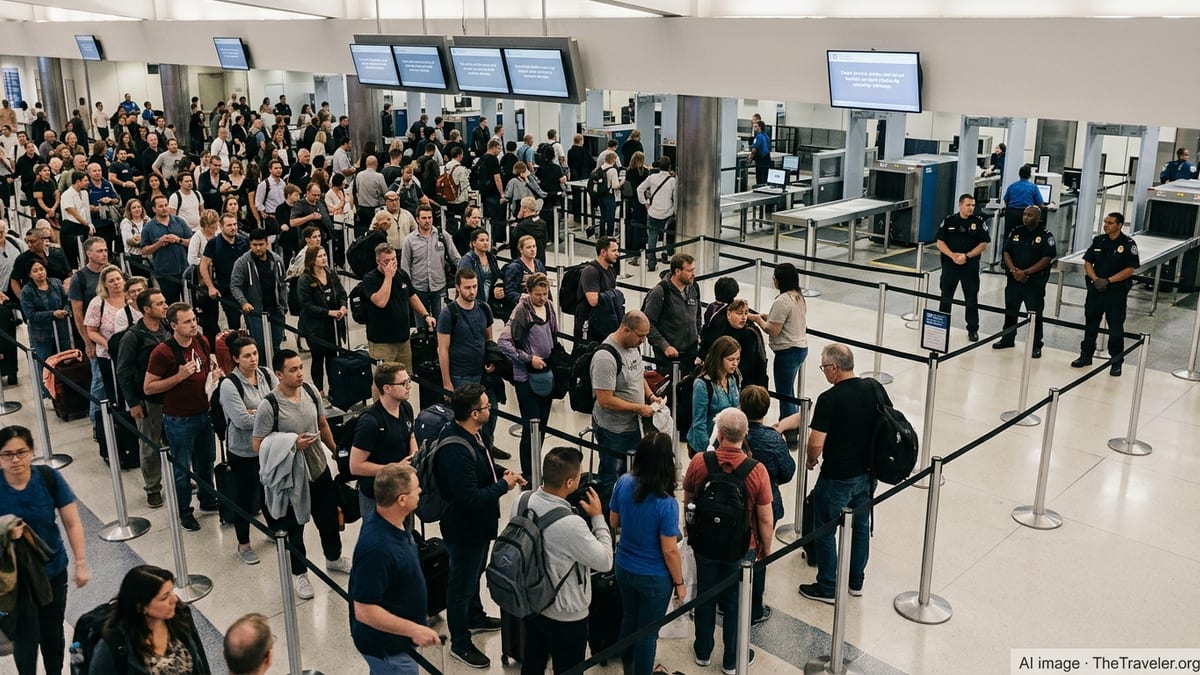
Advisory comes amid busy summer travel period
Publicly available travel guidance indicates that Glasgow Airport is preparing for one of its busiest periods of the year, with early morning and weekend departures already loading terminals with holiday traffic. General advice for the airport in 2026 suggests arriving two to three hours before departure, with additional time recommended during peak seasons and the first wave of morning flights.
Reports on local travel forums and recent travel FAQs highlight that the airport can see sharp spikes in security demand around dawn and late afternoon, when multiple leisure departures are scheduled close together. At those times, security queues can lengthen rapidly if there are staffing constraints, equipment issues or concurrent delays elsewhere in the network.
Current travel commentary also points to the wider UK and European aviation system approaching another high-pressure summer, with airlines and airports across the continent urging passengers to arrive earlier than they might have done before the pandemic. Glasgow Airport’s advice to allow extra time reflects that broader pattern and is framed as a precaution rather than a response to a single incident.
For passengers, the headline message is simple: build in a larger buffer at the start of the journey than usual, especially if travelling with checked baggage, young children or anyone needing additional assistance, or if connecting onward from another flight later in the day.
Security queues and check in cut-off times under scrutiny
Recent explanations aimed at Glasgow-bound travellers stress that security screening and airline check in cut-off times remain two of the biggest pinch points in the passenger journey. Airline policies generally require customers to have completed check in and baggage drop well before scheduled departure, with boarding gates typically closing around 30 minutes prior to take off.
Travel discussion threads covering Glasgow Airport in 2025 and 2026 note that while security is often described as efficient by regular users, there have been periods of congestion, particularly after operational problems or during holiday getaways. Some passengers responding to those discussions describe choosing to pay for fast-track security to mitigate the risk of missing flights when queues suddenly lengthen.
Information collated in recent Glasgow-specific FAQs suggests that arriving at least two hours before a domestic or short-haul flight, and up to three hours before longer services, is now considered a sensible minimum for most travellers. During peak school holiday weekends, early morning waves or when major events are taking place in the city, adding an extra 30 minutes is presented as a prudent safeguard.
Passengers with hand luggage only and online check in may be able to move more quickly once inside the terminal, but they remain subject to the same security and gate closing times. The current advisory to allow extra time is therefore directed at all travellers, regardless of ticket type or airline.
Road access and local transport add to timing risks
Aside from what happens inside the terminal, local transport conditions around Glasgow can also affect how early passengers need to set off. Recent travel and transport guides for the city in 2026 highlight that works on and around the M8 motorway, as well as other urban road projects, have contributed to slower journeys at certain times of day.
Local travellers posting updates about airport transfers in recent months describe heavy traffic on approaches to the airport during morning and evening rush hours, even when specific roadworks have eased. Advice shared in those public forums often encourages passengers to leave “a bit extra time” for the airport bus or taxi, particularly if travelling from central Glasgow at commuter times.
These local factors sit alongside national travel notes warning of pressure on public transport networks during major events and busy holiday weekends. For visitors unfamiliar with the city, guidance suggests checking expected journey times on mapping apps for the same weekday and time a few days in advance, then adding a safety margin on top.
Combined with the airport’s own recommendation to arrive well ahead of departure, the message from recent coverage is that timing for the journey should be planned from the front door, not just from the terminal entrance.
European border changes amplify concerns about delays
The warning from Glasgow Airport also comes against a backdrop of travel disruption linked to new European border procedures. Across the continent, reports in June and July 2026 describe long queues at passport control in some EU airports as the Entry/Exit System for non-EU nationals beds in, with airlines advising British passengers to allow extra time at departure and arrival points.
Several carriers serving UK travellers, including low cost airlines, have recently urged customers to arrive as early as three hours before flights from affected European hubs because of extended biometric checks. Industry bodies and travel analysts have warned that these changes, combined with peak summer demand, could create knock-on delays across routes, including those operating to and from Scottish airports.
While Glasgow itself is outside the Schengen border zone, its summer schedules are closely tied to leisure destinations in the EU. Publicly available commentary suggests that disruption or staffing pressures at overseas airports can cascade back into Scottish operations through late-arriving aircraft, altered crew rosters or compressed turnaround times.
The current advisory to allow extra time is therefore being viewed as part of a wider push by the industry to smooth traffic peaks, reduce the risk of missed flights and give airports more flexibility to manage irregular operations over the busy holiday period.
What passengers are being encouraged to do now
Travel experts and consumer advocates commenting on the latest guidance for Glasgow Airport emphasise that the most effective step passengers can take is to build in more time than they think they need. For many summer travellers, that means treating the traditional “two hours before departure” rule as a starting point rather than a guarantee.
Practical suggestions circulating in recent travel coverage include checking in online as early as the airline allows, preparing cabin baggage to meet security rules before leaving home, and making firm decisions about how to reach the airport, rather than relying on last-minute transport options. Those planning to use airport parking are also advised to reserve spaces in advance, both to secure a place and to avoid spending additional time searching for alternatives on arrival.
For passengers with tight onward connections from Glasgow, publicly available information urges particular caution. Commentators advise avoiding self-made connections that leave less than a couple of hours between flights, given the possibility of delays at passport control, baggage reclaim or security re-screening.
Overall, the emerging picture is of an airport and wider travel system gearing up for a demanding summer, with Glasgow Airport urging customers to prioritise time as their primary buffer against disruption.