


More news on this day
International travel is entering a more complex and expensive era as governments across Europe, North America and Asia roll out biometric border controls, new electronic travel authorisations, tighter visa rules and higher fees, with Norway, France, Germany, the United Kingdom, the United States, Thailand and others introducing overlapping reforms that will affect millions of visitors over the next two years.
Get the latest news straight to your inbox!
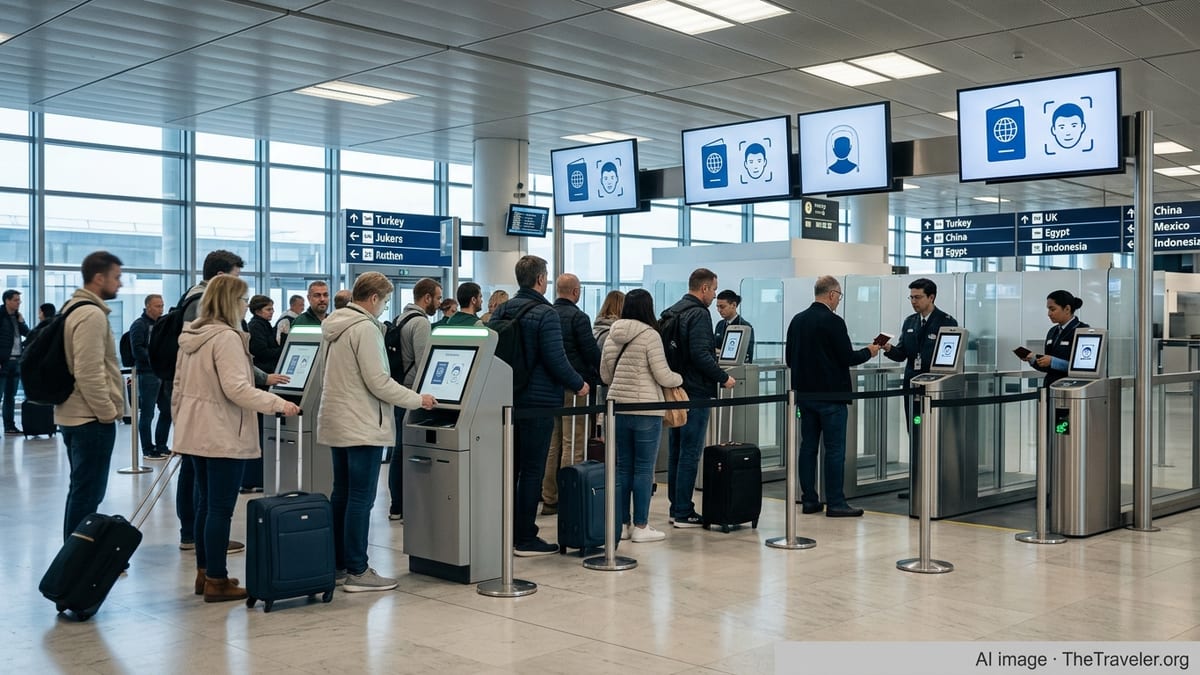
Europe’s biometric border overhaul reaches Norway and its neighbours
Norway, along with France, Germany and other Schengen members, is moving into the final phase of Europe’s long-planned digital border transformation. The European Union’s new Entry/Exit System began its progressive launch on 12 October 2025, replacing manual passport stamps with biometric registration for most non-EU travellers entering the Schengen area for short stays.
Publicly available information shows that the system records fingerprints, facial images and passport data at external border checkpoints, with a transition period that runs into April 2026 as member states activate the technology at air, land and sea crossings. Norway participates in the Schengen framework, meaning visitors arriving there will be enrolled in the same biometric database as those landing in other participating countries.
European Commission and parliamentary briefings indicate that the Entry/Exit System is intended to automate checks, detect overstays more accurately and tighten enforcement of the rule limiting non-EU visitors to 90 days in any 180-day period. Travel industry commentary, however, has warned of longer queues during the initial roll-out as border officers collect biometrics from first-time arrivals and travellers adapt to the new procedures.
The biometric upgrade is only one element of a broader shift. A separate electronic travel authorisation, known as ETIAS, is expected to begin in late 2026 for visa-exempt visitors such as many travellers from the United States, Canada and the United Kingdom. Once in force, most non-EU nationals who currently enter Norway, France, Germany and other Schengen states using only a passport will also need pre-approval and will pay a processing fee for each multi-year authorisation.
United Kingdom and United States tighten entry while raising costs
The United Kingdom is pursuing its own move toward digital borders, distinct from the Schengen systems. Government releases describe the phased rollout of an Electronic Travel Authorisation requirement for visitors who do not need a full visa, including many travellers from Europe and other visa-waiver countries. The scheme is being expanded through 2025, with plans for all such visitors to need approval before boarding a flight or ferry to the UK.
In parallel, travellers are facing rising costs. Legal and immigration advisories highlight increases to UK visa application fees and border-related charges from 2024 and 2025, affecting work, study and visit categories. The price of the UK’s electronic travel authorisation itself is also scheduled to climb, adding a recurring expense for frequent visitors.
Across the Atlantic, the United States has already adjusted a number of visa and travel-related fees in recent years, and industry analysis points to a pattern of gradual increases rather than one-off rises. Applicants for non-immigrant visas, including popular categories used by tourists, students and temporary workers, have seen processing charges revised upward, while the separate Electronic System for Travel Authorization remains mandatory for many short-stay visitors from allied countries.
Combined, these changes mean that travellers considering multi-country itineraries that include both the UK and US must now budget for a growing list of digital clearances and consular fees in addition to transport and accommodation, with some approvals required weeks in advance of departure.
Asia introduces new digital checks and stricter stay limits
Asia is also reshaping its entry systems, with Thailand emerging as a key example. Recent measures adopted by the country’s Immigration Bureau have introduced tighter rules on repeat short-term entries and visa runs, responding to concerns about long-stay visitors using back-to-back exemptions rather than formal long-stay visas. Reports indicate that, from late 2025, travellers seeking repeated extensions or frequent border hops face closer scrutiny and, in some cases, shorter permitted stays.
At the same time, Thailand has been experimenting with changes to visa-free stay lengths and extension options, as well as enhanced enforcement of overstay penalties. These steps follow an earlier effort to stimulate tourism through temporary extensions of visa waivers for selected nationalities, indicating a shift from broad incentives toward more targeted and controlled entry.
Digitalisation is advancing as well. Public documentation shows that Thailand’s digital arrival form became compulsory for foreign visitors in 2025, replacing paper cards and requiring advance submission of travel details online. The move mirrors broader regional trends as airports and immigration authorities in Asia invest in e-gates, biometric verification and pre-arrival data collection to manage growing passenger volumes.
Other destinations across East and Southeast Asia are taking similar paths, with new or expanded electronic travel authorisation schemes, online visa platforms and biometric screening systems either in operation or in development. For travellers, these shifts translate into more pre-trip administration and stricter compliance obligations, even when formal visa requirements have not changed.
From stamps to scanners: how biometrics are redefining borders
The shift away from ink stamps and toward biometric databases marks a structural change in how borders work. Under the European Entry/Exit System, each crossing by an eligible non-EU traveller is logged digitally, including the date and place of entry and exit. Comparable systems in other regions, such as US biometric entry and exit checks, capture facial images or fingerprints at inspection points and match them against stored records.
Supporters of these technologies argue, in public briefings and policy documents, that automated checks can improve security screening, reduce identity fraud and speed up border processing once initial enrolment is complete. Critics, including civil liberties groups and some travel advocates, have raised questions over data protection, retention periods and the risk of system failures causing widespread disruption at airports and land crossings.
For individuals, the most immediate impact is practical. First-time users of new biometric or digital systems typically spend longer at border control while information is captured and verified. During phased launches, authorities often run old and new procedures in parallel, creating uncertainty over which queues to join and how much time to allow between arrival and onward connections.
As biometric systems mature, they are increasingly linked to advance data tools such as electronic travel authorisations and passenger information records. This interoperability allows border agencies to check a traveller’s authorisation, risk profile and past compliance as soon as they scan a passport or enter a facial recognition gate, intensifying the consequences of past overstays, unpaid fines or incomplete documentation.
What travellers can expect in the next two years
Across Europe, North America and Asia, the cumulative effect of these changes is a more rules-driven travel environment. A visit to Norway that includes onward legs to France, Germany, the UK and Thailand could soon involve multiple online applications, biometric registrations and fees, even for holidaymakers who previously moved between these destinations using only a passport.
According to published coverage by European institutions and national governments, the period from late 2025 through the end of 2026 is set to be particularly intense. The full deployment of the Schengen Entry/Exit System, the planned launch of ETIAS, continued expansion of the UK’s electronic travel authorisation regime and ongoing visa-policy revisions in destinations such as Thailand and the United States will overlap, creating a dense calendar of implementation dates.
Travel experts and consumer groups have begun advising passengers to track rule changes by destination and by nationality, as the impact can differ significantly depending on passports held, length of stay and purpose of visit. Planning time for biometric enrolment on arrival, securing any required digital travel passes well in advance and budgeting for higher fees are increasingly seen as essential parts of international trip preparation.
While some of the new systems promise eventual benefits, such as faster automated gates for pre-vetted travellers, the near-term reality is that global mobility is becoming more conditional, more data intensive and, for many, more expensive. For frequent visitors to Norway, France, Germany, the UK, the US, Thailand and other popular destinations, keeping pace with the evolving landscape of visas, authorisations and border technologies is set to become an ongoing travel task.