


More news on this day
Rail travel to and from India’s capital faced major disruption on Tuesday after a goods train derailed on the Ghaziabad–New Delhi corridor, leading to the cancellation, diversion, or short-termination of more than 50 trains and leaving thousands of passengers scrambling to rearrange journeys.
Get the latest news straight to your inbox!
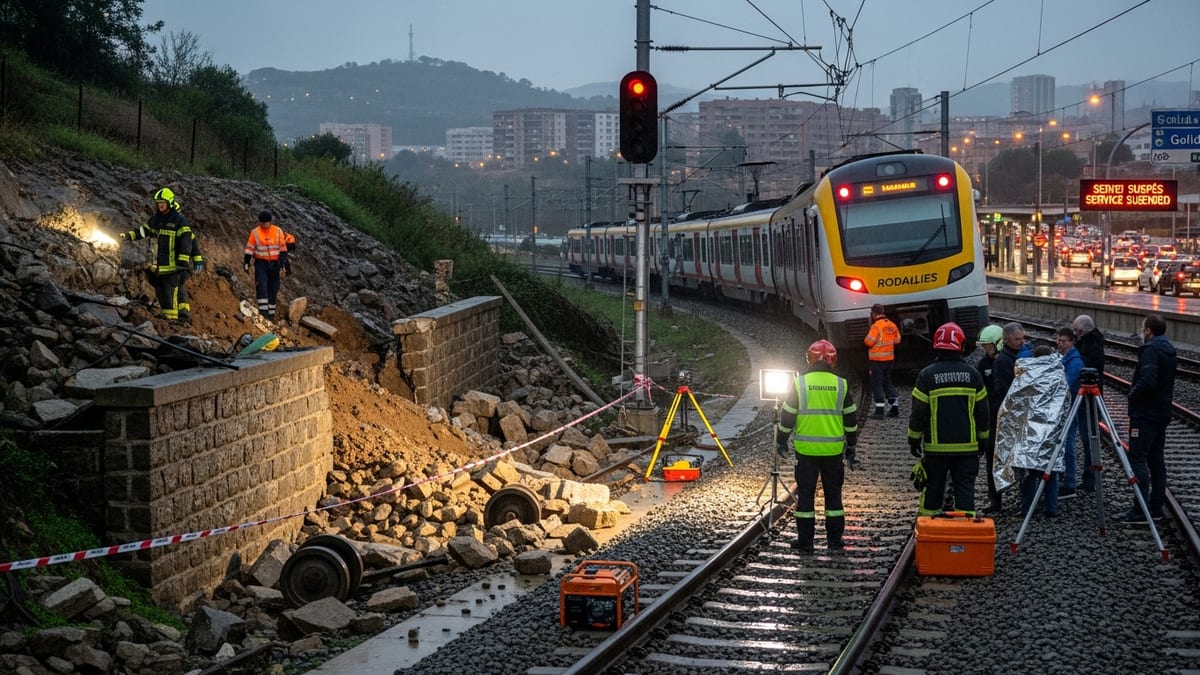
Derailment on key approach line to the capital
Initial reports indicate that several wagons of a freight service derailed on a heavily used section between Ghaziabad and New Delhi in the early hours of July 21. The incident occurred on one of the primary approach lines feeding the capital’s main stations, instantly constraining capacity on a route that already handles dense long distance and commuter traffic.
Imagery and descriptions shared through local media coverage show freight wagons off the rails and obstructing at least one of the main running lines. Safety checks and recovery work have required the suspension of traffic across affected tracks, sharply reducing the number of trains that can be routed into and out of Delhi during peak travel hours.
According to published coverage, no major injuries have been reported so far, but the disruption to services has been extensive. Railway staff and contracted engineering teams have been deployed to stabilize derailed wagons, inspect the permanent way, and prepare the site for heavy lifting equipment needed to clear the line.
Because the corridor serves both daily commuters from the National Capital Region and long distance travelers from across northern and eastern India, the operational impact has quickly spread across multiple railway zones and key intercity routes.
More than 50 trains cancelled, diverted or short-terminated
Publicly available train bulletins and media summaries suggest that over 50 passenger services have been affected so far through cancellations, diversions, and short terminations. Several long distance trains bound for the capital have been turned back before reaching Delhi or have been re-routed via alternative lines to keep passengers moving.
Some express and superfast services are being diverted through less congested corridors around the National Capital Region, which adds several hours to scheduled journey times. In other cases, trains that would normally run into central Delhi are being terminated at outer stations, with passengers advised to complete their trips by road or suburban services where available.
Short distance and commuter services on the Ghaziabad–New Delhi stretch are also experiencing significant disruption. Revised timetables, rolling delays, and last minute platform changes are being reported at major junctions as controllers attempt to balance recovery work with limited train movements on the remaining usable lines.
For travelers, this means that even trains not formally listed as cancelled or diverted may face extended delays, slower running, and crowding as services bunch up behind operational bottlenecks near the incident site.
Knock on impact for travelers across North India
The Ghaziabad–New Delhi corridor forms part of the wider network that connects Delhi with states including Uttar Pradesh, Bihar, Jharkhand, Rajasthan, Haryana, and beyond. Disruption at this single node is therefore having a ripple effect on services far from the derailment site, affecting travelers whose journeys neither start nor end in the capital.
Passengers on overnight and early morning trains have reported extended halts outside stations as signaled movements are rationed into the restricted section. According to media reports and user updates on public tracking platforms, several trains have been held at intermediate junctions to allow priority services and engineering trains to pass first.
Tourists heading to and from Delhi, Agra, Jaipur, Varanasi, and other major destinations may face missed connections and rescheduled itineraries as the network absorbs the shock. Travel planners indicate that delays on primary trunk routes often cascade into subsequent days’ operations, meaning disruption can persist even after the physical obstruction has been removed.
Given that July is a busy month for domestic travel and pilgrimage, the timing of the derailment is particularly challenging for families and groups with fixed hotel bookings or onward flights from Delhi’s international airport.
Restoration efforts and safety checks under way
Engineering teams are concentrating first on clearing the derailed wagons and restoring at least one additional track to operation, a step that would allow more trains to be threaded through the bottleneck while full repairs continue. Based on patterns seen in previous incidents on major corridors, this phase typically involves lifting or dragging damaged wagons clear, followed by thorough inspection of rails, sleepers, and signaling equipment.
According to publicly available information from recent derailments on other busy routes in India, comprehensive safety checks are standard before full speed operations resume. These checks can include ultrasonic rail testing, alignment surveys, and test runs by light engines or empty trains to confirm that the track geometry and signaling systems are functioning correctly.
Until these steps are completed, traffic managers are expected to retain speed restrictions through the affected section, contributing to longer journey times even once passenger services restart. Timetables may also remain fluid as rescheduled and diverted trains are slotted back into regular paths.
Observers note that the derailment highlights the vulnerability of high density corridors to even single asset failures, reinforcing the importance of redundancy, predictive maintenance, and rapid response capability on approach lines into major hubs like Delhi.
Advice for passengers and implications for upcoming journeys
For travelers planning to use Delhi bound or Delhi originating trains over the next one to two days, industry watchers strongly recommend checking live train status and official railway advisories before setting out for stations. Experience from previous disruptions suggests that restoration milestones, new cancellations, or route changes can be announced at short notice as conditions evolve on the ground.
Travelers holding flexible tickets or with the option to adjust dates may wish to postpone non essential trips until the situation stabilizes. Those with fixed plans, including international connections, may need to consider alternative options such as flights from nearby airports, intercity buses, or car hire from unaffected junctions where long distance trains are being short terminated.
For visitors already in India, travel planners advise allowing generous buffers between rail arrivals in Delhi and onward connections, especially on the day of arrival. Where possible, choosing trains that do not rely on the most constrained segments of the Ghaziabad–New Delhi corridor may reduce exposure to the worst delays, although information about such routings can change quickly during a disruption of this scale.
While full details about the cause of the derailment and the exact restoration timeline are still emerging, the incident serves as a reminder of the importance of building flexibility into itineraries involving busy rail approaches to India’s largest cities.