


Greek island hopping is one of Europe’s great travel experiences, but it only feels carefree if you understand how the ferries, ports and routes actually work. With dozens of companies, three main Athens ports and winds that can whip up rough seas in summer, a little planning makes the difference between a smooth island chain and a stressful scramble. This guide brings together current ferry habits, real routes and sample 7, 10 and 14 day itineraries so you can build a realistic plan instead of a theoretical fantasy.
Get the latest updates straight to your inbox!
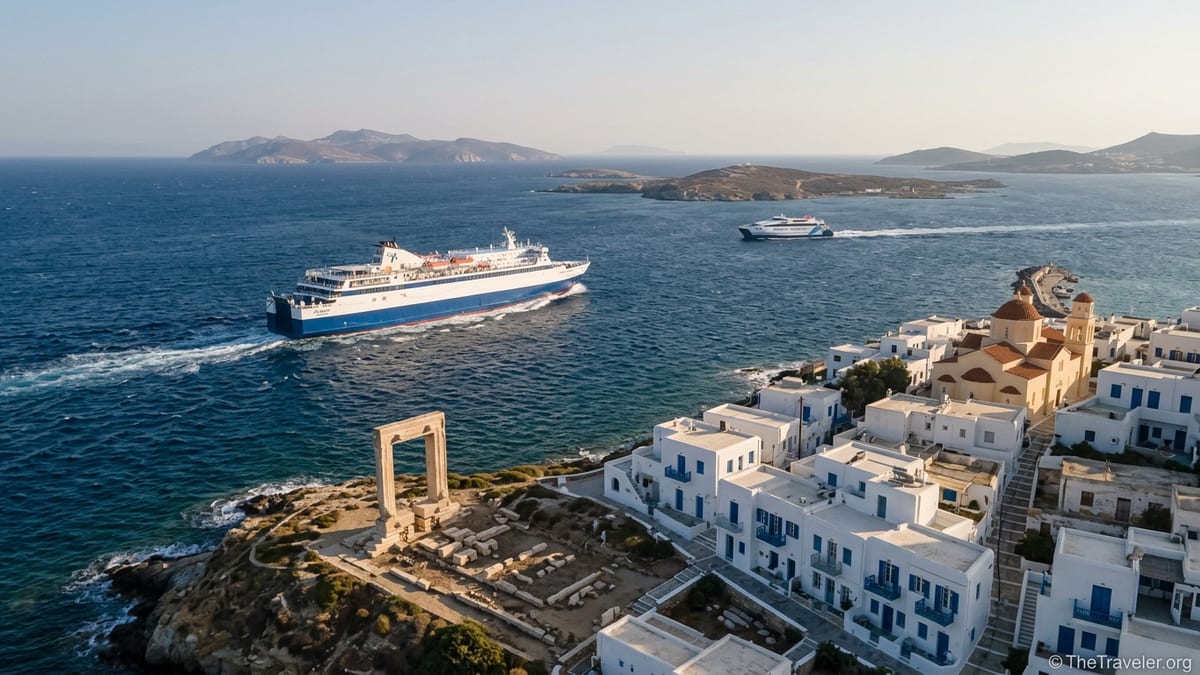
How Greek Island Hopping Really Works
Most Greek island hopping is built around the ferry network that crisscrosses the Aegean Sea. In practice, that means you will almost always start from one of the three ports in the Athens area and then move along clusters of islands served on the same lines. Large conventional ferries operated by companies such as Blue Star Ferries typically run year round and are the backbone of routes from Piraeus to major islands like Syros, Paros, Naxos, Kos and Rhodes. High speed catamarans from operators like Seajets and Golden Star Ferries add seasonal, faster links between the Cyclades and Crete, but are more exposed to weather.
Timetables for summer 2026, like most years, are only finalized in spring and then tweaked through the season, so you should expect small changes in departure times or even the occasional cancellation. A typical July day might see multiple sailings from Piraeus to Mykonos, some on a big Blue Star conventional ferry taking about 5 hours, others on high speed Seajets boats that can cover the same distance in roughly 2.5 to 3 hours. In early April or late October there may be only one daily sailing or a few a week, which limits your ability to hop spontaneously.
For planning purposes, think in terms of travel blocks instead of exact boats. For example, travel from Athens to the central Cyclades often takes half a day door to door, even if the sea leg is only 3 or 4 hours, because you must factor in transfers to the port, check in and boarding. On a 7 day trip you realistically have time for at most two islands plus Athens, while 10 and 14 day itineraries give you more flexibility to absorb weather disruptions and slower connections.
Price wise, island hopping is still cheaper than flying between islands in most cases, but costs have risen. A standard economy ticket on a large ferry from Piraeus to Mykonos in high season typically lands in the range of 50 to 70 euros one way on a fast boat, and 40 to 55 euros on a slower conventional vessel, with reserved business lounges and cabin berths costing more. Short hops between neighboring islands, such as Naxos to Paros or Tinos to Mykonos, can be as low as about 10 to 25 euros each way depending on the operator and speed.
Athens Port Choices: Piraeus, Rafina and Lavrio
The choice of Athens port matters because each one connects better to different island groups. Piraeus, south west of central Athens, is the main commercial harbor and the hub for most ferries to the Saronic Gulf, the Cyclades, the Dodecanese and Crete. From here you can reach large islands like Naxos, Paros, Santorini, Chania and Heraklion, as well as longer routes to Rhodes and Kos. If your itinerary includes Naxos plus longer routes down the Aegean, Piraeus is usually your best starting point.
Rafina, on the north east side of Attica, is physically closer to Athens International Airport, roughly 25 kilometers away by road. That makes it an appealing option if you land in the morning and want to sail to the Cyclades the same day without first crossing central Athens. Rafina is particularly strong for northern and central Cyclades routes such as Andros, Tinos, Mykonos, Naxos and Paros, with frequent summer services by companies including Seajets, Golden Star Ferries and Fast Ferries. For example, a morning Seajets high speed from Rafina can reach Mykonos in about 2 to 2.5 hours in peak season.
Lavrio, to the south east of Athens, is smaller but increasingly important. Its ferries serve nearby Kea and Kythnos and also some longer routes towards the Northern Aegean and the northeastern Cyclades. In summer 2026, local operators are again running regular services from Lavrio to Kea and Kythnos, often with multiple departures per day. Lavrio is less convenient from central Athens than Piraeus, but it is useful if you want a quieter departure port and a quick hop to Kea for a short escape or as the first step in a slow island hopping chain through the western Cyclades.
When you book, pay close attention to which port your ferry actually leaves from. Many first time visitors assume that all Athens ferries depart Piraeus and only realize the mistake when they see Rafina or Lavrio printed on their ticket. Since a taxi between Piraeus and Rafina can easily take over an hour in traffic and cost more than 60 euros, confusing your ports can derail your itinerary before it begins. Build at least 90 minutes between your flight arrival and your planned transfer departure to any port, more if you are checking luggage or arriving in peak afternoon traffic.
Ferry Types, Tickets, Luggage and Rough Seas
Not all ferries feel the same. Conventional ferries are large, slower ships with open decks, vehicle garages and usually multiple indoor lounges. They are generally more stable in rough seas, and you can walk around, buy snacks and even stretch out on bench seating during longer crossings. High speed catamarans and smaller fast ferries are quicker but more sensitive to wind and waves. On a windy August crossing from Naxos to Santorini, for instance, a high speed may slam into the chop and feel bumpy enough to make motion sickness tablets very worthwhile, while a big Blue Star ferry on the same route feels more like a slow moving building.
Summer in the Aegean brings the meltemi, a strong, dry north wind that typically blows from mid June to mid September and peaks in July and August. Those winds create whitecaps, higher swells and sometimes spray over the bow, especially on north south routes like Mykonos to Santorini or Andros to Tinos. On the windiest days, high speed ferries are the first to suffer delays or cancellations, while big conventional ships usually continue to run, though with possible schedule changes. Locals often prefer the slower boats in mid summer for their more predictable performance when the meltemi is howling.
Luggage rules on Greek ferries are relatively relaxed compared with airlines. You normally carry your own suitcase on board and either leave it in designated luggage racks near the garage level or keep smaller bags with you in the seating areas. Heavy suitcases are easiest to manage if they are wheeled and not overpacked, because you may need to haul them up a steep internal stairway or across the open vehicle deck. There are no weight checks in practice for foot passengers on most routes, but you still want to pack as if you will be climbing a few flights of stairs in summer heat.
Tickets can be bought directly from ferry company websites, through online aggregators, or via local ticket offices around each port. Dynamic pricing means that popular sailings on busy weekends in July or August become more expensive the closer you get to departure, while shoulder season dates in May, June, September and early October stay relatively affordable. On core tourist routes such as Piraeus to Santorini or Rafina to Mykonos it is wise to prebook at least several weeks ahead for July and August travel, especially if you are traveling with a car or want a cabin. For May, early June or late September, you can often wait longer and still find good options.
Island Groups That Combine Well
Most successful island hopping trips focus on a single cluster of islands with frequent ferry links. The central Cyclades is the classic example. A route that strings together Paros, Naxos and a smaller island like Koufonisia or Amorgos uses well established connections that typically run daily in high season. For instance, you might sail from Athens to Paros, hop to Naxos in about an hour and then continue on a smaller local ferry to Koufonisia or the Small Cyclades, sometimes for as little as around 6 to 10 euros for short legs on local boats.
The northern Cyclades centered on Andros, Tinos and Mykonos make another tight group, often served on the same Rafina based routes. Travelers who arrive at Athens Airport in the morning can be in Andros by early afternoon, then hop down to Tinos and Mykonos on successive days. These islands share similar travel logistics, yet each feels distinct: Andros is greener and less visited, Tinos has a strong religious and culinary culture, and Mykonos offers full scale nightlife and beach clubs.
For those who want more variety in landscape, pairing Milos and Sifnos with either Serifos or Kimolos in the western Cyclades delivers volcanic rock formations, calm fishing villages and excellent hiking. These islands are best accessed from Piraeus, often on routes operated by companies like Seajets or other conventional ferries that link Kythnos, Serifos, Sifnos, Milos and sometimes continue to Folegandros and Santorini. Continue beyond Santorini and you are into the Dodecanese chain, where islands like Rhodes, Kos and Symi are linked by longer Blue Star routes.
If you prefer gentler seas and want to avoid the meltemi at its worst, consider the Saronic Gulf islands closer to Athens: Aegina, Agistri, Poros and Hydra. These can be reached in 40 minutes to 2 hours from Piraeus by fast ferry or hydrofoil and usually experience less severe conditions than the open Aegean. They combine well for short hops and are especially practical if you only have a few days but still want the feeling of moving between islands.
7 Day Greek Island Hopping Itinerary
With just one week, the key is to limit your island count and pick a logical route with short ferry legs. A realistic 7 day plan for a first timer might be Athens, Paros and Naxos in the central Cyclades. Fly into Athens on day one and spend the night near the center or at a hotel close to Piraeus. On day two, take a morning ferry from Piraeus to Paros, which in summer normally takes about 3 to 4 hours on a conventional ferry or 2.5 to 3 hours on a high speed. Check into a hotel in Naoussa or Parikia and use the rest of the day for beaches and sunset.
Day three can be devoted to exploring Paros, perhaps with a bus or rental car to reach villages like Lefkes. On day four, hop from Paros to Naxos on a short ferry that usually takes around an hour, depending on the operator. Because these routes are busy in summer, you will often find multiple sailing times, which gives flexibility. Settle in Chora on Naxos, climb up to the Portara at dusk and dine at a taverna in the old town. Day five on Naxos could be a mix of a beach day at Agios Prokopios or Plaka and a late afternoon drive into the mountain village of Apeiranthos.
Use day six as a buffer. If the meltemi has been strong and there are delays, you can adjust your ferry back to Athens to this day. Otherwise, return by boat to Piraeus in the morning or afternoon and spend your remaining time in Athens visiting the Acropolis and the neighborhoods of Plaka and Koukaki. Day seven is for final Athens sightseeing or a relaxed breakfast before your flight home. This itinerary uses only two ferry jumps and keeps them relatively short, which is crucial in July and August when rough seas and crowds increase the stress of each travel day.
Travelers who are more interested in quick access than Cycladic scenery can adapt this 7 day structure to the Saronic Gulf. In that case, you might combine Athens, Hydra and Poros, moving between them on frequent hydrofoil and small ferry services from Piraeus and nearby coastal towns. Transfers are shorter, so you can spend more hours on shore and less time at sea.
10 Day Island Hopping Itinerary
Ten days gives you enough time to string together three islands plus Athens at a relaxed pace. A popular 10 day loop starts and ends in Athens and focuses on Mykonos, Naxos and Santorini. Fly into Athens, overnight near the airport or Piraeus, then on day two sail to Mykonos from either Piraeus or Rafina. In summer there are usually several daily departures, with journey times from around 2 to 5 hours depending on whether you choose a high speed catamaran or a conventional ferry. Check into accommodation near Mykonos Town and enjoy the evening in the old lanes and waterfront.
Spend day three on Mykonos exploring beaches like Psarou, Elia or Agios Sostis, then take a short boat trip to the archaeological site of Delos if you want a strong cultural contrast to the nightlife. On day four, hop to Naxos on a mid morning ferry that typically takes around 1.5 to 2.5 hours. This route is intensely popular, so be ready to board quickly when your boat arrives and follow staff instructions to stow luggage and move to the passenger decks without lingering in the vehicle area.
Use days five and six on Naxos for a mix of beaches and interior villages, then continue on day seven to Santorini. Most summer ferries from Naxos to Santorini take between 1.5 and 3 hours and can be affected by wind and sea state. When you arrive at Athinios port, the long zigzag road uphill can be congested, so booking a transfer in advance or confirming with your hotel that they will meet you saves time. Day eight and nine on Santorini are your time for the caldera views in Fira and Oia, a late afternoon wine tasting, and possibly a sunset boat trip inside the caldera if the seas are calm enough.
On day ten, sail or fly back to Athens. In peak season, there are often both morning ferries and multiple daily flights between Santorini and Athens. If your international departure is on the same day, choose the earliest connection that fits and consider a slow, sturdy ferry if strong meltemi winds are forecast. Alternatively, fly back to Athens the night before your long haul flight so that any delays due to rough seas do not cascade into missed connections.
14 Day Island Hopping Itinerary
With two full weeks you can design a more ambitious island chain and still leave some space for rest days and bad weather. One strong 14 day plan focuses on the western Cyclades and central Cyclades. Start with two nights in Athens, then sail from Piraeus to Serifos or Sifnos on day three. These routes usually take between 2.5 and 5 hours, depending on whether you choose a high speed passenger ferry or a larger, slower vessel. Use days three to five to explore beaches and villages, then move on to Milos, which is known for sea caves, boat trips around the island and the lunar landscape of Sarakiniko beach.
Days six and seven on Milos can easily fill with sailing tours, coastal drives to Mandrakia and Klima, and slow evenings in Plaka. From Milos, continue east to Santorini, again on a direct seasonal ferry that typically takes a few hours. Spend days eight and nine on Santorini and then hop to Naxos on day ten. Naxos gives you a contrasting sense of scale and agriculture after the drama of Santorini’s caldera cliffs, with more extensive beaches and inland valleys.
From Naxos, you can spend day eleven taking a local ferry or excursion boat to the Small Cyclades, such as Koufonisia, returning the same evening or staying overnight if the schedules suit. Smaller local boats sometimes charge under 10 euros for basic inter island hops, though availability and routes can change from year to year. Days twelve and thirteen are a good time to relax on Naxos and keep an eye on the weather forecast. If meltemi winds intensify, consider bringing your return to Piraeus forward by a day so that you have a cushion before your international flight.
On day fourteen, return to Athens, leaving time for last minute shopping and a final meal. Alternatively, a 14 day plan can keep you mostly in the Dodecanese by flying to Rhodes or Kos, hopping by ferry to smaller islands like Symi, Nisyros or Leros, and then flying back to Athens from a different island. The principle is the same: use longer hops at the start and end of the trip and intersperse them with short legs that keep the total number of ferry travel days manageable.
Practical Tips for Booking and Timing
Because ferry schedules in Greece are published relatively late and adjust through the summer, you should treat any draft timetable you see in winter as provisional. Most major operators load their peak season schedules in late winter and early spring, and then fine tune frequency based on demand. For routes like Athens to Mykonos or Athens to Santorini, this usually means additional high speed services appear as the season gets closer and booking patterns become clear. If you are traveling in June through early September, aim to book your main long legs several weeks in advance, particularly around weekends.
When comparing ferries, look at more than just departure time. A 7.30 am high speed that reaches Naxos by mid morning might look attractive, but you need to be at the port at least an hour earlier, which could mean a 5.30 am wake up or even earlier if you are staying far from Piraeus or Rafina. Sometimes a mid morning or early afternoon departure on a slightly slower boat yields a more relaxed start to the day and still delivers you to the next island with enough light to check in and orient yourself.
Always leave buffer time at the end of your trip. Rough seas and the meltemi are not constant, but they are regular enough that entire days of high speed cancellations do occur in July and August. If possible, plan to be back on the Athens mainland at least one night before your flight home and avoid scheduling critical events immediately after a ferry leg. Travel insurance that covers missed connections due to weather related disruptions can offer additional peace of mind, particularly if you are moving across several islands on a tight schedule.
Finally, dress for practicality on ferry days. You may board in full sun, navigate metal decks that get very hot, and then encounter strong air conditioning inside the lounges. Wearing layers and carrying a light jacket or scarf makes it easier to stay comfortable. A small daypack with motion sickness tablets, water, snacks, a power bank and a printed or downloaded copy of your ticket saves you from rummaging through your main suitcase in the middle of a crowded vehicle deck.
The Takeaway
Greek island hopping looks spontaneous on social media, but in real life it rewards travelers who understand how the ferry system, ports and seasonal winds shape what is possible. Choosing the right Athens port for your island group, favoring routes with frequent daily connections and building realistic 7, 10 or 14 day itineraries keeps your focus where it belongs: on swimming, sunsets and village evenings instead of ticket offices and departure boards.
The Aegean’s meltemi and shifting timetables will always add a little unpredictability. By allowing buffer days, limiting the number of long hops and combining islands that sit naturally on the same lines, you can embrace that unpredictability rather than fear it. Whether you start with a simple week in Paros and Naxos or a full two week circuit through the Cyclades and beyond, the ferries become part of the experience, not just a way of getting from A to B.
FAQ
Q1. Do I need to book all my Greek ferries in advance for summer travel?
For July and August, it is wise to prebook the longer and more popular legs such as Athens to Mykonos or Santorini several weeks in advance, while shorter inter island hops in the Cyclades can sometimes be booked closer to departure, especially in June or September when demand is a bit softer.
Q2. Which Athens port is best for starting an island hopping trip?
Piraeus is best for most routes to the Cyclades, Dodecanese and Crete, Rafina is very convenient for northern and central Cyclades like Andros, Tinos and Mykonos, and Lavrio is ideal if you are heading to nearby Kea and Kythnos or want a quieter alternative to the larger ports.
Q3. How rough are the seas in summer and should I avoid high speed ferries?
In July and August, the meltemi winds can create choppy conditions on exposed routes, which passengers feel more on high speed catamarans than on big conventional ferries, so motion sensitive travelers often prefer slower, larger ships on windy days while keeping an eye on the forecast.
Q4. Can I island hop in Greece outside the main summer season?
Yes, but your options narrow. In May, June, September and early October, main routes between big islands still run frequently, while some seasonal high speed services and small inter island links wind down, so you should plan more conservatively and check that each leg you want actually operates on your dates.
Q5. How much does it typically cost to island hop between the Cyclades?
Prices vary by route and operator, but as a rough guide, longer legs from Athens to islands like Mykonos, Paros or Naxos often cost around 40 to 70 euros in economy each way in high season, while short hops such as Naxos to Paros or Tinos to Mykonos can be in the 10 to 25 euro range.
Q6. What is the best way to handle luggage on Greek ferries?
You normally roll your suitcase on board yourself and leave larger bags on racks near the vehicle deck or carry smaller bags to your seat, so it helps to travel with wheeled luggage that you can manage on stairs and to pack a small daypack with valuables, tickets and essentials for the crossing.
Q7. Is it better to fly or take a ferry between Athens and the popular islands?
Flying is faster and sometimes similar in price if you book early, especially for Santorini and Mykonos, but ferries offer flexibility, more generous luggage handling and the ability to hop between multiple islands, so many travelers choose a mix, such as flying one way and sailing the other.
Q8. How many islands can I realistically visit in 7, 10 or 14 days?
In one week, aim for at most two islands plus time in Athens, in ten days you can comfortably include three islands, and in fourteen days you might add a fourth or combine a cluster of smaller islands, always remembering to leave room for travel days and possible weather delays.
Q9. Do Greek ferries ever cancel because of weather?
Yes, particularly high speed ferries can be delayed or cancelled when strong meltemi winds hit, especially in July and August, while large conventional ferries are more likely to keep operating, so having flexible dates and avoiding tight same day flight connections is important.
Q10. Can I travel with a rental car on Greek island ferries?
Many conventional ferries take vehicles, and you can book a spot for a rental car, but it usually costs significantly more than a foot passenger ticket, and one way drop fees between islands can be high, so most visitors rent cars separately on each island instead of carrying one with them.