


More news on this day
Greek carrier SKY express has openly criticized the Hellenic Civil Aviation Authority’s planning at Athens International Airport, arguing that airspace management and scheduling decisions are worsening already heavy delays for passengers using the country’s busiest hub.
Get the latest news straight to your inbox!
Carrier Points to Airspace Management and Inspection Windows
According to publicly available statements and local media coverage, SKY express has linked a recent wave of disruptions at Athens International Airport to how the Hellenic Civil Aviation Authority (HCAA) structures navigation system checks and allocates airspace capacity. The airline’s position is that the timing and duration of technical inspections, combined with limited flexibility in traffic management, are amplifying congestion during peak periods rather than smoothing it out.
Reports indicate that HCAA has scheduled repeated inspections of critical landing and navigation systems during afternoon and early evening hours, when demand for arrivals and departures at Athens typically surges. These checks require temporary reductions in traffic flow, prompting ground delays and in some cases forcing aircraft to hold before landing. SKY express has argued that such work could be better integrated into off-peak slots or supported with more robust contingency planning.
Industry coverage also notes that SKY express sees a mismatch between the airport’s published capacity and what is actually delivered on the day when inspections or technical constraints are introduced. The carrier maintains that when capacity is reduced at short notice, airlines are left to manage the passenger-facing consequences, even though the triggering decisions lie with regulators and infrastructure providers.
Summer Travel Squeeze at Athens International Airport
The latest criticism from SKY express comes as Athens grapples with one of its busiest early summer travel periods in recent years. Network performance snapshots for the region show steadily rising traffic through the Greek capital, with more domestic island services, additional international routes and a growing volume of non-scheduled flights feeding into already tight schedules.
Recent days have seen hundreds of flights operating behind schedule at Athens, affecting a broad mix of carriers from Greek operators to European and long haul airlines. Public flight tracking data and local reports show substantial clusters of delays building around afternoon peaks and rippling into late evening operations, with some services departing or arriving more than an hour later than planned.
Within this environment, SKY express and other airlines face limited room to re-time departures or reroute aircraft when air navigation constraints are imposed. Observers note that once a backlog develops at Athens, reactionary delays can spread quickly across domestic island networks, disrupting connections for travelers heading to or returning from destinations such as Crete, Santorini and the Cyclades.
Shared Responsibility Between Airlines and Regulators
Commentary from European aviation monitoring bodies in recent months has highlighted Athens as an airport operating close to its throughput limits at busy times. Network planning documents reference recurring air traffic control capacity challenges in Greek airspace and emphasize the need for coordinated mitigation measures involving airlines, HCAA, the airport operator and Eurocontrol.
Publicly available information from airport and network reports suggests that while airlines are expected to manage schedules responsibly, systemic issues such as staffing levels in air traffic control, technical resilience of navigation systems and the layout of inspection windows are largely outside their direct control. SKY express has drawn attention to this division of responsibilities, arguing that carriers are often blamed for delays that, in its view, originate in operational planning decisions made by regulators and infrastructure managers.
Analysts following the Greek aviation market point out that disputes over responsibility for delays are not unique to Athens. Similar debates have emerged at other European hubs where growing demand has outpaced infrastructure upgrades. In the case of Athens, however, the convergence of seasonal tourism peaks, complex island connectivity and periodic technical checks has made the question of who should shoulder the burden especially visible.
Impact on Passengers and Travel Planning
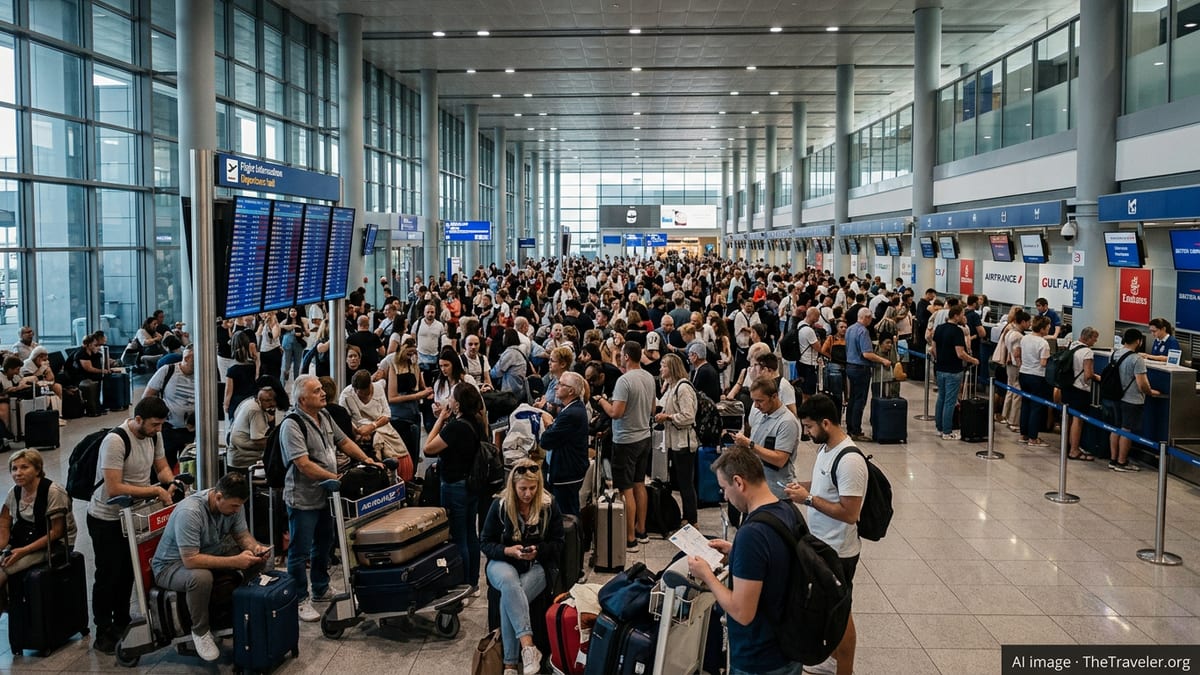
For passengers, the underlying causes of disruption matter less than the practical effects. Recent travel reports describe missed connections, extended waits in terminal areas and uncertainty around rebooking options for those relying on tight transfer times at Athens International Airport. SKY express, like other carriers, has faced a wave of complaints on consumer platforms related to delays, schedule changes and baggage handling.
Travel advisers are increasingly urging visitors transiting through Athens to allow wider buffers between domestic and international flights, particularly during the late afternoon and evening peaks when inspections or air traffic restrictions are more likely to coincide with heavy demand. Some guidance recommends at least two to three hours between arrival and onward departure, even when itineraries appear straightforward on paper.
Passenger rights advocates note that, under European regulation, travelers on delayed or canceled flights may be entitled to care or compensation depending on the length and cause of the disruption. However, they also point out that claims can be complex when delays stem from a combination of factors, including technical issues in air navigation systems, air traffic flow controls and airline scheduling choices. In this context, the dispute between SKY express and HCAA over planning responsibility may influence how future disruptions at Athens are interpreted.
Ongoing Scrutiny of Greek Air Navigation Systems
The tensions surrounding SKY express’s criticism arise against a backdrop of heightened scrutiny of Greek air navigation infrastructure. Earlier technical incidents in the Athens flight information region, including problems affecting radar and approach systems, prompted calls for more resilient systems and clearer contingency procedures. Subsequent inspection programs, while intended to assure safety and reliability, have introduced additional operational constraints.
Aviation observers say that the challenge for HCAA and airlines such as SKY express is to balance the non-negotiable requirement for safety with the need to protect the reliability of Greece’s air transport network during peak tourism season. Safety-driven inspections and upgrades are widely viewed as essential, but their timing, duration and communication to airlines and passengers have become central points of debate.
As the summer 2026 season progresses, Athens International Airport is expected to remain a focal point for discussions about capacity, planning and accountability. Whether the public criticism from SKY express prompts adjustments in how inspections are scheduled or how capacity limits are communicated will likely be watched closely by both industry participants and travelers planning journeys through the Greek capital.