


More news on this day
Hawaiian Airlines will discontinue its Honolulu to Auckland route from late 2026, drawing a line under more than a decade of on-and-off service linking Hawaii and New Zealand as the carrier and its new parent Alaska Airlines refocus their combined network.
Get the latest news straight to your inbox!
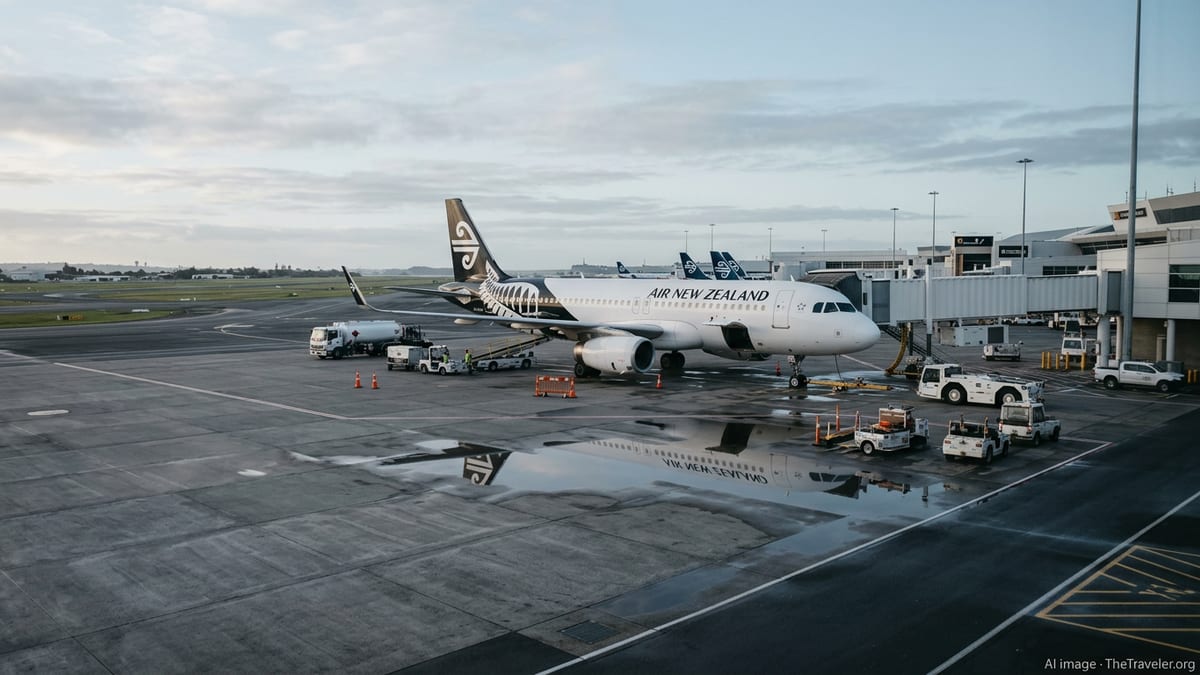
Seasonal Honolulu–Auckland link set to disappear
The Honolulu–Auckland route, most recently operated as a seasonal service, is scheduled to conclude after the southern summer 2025–2026 season. Publicly available information from aviation industry trackers and tourism updates indicates that flights will run through April 2026 before being withdrawn from published schedules later in the year.
The route had shifted to a seasonal model in recent years, typically operating three times a week during the New Zealand summer and pausing over winter. Coverage from airline and tourism outlets shows that the latest iteration of the service was due to operate from November 2025 into April 2026, mirroring previous seasonal patterns designed to capture peak leisure demand.
Reports from aviation-focused publications in mid-July 2026 state that the seasonal service will not return for the 2026–2027 season, effectively cancelling future New Zealand flights for Hawaiian Airlines and its Alaska Airlines parent. Schedules reviewed by independent flight data sites show no Honolulu–Auckland services loaded beyond the end of the current season.
Travel industry reporting characterises the move as a permanent end to the Honolulu–Auckland route after roughly thirteen years of intermittent operation, including a multi-year pause during the pandemic. For New Zealand travellers, it removes one of the few nonstop options connecting to Hawaii and, by extension, to a broad network of U.S. mainland destinations.
Strategic shift under Alaska–Hawaiian integration
The cancellation comes as Hawaiian Airlines is folded into Alaska Airlines, with the combined group aligning schedules, aircraft deployment and route planning across the Pacific. Corporate and regulatory filings over the past year have outlined a plan to consolidate flying under Alaska’s code, adjust flight numbers and streamline overlapping services.
According to recent coverage in U.S. business media, the group is prioritising routes with stronger year-round demand and higher yields, particularly from major West Coast gateways into Hawaii. Ending the New Zealand service is described as part of a broader reshaping of the long-haul network, coinciding with additional capacity on domestic U.S.–Hawaii legs operated by Alaska.
Network summaries published by aviation analytics sites note that some underperforming or niche international routes inherited from Hawaiian Airlines have already been reduced or removed in the 2025 and 2026 schedules. The Honolulu–Auckland link now joins those cuts, even as the airline group signals plans to grow overall Hawaii capacity by shifting aircraft onto more profitable markets.
Industry commentary suggests that operating a long overwater sector to a relatively small origin market, while dealing with currency shifts and rising costs, had become increasingly difficult to justify once the merged airline began reviewing its network on a combined basis.
Economic headwinds and demand challenges
Travel and business publications covering the decision point to several pressures behind the exit from New Zealand. Reports highlight elevated fuel prices, unfavourable exchange rates for New Zealand travellers and softer leisure demand compared with pre-pandemic peaks as key factors that eroded the route’s viability.
Tourism statistics released in late 2025 showed a notable decline in New Zealand visitor arrivals to Hawaii compared with 2019, even after borders fully reopened. Analysts quoted in regional tourism commentary have linked that weakness to a combination of higher airfares, a strong U.S. dollar and competition from closer, lower-cost island destinations popular with New Zealand holidaymakers.
At the same time, the Honolulu–Auckland service depended heavily on connecting traffic beyond Hawaii to the mainland United States. As Alaska and Hawaiian integrated their networks, planners had to weigh whether those same passengers could be more efficiently routed via larger hubs such as Los Angeles, Seattle or San Francisco, where multiple carriers offer frequent services.
With aircraft in high demand across the combined fleet, reassigning widebody capacity from a seasonal, leisure-focused route to busier transpacific or West Coast markets appears to have become a logical step, based on analysis from airline and investment commentators tracking the merger.
Impact on travellers and competing airlines
The end of Hawaiian’s New Zealand flights will alter the landscape for travellers moving between Auckland, Hawaii and the continental United States. Without the nonstop Honolulu link, New Zealand passengers will increasingly route through Australian hubs, other Pacific islands or major mainland U.S. gateways when heading to or from Hawaii.
Travel forums and consumer reports in recent days indicate that affected customers are being rebooked via alternative connections or offered refunds, depending on their tickets. Some leisure travellers who had planned multi-island itineraries via Honolulu in late 2026 have reported receiving notifications that their Auckland segments are no longer operating and that their itineraries are being restructured.
The withdrawal creates an opening for rival carriers already active on South Pacific and North Pacific corridors. Air New Zealand maintains its own Honolulu flights, while other airlines in the region offer one-stop itineraries via cities such as Sydney, Nadi or Los Angeles. Travel agents in both markets are expected to pivot toward these alternatives as Hawaiian’s presence recedes.
Industry analysts say the cancellation could also influence package holiday offerings, as tour operators that once marketed direct Hawaii getaways from New Zealand adjust brochures and pricing for 2027 and beyond. Some packages may shift focus to mainland U.S. beach destinations or to closer Pacific islands that can be reached via shorter flights.
What comes next for Hawaii–New Zealand connectivity
While Hawaiian Airlines is stepping away from New Zealand, tourism bodies and aviation watchers will be monitoring whether other carriers expand capacity to fill part of the gap. Historically, long-haul leisure routes connecting smaller markets have often seen periods of entry and exit as airlines test demand and respond to macroeconomic swings.
New Zealand tourism organisations have previously highlighted Hawaii as both a destination in its own right and a convenient stopover for trips to the mainland United States. Without Hawaiian’s nonstop link, future marketing strategies may shift toward promoting alternative routings and multi-stop itineraries, or toward destinations where seat supply is more stable.
On the Hawaii side, publicly available fact sheets from the state’s tourism authority show that visitor arrivals from Oceania have been recovering but remain below 2019 peaks. Observers suggest that airlines and local stakeholders will be watching whether those numbers can grow through other gateways or partnerships in the absence of a direct Auckland connection.
For now, travellers weighing trips between New Zealand and Hawaii in late 2026 and 2027 are being advised by travel sellers and consumer advocates to check itineraries carefully, monitor schedule changes and consider flexible booking options as airlines continue to adjust their networks in the wake of the Alaska–Hawaiian integration.