


More news on this day
A United Airlines service operating as Flight UA1507 from Houston to Phoenix diverted to Las Vegas Harry Reid International Airport following what publicly available tracking data and reports describe as an unconfirmed operational disruption en route.
Get the latest news straight to your inbox!
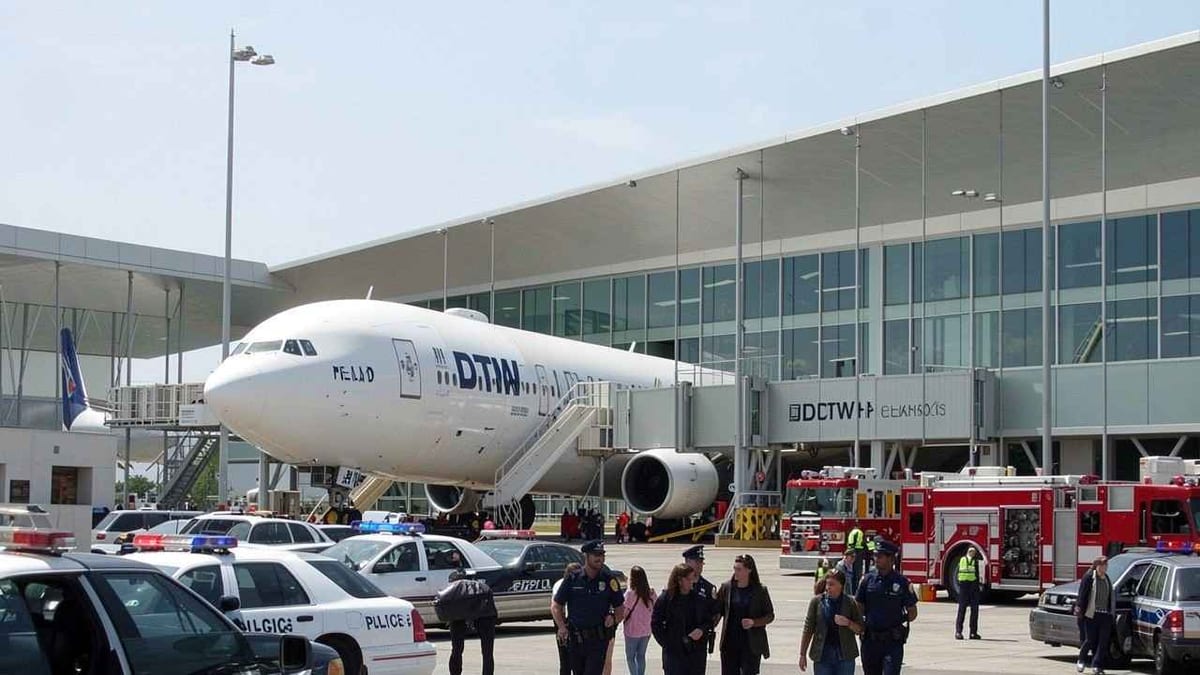
Unexpected diversion along a routine domestic route
Flight UA1507 was scheduled to operate between George Bush Intercontinental Airport in Houston and Phoenix Sky Harbor International Airport, a busy domestic corridor linking two major hubs in the U.S. Southwest. The route typically follows a roughly west-northwest track over Texas and New Mexico before descending into the Phoenix area, with a block time of around three hours.
On this occasion, publicly accessible flight tracking information indicates that the aircraft deviated from its expected path and turned toward Las Vegas instead of continuing on toward Phoenix. The change in routing resulted in the jet touching down at Harry Reid International Airport, one of the primary diversion and alternates for traffic operating in and out of the desert Southwest.
Available data shows no prior schedule listing Las Vegas as an intermediate stop for UA1507, suggesting that the landing at Harry Reid International was unscheduled and undertaken in response to circumstances that developed during the flight.
Passenger itineraries typically list UA1507 as a nonstop service, which means the diversion added both additional flight time and ground time as the situation was assessed and onward travel options were organized.
Nature of the disruption remains unconfirmed
As of the latest publicly available information, there is no detailed explanation for the operational disruption that prompted the diversion. Flight monitoring platforms and airport information feeds reflect the change in destination but do not specify whether the cause was related to technical issues, onboard medical needs, airspace constraints, or other factors.
U.S. carriers routinely divert flights when crews determine that continuing to the planned destination is not the safest or most practical option. Reasons can include mechanical irregularities, warning indications in the cockpit, medical situations involving passengers or crew, disruptive behavior on board, or weather and traffic management constraints at the destination airport.
In this case, reports simply note that the aircraft proceeded safely to Las Vegas, where it landed without further incident. There are no publicly available indications of injuries or damage connected to the diversion, and the event is so far described only as an in-flight operational disruption.
Published operational data and historical statistics show that diversions account for a very small proportion of total flights operated by major U.S. airlines, but they remain a normal part of commercial aviation safety management, particularly on busy domestic corridors.
Harry Reid International’s role as a Southwest diversion hub
Las Vegas Harry Reid International Airport frequently functions as a convenient diversion point for flights crossing the interior West, including services bound for Phoenix, Southern California and other regional destinations. Its extensive runway infrastructure and carrier presence allow airlines to handle unplanned arrivals more efficiently than at smaller regional airports.
United Airlines operates regular services into Las Vegas from Houston and other hubs, which can simplify logistics when a Houston-originating aircraft diverts there. Existing ground handling arrangements, maintenance capability and onward flight options often make Harry Reid International a practical choice when a crew decides that continuing to the original destination is not advisable.
For passengers, diversion to a large airport such as Las Vegas generally improves the chances of being rebooked on later flights or alternative routings once the aircraft has been inspected and the airline has assessed available capacity. In some cases, the original aircraft is cleared to continue onward to the planned destination after checks are completed.
The combination of robust infrastructure and multiple daily connections to major U.S. cities means that Harry Reid International is frequently cited in industry analysis as a key alternate for operations across the Southwest, including routes linking Houston, Phoenix, Los Angeles and Denver.
Impact on passengers and onward travel plans
For travelers on UA1507, the diversion would likely have resulted in missed onward connections and changes to arrival times in Phoenix and beyond. When a flight lands at an unplanned airport, airline operations teams typically work through options that can include operating the same aircraft onward after inspection, transferring passengers to later flights, or, in some cases, arranging overnight accommodation when onward travel is not possible the same day.
Publicly available guidance from U.S. carriers indicates that passenger handling varies depending on the underlying cause of the disruption. Weather and air traffic restrictions are usually treated differently from issues directly under the airline’s control, such as certain technical problems or crew availability, with different standards for rebooking and care at diversion points.
Because the circumstances surrounding UA1507’s diversion have not been confirmed, it is not yet clear how passenger care and re-accommodation were managed in this instance. However, the presence of multiple daily flights linking Houston, Las Vegas and Phoenix generally provides several options for reaccommodating travelers once aircraft and crews are available.
In similar situations, some passengers may choose to end their journey at the diversion airport if it suits their plans, while others wait for the airline to resume service to the original destination or arrange alternative routings.
Operational context amid a busy summer travel period
The diversion involving UA1507 comes during a peak summer travel period in the United States, when airlines typically operate at or near full capacity and weather, heat-related performance limits, and air traffic management measures place additional pressure on schedules. Routes across Texas, the desert Southwest and the Mountain West can be particularly affected by convective storms and high temperatures.
Industry analyses of U.S. flight data note that most diversions and extended delays emerge from a combination of factors, including weather systems, congestion at major hubs and the knock-on effects of earlier disruptions in the network. During busy travel weeks, even a single operational issue can ripple through connections, affecting passengers on multiple subsequent flights.
In that context, UA1507’s unplanned stop in Las Vegas is one of many operational adjustments airlines make to keep safety as the overriding priority while attempting to limit disruption for travelers. Further details about the specific cause of the diversion may emerge through later operational summaries or regulatory databases, but for now it is recorded publicly simply as a flight that did not complete its planned nonstop journey from Houston to Phoenix.
For passengers and observers, the episode underscores how quickly a routine domestic sector can change, and how diversion airports such as Las Vegas Harry Reid International play a central role in managing those unexpected turns in the air travel network.