


More news on this day
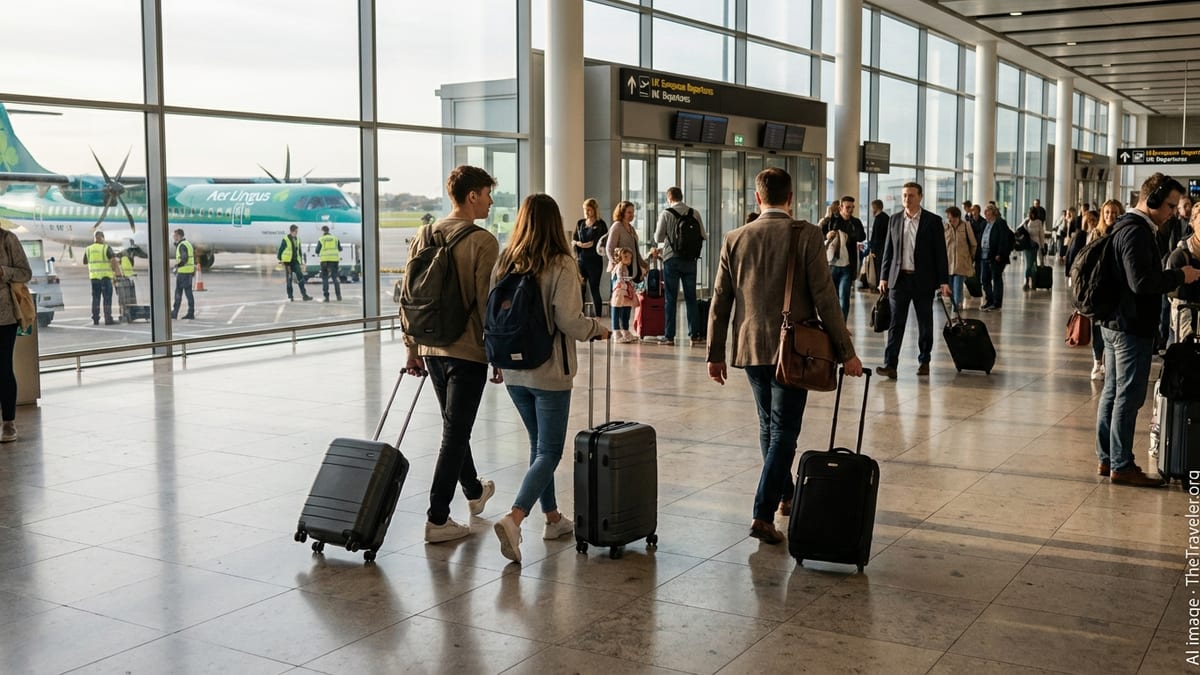
Rising baggage fees, lingering fears of lost luggage and a wave of social media content celebrating minimalist packing are driving a noticeable shift in 2026 toward carry on only travel.
Get the latest news straight to your inbox!
Sticker Shock as Checked Bag Fees Climb Again
Checked baggage has become one of the fastest rising costs in air travel, and 2026 is proving to be another year of sharp increases. Major U.S. carriers have adjusted fee structures in recent months, pushing the price of a first checked bag on many domestic routes into the mid-40 dollar range, with second bags often higher. According to published coverage, American Airlines updated its baggage fees in April 2026, while Delta, United and JetBlue have all implemented successive hikes over the past two years.
Industry reporting indicates that these charges are no longer a side revenue stream but a central pillar of airline finances. An analysis of airline disclosures cited by financial outlets estimated global baggage fee revenue in the tens of billions of dollars in 2023, with U.S. carriers alone collecting more than 7 billion dollars in 2024. As energy prices and labor costs remain elevated, airlines are leaning on ancillary fees such as baggage to protect margins.
The impact for travelers is straightforward. For a family of four on a domestic round-trip flight, checking even one bag per person can now add hundreds of dollars to a vacation budget. Travel advisors note that many cost-conscious passengers are responding by eliminating checked luggage altogether, especially on trips of one week or less, and redirecting that money toward accommodations and activities.
Low-cost carriers and basic economy fares, which often charge for every checked item from the first bag, are reinforcing the trend. Some budget airlines now price a small cabin suitcase almost on par with a checked bag, further nudging travelers to concentrate everything into a single, airline-compliant carry on.
Lost Luggage Fears Linger Despite Operational Gains
The sharp baggage meltdowns of 2022 and 2023, when images of luggage piled high at European and North American hubs circulated widely, left a lasting impression on travelers. While handling performance has improved since those peaks, many passengers continue to view checking a bag as a major risk to the start of their trip.
Recent data from SITA and IATA shows that global baggage mishandling rates fell in 2024, to roughly 6.3 bags per 1,000 passengers, down from the year before. Even with that improvement, industry reports estimate more than 30 million bags were still delayed, damaged or lost worldwide last year, costing airlines around 5 billion dollars. Published analyses also highlight that mishandling is significantly more frequent on complex international itineraries than on simple domestic routes.
Consumer-facing trackers that compile complaint data from the U.S. Department of Transportation show that some large airlines still misdirect thousands of bags every month. Comment threads on airline and travel forums in early 2026 remain filled with accounts of travelers arriving for cruises, destination weddings and overseas tours without their checked suitcases.
That experience is pushing many to adopt a carry on only rule, especially for time-sensitive travel. With all belongings in the overhead bin, passengers avoid waiting at carousels, worrying about missed connections or budgeting extra time for potential baggage office visits. The growth of inexpensive Bluetooth and GPS bag trackers has not fully offset these concerns, since they can show where a lost bag is but cannot speed up its return.
Social Media Turns Packing Light into a Travel Trend
Digital platforms have transformed carry on only travel from a niche habit into a mainstream aspiration. On TikTok, YouTube and Instagram, packing videos showing travelers preparing for two or even three weeks abroad with a single cabin case routinely attract millions of views. Lifestyle publications have amplified the movement with minimalist packing lists and capsule wardrobe guides designed specifically for carry on suitcases.
Trend coverage in 2025 and 2026 points to an explosion of “pack with me” clips that break down how to fit outfits, shoes and toiletries into a 40-liter bag. Influencers demonstrate folding techniques, the use of compression packing cubes and strict outfit coordination to keep volume low. Viewers are encouraged to count every item, repeat clothing, and rely on hotel laundry or local laundromats to reduce bulk.
Retailers and luggage brands are responding in kind. Travel sections on major e-commerce sites prominently feature “personal item” backpacks that meet under-seat dimensions, as well as ultralight four-wheel cabin suitcases and vacuum-seal bags marketed to frequent flyers. Product descriptions often reference carry on only trends directly, emphasizing how a particular bag is optimized for airline cabin size limits.
For many travelers, the aesthetic of traveling light has become as important as the practical benefits. The image of breezing through an airport with a single compact bag, in contrast to wrestling heavy suitcases onto trains or into rideshares, has turned into a core part of the aspirational travel narrative promoted online.
Flexibility, Productivity and Environmental Motives
Beyond cost and social media influence, carry on only flying offers practical advantages that align with how many people travel in 2026. With more workers blending business and leisure trips, the ability to move quickly between airports, coworking spaces and short-term rentals is a priority. A small cabin bag makes multi-stop itineraries easier, particularly when using public transport in dense cities.
Travel writers and frequent flyer surveys consistently note time savings as a key benefit. Skipping the check-in counter can cut down arrival times at airports, while bypassing baggage claim on landing allows travelers to reach ground transport or immigration queues earlier. For routes with tight connections, not having to rely on ground staff to transfer a suitcase can significantly reduce stress.
Sustainability has also entered the conversation. Environmental commentators argue that lean packing encourages more efficient use of space on planes, trains and buses, and discourages the purchase of disposable or single-use travel items that often end up discarded. While the emissions impact of an individual suitcase is small compared with the flight itself, some travelers view minimal baggage as part of a broader low-impact travel ethic that includes slower itineraries and fewer, longer trips.
For airlines, the shift is double-edged. Lighter cabins can reduce handling costs and improve turnaround times at the gate, but fewer checked bags also threaten a lucrative revenue stream. Industry analysts suggest that carriers may respond by refining overhead-bin policies or adjusting fare bundles to preserve income while accommodating passenger demand for lighter travel.
Constraints and the Future of One-Bag Travel
Despite the momentum, carry on only is not viable for every traveler. Families with young children, passengers relocating for extended periods and travelers with specialized gear often find that they cannot avoid at least one checked bag. Liquid restrictions remain a persistent obstacle for those who prefer full-size toiletries or need to carry medical supplies that exceed standard limits.
Regional variations in cabin baggage rules further complicate matters. Some low-cost airlines strictly enforce smaller personal-item dimensions and charge for overhead-bin access, blurring the line between cabin and checked luggage costs. Reports from consumer groups highlight instances in which passengers expecting to fly carry on only are required at the gate to pay last-minute fees to check bags that exceed size or weight thresholds.
Still, industry surveys conducted in 2024 and 2025 indicate a steady rise in travelers who say they would rather do laundry on the road than check a suitcase. Early 2026 trend reports from major booking platforms describe higher searches for “carry on only” packing tips, as well as increased sales of cabin-sized luggage.
As airlines continue to revise fee structures and travelers prioritize flexibility, analysts expect the one-bag mindset to persist. For many, especially solo travelers and couples on short trips, the question is no longer whether they can fit everything into a carry on, but how small and efficient that carry on can be.