


More news on this day
Hitachi Rail and Polish rolling stock manufacturer Pesa Bydgoszcz have entered a strategic partnership aimed at supplying high speed and double‑deck trains in Poland, positioning the duo for a flagship PKP Intercity contract and wider regional opportunities.
Get the latest news straight to your inbox!
Strategic cooperation targets PKP Intercity’s very high speed plans
According to published information from both companies, the partnership is built around joint participation in PKP Intercity’s tender for very high speed electric multiple units. The state operator is seeking 20 trainsets capable of at least 320 km/h, with an option for 35 additional units and a 30‑year maintenance package, in what is set to be one of Poland’s most significant rolling stock procurements.
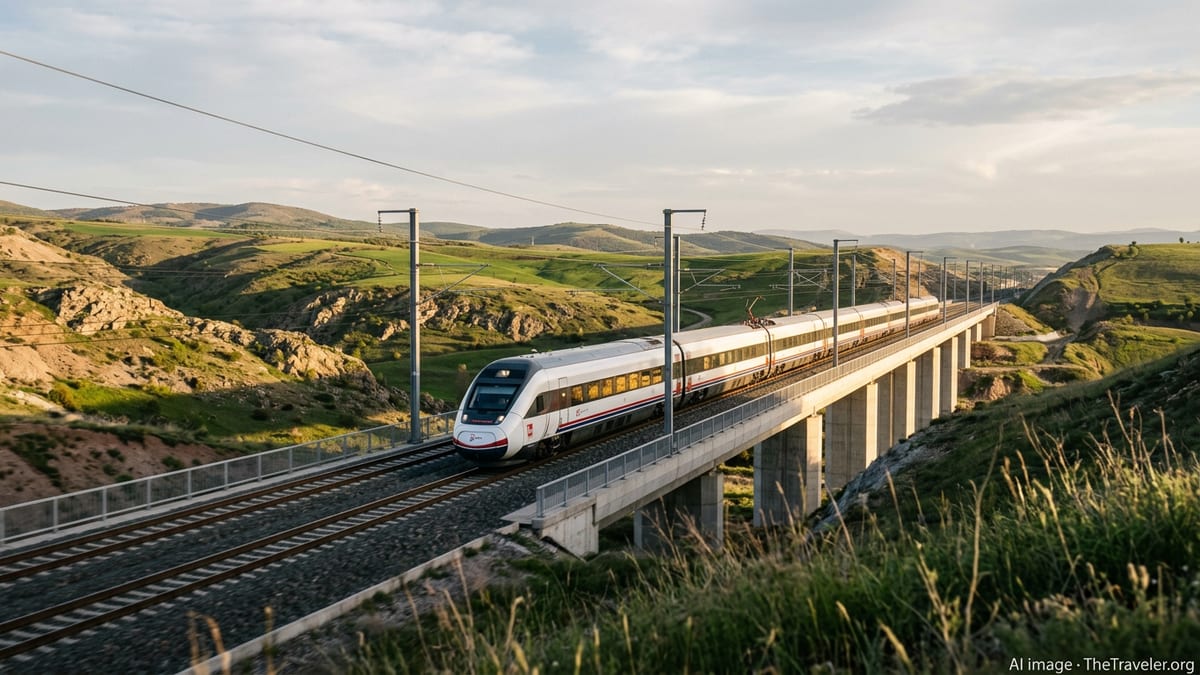
Reports indicate that Hitachi and Pesa plan to offer a version of Hitachi Rail’s ETR 1000 high speed train, already in service on major European corridors. Under the proposed production model described in specialist rail coverage, the initial batch of trains would be manufactured at Hitachi Rail facilities in Italy, with a growing share of work transferred to Poland as local capabilities ramp up.
The tender is closely watched in the context of Poland’s broader ambitions for a new high speed network and upgraded main lines. Industry analysis suggests that securing a 320 km/h fleet is seen by policymakers as a necessary step if future services are to fully exploit new infrastructure now in planning and early construction stages.
Publicly available details of the memorandum of understanding show that Pesa would take primary responsibility for maintenance activities in Poland. That arrangement would build on the company’s existing service depots and is expected to support long term employment and technical skills development in the domestic market.
Technology transfer and a new role for Bydgoszcz
A central feature of the Hitachi–Pesa cooperation is technology transfer, particularly in areas where Poland’s supply chain is still emerging. Company statements describe plans to bring advanced know‑how in the welding of aluminium train bodies to Pesa’s Bydgoszcz site, which would be developed into a local centre of excellence for lightweight structures.
Aluminium construction is viewed by rail engineers as a key enabler of very high speed operation, helping to reduce train weight while maintaining structural strength and crashworthiness. By internalising this capability, Pesa is expected to move beyond its traditional focus on regional and intercity trains at lower top speeds and join a small group of European manufacturers able to deliver very high speed products.
The agreement also covers the development and construction of double‑deck trains in Poland. Public information indicates that Hitachi Rail’s European portfolio already includes double‑deck regional equipment, while Pesa brings detailed knowledge of Polish operating conditions and infrastructure constraints such as platform heights and power supply characteristics.
Polish economic agencies involved in Pesa’s restructuring in recent years present the deal as the next phase in the company’s evolution. After stabilisation and a return to profitability, the Bydgoszcz manufacturer is now expected to expand its product range into higher value, technology‑intensive segments of the market, supported by foreign partners and export‑oriented projects.
Double‑deck trains positioned for capacity growth
Beyond the headline speed figures, the joint focus on double‑deck rolling stock reflects concerns about capacity on Poland’s busiest corridors. Passenger numbers on trunk routes linking Warsaw with regional capitals have been climbing steadily, while infrastructure upgrades are progressing in stages, limiting the ability to add more paths in the short term.
Double‑deck electric multiple units are widely used elsewhere in Europe to increase seating capacity without lengthening trains beyond existing platform limits. Industry observers note that such trains could be particularly suited to dense corridors feeding into future high speed lines, where a mix of long distance and regional services is anticipated.
Reports on the Hitachi–Pesa cooperation suggest that the partners aim to tailor their double‑deck offer to PKP Intercity’s long distance needs as well as the requirements of regional operators. The technology transfer framework foresees the design and production of double‑deck vehicles in Poland, leveraging Pesa’s manufacturing base and Hitachi’s experience from other European projects.
The move also comes at a time when other manufacturers have secured contracts for double‑deck intercity trains in Poland, underlining a competitive market. Analysts see the new partnership as an attempt by Hitachi and Pesa to position themselves strongly for subsequent orders as passenger growth and network expansion drive further capacity investments.
Poland’s high speed ambitions and regional export prospects
The agreement between Hitachi and Pesa is unfolding against a backdrop of ambitious national rail plans. Government strategies outlined in recent months have highlighted targets for thousands of kilometres of new or modernised lines, including an extensive high speed component designed to link major cities and connect with projects such as Rail Baltica.
Specialist media coverage points out that Poland currently operates high performance trains, including Pendolino sets, at significantly lower speeds than those envisaged for the new very high speed network. The tender for 320 km/h stock is therefore seen as both a technological leap and a signal to potential infrastructure contractors about the country’s long term intentions.
Publicly available information on the Hitachi–Pesa memorandum indicates that the cooperation is not limited to the PKP Intercity tender. The partners are also looking to jointly address markets in Central and Eastern Europe and Scandinavia, using Poland as a production and competence hub for high speed and double‑deck rolling stock.
Such a role would align with recent moves by Pesa to widen its geographic footprint through acquisitions and export contracts. For Hitachi, the partnership offers deeper access to a large and growing rail market within the European Union, as well as proximity to planned cross border corridors that could favor interoperable high speed equipment.
Industrial and employment impacts for the Polish rail sector
Economic commentators in Poland describe the Hitachi–Pesa partnership as part of a broader effort to anchor more advanced industrial activity within the country. The envisaged transfer of aluminium construction techniques, combined with local maintenance responsibilities for a high value fleet, is expected to support long term skilled employment in Bydgoszcz and other sites.
State investment funds involved in Pesa’s turnaround have framed the deal as a validation of earlier support for the manufacturer, which had faced financial difficulties before being recapitalised. By partnering with an established global supplier of high speed trains, Pesa appears to be moving into a new competitive bracket, with implications for domestic suppliers of components and systems.
Observers also point to potential spillover effects for the wider Polish rail ecosystem, including universities and research centres that may be drawn into projects related to aerodynamics, materials science and digital maintenance tools. The prospect of maintaining a 320 km/h fleet over several decades in Poland is likely to generate demand for specialised engineering skills.
Whether the partnership achieves its full ambitions will depend in part on the outcome of the PKP Intercity tender and the pace of Poland’s high speed infrastructure rollout. For now, the agreement signals an intention to combine international experience with local manufacturing to deliver both very high speed and double‑deck trains from within the Polish industrial base.