


More news on this day
Catania’s city map is being quietly rewritten, as new pedestrian areas, digital mapping tools and an expanding metro network alter how visitors experience the historic Sicilian port.
Get the latest news straight to your inbox!
An Historic Grid Under Pressure From Modern Mobility
Catania’s urban layout still revolves around its UNESCO-listed historic center, with Piazza Duomo and the axis of Via Etnea acting as a natural reference point for most printed and digital maps. Publicly available guides describe a concentric structure: the baroque core, encircled by nineteenth-century neighborhoods, and then by coastal and peripheral districts that include the port, the Plaja beachfront and residential zones uphill toward Mount Etna.
Recent travel guides and accommodation platforms continue to highlight this geography when helping visitors choose where to stay. Reports indicate that central districts such as Civita, San Berillo, Castello Ursino and Borgo appear prominently on neighborhood maps, often distinguished from more industrial or working port areas. The result is a layered cartography in which tourist routes, residential quarters and commercial corridors are clearly separated, even at the scale of a small Mediterranean city.
Published coverage notes that the city’s rail and road gateways sit just outside the most historic streets. Catania Centrale railway station is plotted to the southeast of the cathedral, while the Fontanarossa airport appears around 5 kilometers to the south, connected to the center by bus services and, increasingly, by metro. For visitors reading a city plan for the first time, that positioning helps explain why many itineraries suggest walking within the core and using rail-based transit to cover longer distances.
Cartographic products aimed at tourists now place particular emphasis on the visual relationship between Catania’s baroque squares and the seafront. Maps typically trace the link between Via Etnea, Villa Bellini park and the coastline, underlining how quickly the urban grid runs into both the port and the foothills of Etna. That proximity to natural landmarks continues to shape the way the city is represented on paper and on screen.
Official Maps and the Rise of Multichannel Guides
The municipality maintains an official city map for visitors, distributed through the local tourism office and its online channels. Documents hosted by the city indicate that the printable map was last revised in 2022, providing a detailed overview of streets, monuments and basic transport connections. The cartography is designed to function both as an orientation tool and as a starting point for walking itineraries through the historic center.
Alongside the municipal product, a privately run project branded as CityMap Sicilia has positioned itself as an official tourist map for Catania, produced in partnership with local institutions and commercial sponsors. Information on the project describes a multichannel approach that combines a free pocket map, web content and digital guides distributed through local venues. Each edition is marketed as collectible, reflecting incremental changes in routes, featured attractions and services.
Travel websites and destination portals have also begun to offer downloadable maps in PDF form, often bundling district overviews with short thematic itineraries. These products typically highlight practical information such as bus hubs, metro stations, parking areas and pedestrian streets, superimposed on traditional tourist landmarks. For visitors, the growing number of overlapping maps can make pre-trip planning easier, while also underscoring that not all cartographic information is updated at the same pace.
City tourism specialists note that this proliferation of mapping tools reflects broader trends in European urban destinations. In Catania, as in other cities, printed city plans handed out at hotels now coexist with smartphone navigation, custom user-generated maps and official PDFs, each emphasizing slightly different aspects of the urban fabric. The challenge for first-time visitors is often deciding which representation best matches current conditions on the ground.
Pedestrian Zones Redrawing the Center
In the last few years, Catania’s authorities have advanced a series of pedestrianization initiatives that are gradually reshaping the effective city map for those on foot. Publicly available transport information outlines multiple pedestrian areas and restricted-traffic zones, particularly within the historic center and along the seafront. These zones change how streets function in practice, even if printed cartography lags behind in visually distinguishing them.
Recent local reporting indicates that the San Berillo district, just west of Via Etnea, has been designated a permanent pedestrian area, with access controlled through electronic gates and monitored points of entry. The measure covers a cluster of streets that connect key commercial and nightlife corridors, effectively consolidating a walkable enclave in what was once a car-dominated grid. For visitors relying on older maps, streets that appear as through-routes for vehicles may now be best understood as pedestrian corridors.
Other interventions, such as pedestrian spaces established around squares and selected waterfront stretches, are also beginning to appear in updated mobility maps. Transport agency documents reference specific pedestrian zones like San Giovanni Li Cuti on the coastline, signaling an effort to codify car-free spaces within the broader traffic regulation framework. Over time, these designations are likely to become standard features on both official maps and private tourist plans.
Urban design initiatives described in Italian media, including the installation of new street furniture and traffic-calming elements on historic streets, further reinforce these spatial changes. For mapmakers, the shift raises questions about how best to represent streets that remain part of the urban grid but function primarily as plazas, promenades or outdoor dining areas at different times of day.
Metro Expansion and Transport Cartography
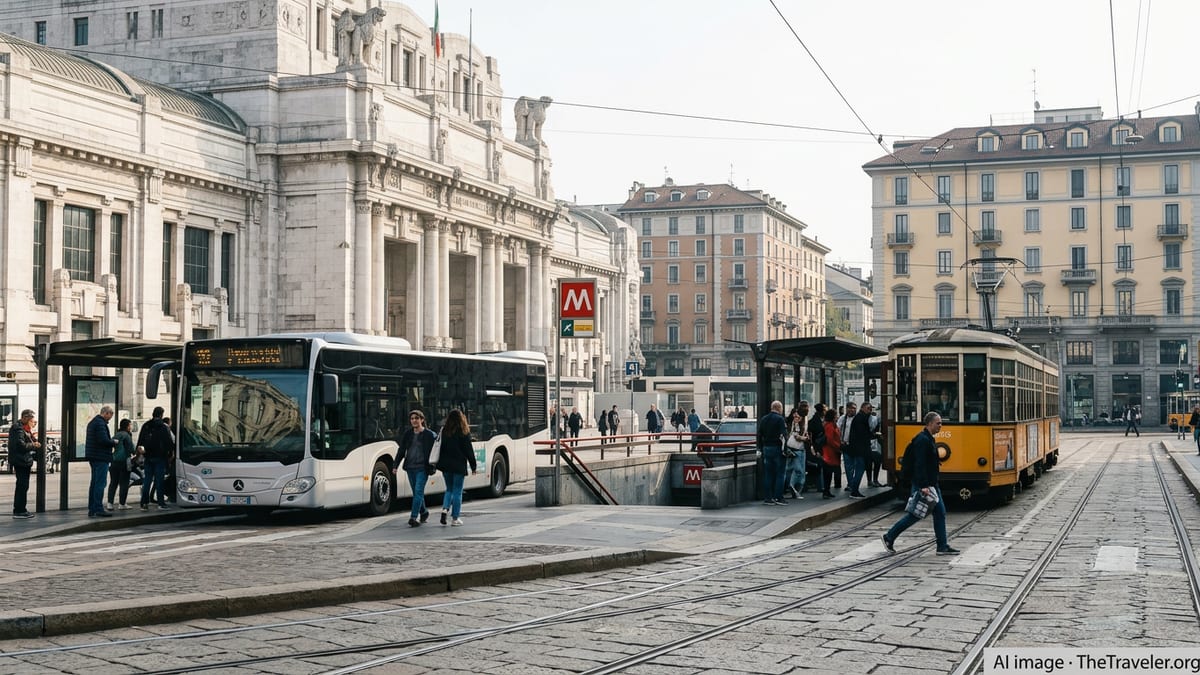
Catania’s small but growing metro network is another driver of change in how the city appears on maps. Transport overviews show a single line running roughly northwest to southeast, with key stations at Nesima, Milo, Borgo, Galatea and Stesicoro. Recent network diagrams incorporate new stations such as Monte Po and Fontana, opened in mid-2024, extending rail-based access deeper into residential districts.
Although the line does not yet reach the airport, institutional reports and technical documents outline ongoing works on the Stesicoro to Aeroporto section. Planning material suggests that future maps will depict a continuous underground axis from the historic center to Fontanarossa, fundamentally altering the mental distance between the baroque core and the terminal. For visitors, this would simplify transfers that currently rely on shuttle buses or taxis from the main rail station and central bus stops.
Dedicated metro maps, often distributed at stations and online, already serve as a parallel cartographic layer to standard city plans, using simplified diagrams to show station locations relative to central landmarks. Travel narratives from recent years describe visitors using the Stesicoro station as a reference point for the historic center, then switching to surface walking routes guided by traditional maps or mobile navigation. As new underground segments open, the overlap between diagrammatic transit maps and geographic city plans is expected to deepen.
Regional mobility plans indicate that the metro expansion is part of a wider set of rail improvements across eastern Sicily, including upgraded connections to other cities. For Catania’s city map, this broader context means that future editions are likely to devote more space to intercity nodes and park-and-ride facilities, rather than focusing solely on the immediate downtown area.
Digital Navigation, Safety Perception and Future Mapping
Alongside official cartography, user-generated digital maps and travel apps are quietly influencing how visitors conceptualize Catania’s neighborhoods. Online forums and social platforms host custom map layers that pinpoint attractions, recommended bars and restaurants, and suggested walking routes, particularly around the historic center and seafront. These tools can emphasize streets and squares that traditional maps treat as minor, simply because they reflect recent traveler experiences.
Discussions on travel platforms also reveal how perceptions of safety and atmosphere feed back into the mental map of the city. Contributors frequently distinguish between lively but visually worn districts and more polished areas around major squares, offering nuanced guidance on where visitors may feel most comfortable after dark. While crime statistics and professional assessments often describe Catania as comparatively safe, this subjective mapping adds an extra layer that cartographers do not capture directly.
At the same time, destination marketing material continues to promote classic routes that connect the cathedral, the fish market, Via Etnea, Bellini Park and the waterfront, creating a stable backbone for both printed and digital maps. As pedestrian zones expand and the metro network grows, these promotional routes are being adjusted to highlight car-free promenades and quicker rail links, without abandoning the historic sequence of landmarks that define the city’s image.
Looking ahead, transport and tourism observers expect Catania’s cartography to evolve in step with new infrastructure and regulatory changes. Each revision of the official city map, each fresh edition of private tourist plans and each update to digital navigation databases will not simply add streets and stations; it will also reflect changing priorities about which parts of this Sicilian port are most visible to the world.