


Park Güell is one of Barcelona’s most photogenic spots, but those dreamy mosaic photos hide a practical truth: this hilltop park can either be a quick detour or a half‑day adventure. Before you buy tickets and lock in a time slot, it pays to decide how much time you actually want to spend there. That single decision will shape your route, your budget, and how stressed or relaxed you feel once you step through Gaudí’s colorful gates.
Get the latest updates straight to your inbox!
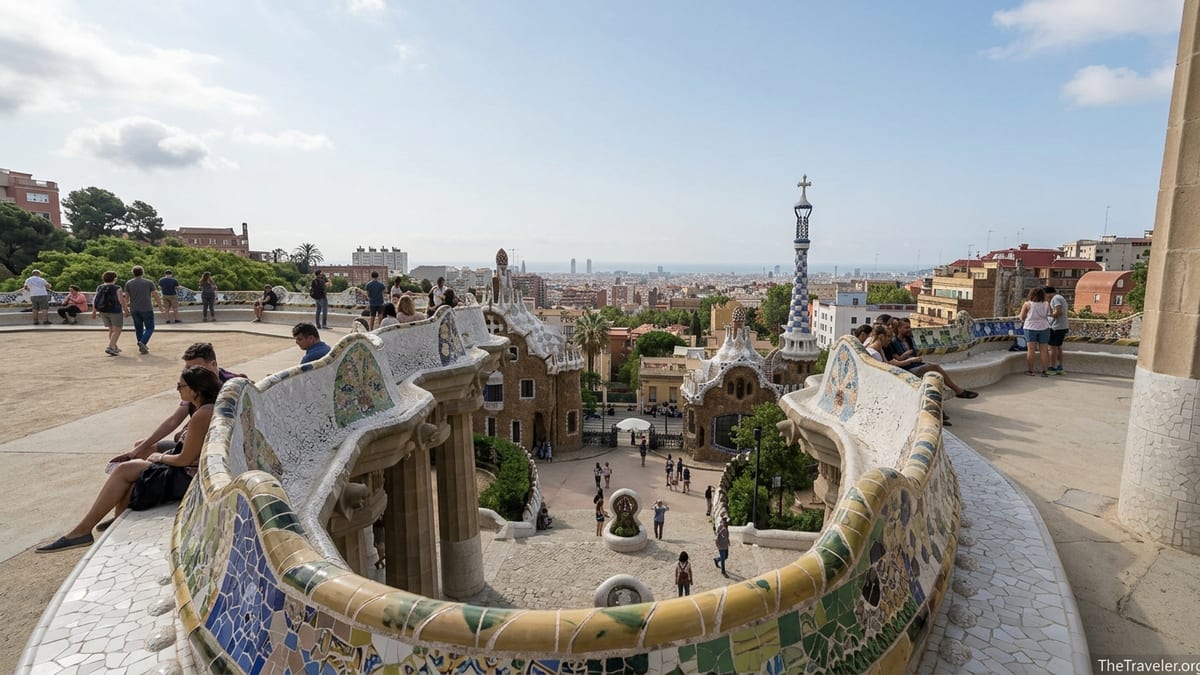
Understand How Park Güell Works Before You Pick a Time
Park Güell has two different faces: a large green zone that is freely accessible, and the ticketed Monumental Zone where you find the dragon staircase, the wave‑shaped bench, and the iconic tiled terrace. Tourist entry to the Monumental Zone works on a timed-ticket system. Standard visiting hours for tourists typically run from mid‑morning to early evening, with morning and late evening slots now reserved mainly for Barcelona residents and local cardholders. That means you cannot simply walk in at sunrise anymore and you should not count on a last‑minute evening wander without a ticket.
When you buy a ticket online, you choose a 30‑minute entry window. You can enter any time during that window and up to around 30 minutes after it. If your ticket says 9:30, you are usually allowed in until about 10:00. Once you are inside the Monumental Zone, you can stay until closing time. There is no strict limit like 60 or 90 minutes, although the park’s own planning documents estimate that a typical visit lasts around 1 to 1.5 hours in the core area. The key restriction is that once you leave the controlled area through an exit gate, you cannot re‑enter on the same ticket.
This structure matters when you think about time. If you only have a 90‑minute gap between breakfast and your Sagrada Família ticket, for example, you cannot afford to arrive late and risk queuing at the wrong entrance. On the other hand, if you are happy to give Park Güell half a day, you can book a mid‑morning slot, enter calmly, and spend extra time in the surrounding forest paths before or after your Monumental Zone visit.
How Much Time Do You Really Need? Sample Visit Types
Most visitors will be comfortable with 90 minutes to 2 hours in the Monumental Zone, which is enough to see the dragon staircase, the Hypostyle Hall with its forest of columns, the main terrace and serpentine bench, and a few viewpoints just above. If you move steadily, that window lets you take photos in several directions, sit briefly on the bench, and read a few interpretive panels without feeling hurried.
If you want a quick highlight stop, you can technically see the essentials in about one hour. This suits travelers who are fitting Park Güell between other timed visits on a tight itinerary, such as a late‑morning slot before an early afternoon Sagrada Família entry. In practice, a one‑hour visit means heading straight from the chosen entrance to the dragon staircase and terrace, skipping side paths, and limiting photo stops.
For a richer experience, especially if this is your main Gaudí sight for the day, plan on roughly three hours in and around the park. That gives you 90 to 120 minutes inside the Monumental Zone plus time to wander into the upper viewpoints, explore the free wooded zone, or pause for a drink. Travelers with kids, photography enthusiasts, or anyone sensitive to heat often find that the slower pace makes a big difference to their enjoyment.
Finally, some Gaudí fans or design professionals happily build half a day around Park Güell. They might book a morning timed entry, then visit the Gaudí House Museum on the upper side of the park and linger on the forest paths with occasional shade and city views. If you fall into this category, think of Park Güell not as a single attraction but as a hilltop landscape where you will take breaks, sit on the walls, and watch the city rather than rushing from one selfie spot to the next.
Planning for 1 Hour, 2 Hours, or Half a Day
If you only have about one hour, you need to be specific. Aim for an entry time that places you at the gate exactly when you plan to start, and allow at least 20 to 30 minutes extra in your schedule for reaching the park from central Barcelona. For instance, if you have a 10:30 Sagrada Família ticket, you might book Park Güell for 8:30 or 9:00 and leave the park no later than 9:45. In that scenario, you would take a taxi or ride‑share up the hill from Eixample rather than relying on a slow bus, and once inside you would head straight to the dragon staircase and terrace, saving the forest paths for another trip.
With roughly two hours available, you can follow a more natural flow. As an example, say your ticket is for 9:30. You arrive by 9:10 using the free shuttle bus from Alfons X Metro station, which drops you near the main entrance. After clearing the ticket check, you spend the first 45 minutes between the dragon staircase, porters’ lodges, and Hypostyle Hall, then move up to the terrace. The next 30 to 40 minutes are for views and photos from the bench, walking along the viaduct paths just above, and looping back down at an unhurried pace.
If you decide Park Güell is a half‑day priority, link your timing to Barcelona’s heat and crowds. One realistic example: book an early tourist slot around 9:30 to avoid the strongest sun in late spring or summer, explore the Monumental Zone for about two hours, then continue up into the pine groves and dirt paths towards the cross monument on the upper hill. After another hour of viewpoints and shaded wandering, you can descend via a different exit and catch a bus or taxi back down, stopping for lunch in nearby Gràcia around 13:30 when many neighborhood restaurants open for their midday service.
Factor in Getting There, Queues, and the Hill Itself
The time you spend inside Park Güell is only part of the equation. The park sits on the slopes of Carmel Hill, above the Gràcia district, so almost every approach involves some uphill walking or a combination of transport. Many visitors arrive using the Metro plus the dedicated shuttle from Alfons X station on Line 4; others use city buses that drop you closer to one of the side gates. If you walk up from the lower part of Gràcia, you will encounter steep streets and, in one direction, a series of outdoor escalators that occasionally go out of service.
As a practical rule, add at least 30 minutes to whatever time you think you need in the park to cover getting there, finding the correct entrance, and clearing the ticket check. During peak months, you may spend several minutes in a slow‑moving line, especially at the busier gates near the dragon staircase. Recent reports from visitors show that mid‑morning and late afternoon slots on spring and autumn weekends can feel particularly congested at the main entrance, even though overall visitor numbers per hour are capped.
Heat and hilliness also slow people down. In July and August, temperatures on the exposed terrace can feel intense by late morning, which means families with young children, older travelers, or anyone with mobility issues might take longer than expected to move between levels. Even outside midsummer, bringing water and a hat can change how long you feel comfortable staying. If you know you are likely to need more rest breaks, build in extra time rather than aiming for a one‑hour dash.
Transportation choices can either protect or eat into your Park Güell time. A taxi from Plaça de Catalunya or Passeig de Gràcia often takes 20 to 25 minutes in normal traffic and drops you close to one of the main entrances, saving energy for the park itself. In contrast, a combination of Metro and walking can easily stretch to 40 minutes or more door to gate, especially if you get turned around in Gràcia’s smaller streets. When you are counting minutes between two timed attractions, that difference matters.
How Your Park Güell Time Affects the Rest of Your Day
Deciding how long to spend at Park Güell is not just about the park; it shapes your entire Barcelona day. Many travelers pair it with Sagrada Família, Casa Batlló, or La Pedrera on the same day, and all of those also use timed entry. If you only give Park Güell an hour but do not leave a buffer for transport, you risk arriving late at your next ticketed site and having to argue your case at the door. Conversely, if you dedicate half a day to Park Güell, you may find you enjoy one major city sight in the late afternoon more intensely instead of rushing through three.
A common pattern is to book Park Güell first thing in the tourist opening hours, then head down to Sagrada Família late morning or early afternoon. For example, a 9:30 park entry followed by a 12:30 basilica ticket usually works well if you leave the park by 11:15, walk or ride down, and stop briefly for a snack. Another workable combination is a late afternoon Park Güell visit after a morning at Sagrada Família, especially in the longer‑daylight months from late spring to early autumn, where a 17:00 park slot can still offer good light on the terrace.
Your energy level also matters. The terraces, steps, and paths of Park Güell can leave you more fatigued than you expect, especially if you visit on your first jet‑lagged day in Barcelona. If you are planning a packed schedule with back‑to‑back Gaudí sites, it can be wise to limit Park Güell to about two hours and schedule a proper lunch or rest in the cooler early afternoon. That way you arrive at your next highlight, like Casa Batlló, refreshed rather than drained from a four‑hour hilltop wander.
Families and mixed‑interest groups should consider everyone’s priorities before committing to a long stay. For example, a group with teenagers who are more excited about shopping around Passeig de Gràcia or the beach at Barceloneta might opt for a 90‑minute Park Güell visit and leave the second half of the day open. On the other hand, if one member of the group is an architecture student, building in extra hours at Park Güell with time to sketch or photograph details up close can be one of the trip’s highlights.
Choosing Your Ticket Type and Whether to Take a Tour
Your preferred duration at Park Güell should also guide which type of ticket you buy. A basic timed‑entry ticket gives access to the Monumental Zone and allows you to stay as long as you like until closing. Prices fluctuate but are generally modest for such a famous site, with discounts for children, seniors, and residents. This option works well if you want flexibility: you can wander, backtrack along paths, and pause at viewpoints without worrying about keeping step with a group.
Guided tours typically last 60 to 90 minutes inside the Monumental Zone and may include a short walk into the surrounding parkland. They can be excellent value if you prefer someone else to handle navigation and storytelling. For example, a morning small‑group tour might start at the main gate on Carrer d’Olot, cover the dragon staircase, Hypostyle Hall, terrace, and viaducts, and then leave you free to continue exploring on your own afterward. If you like the idea of spending around two hours in total, a tour plus a bit of independent time is often ideal.
Combo tickets that include Park Güell and Sagrada Família or another Gaudí site can save money and help coordinate time slots, but they also lock you into a tighter schedule. Before booking, ask yourself honestly whether you want Park Güell to be a quick highlight or a lingering experience. If you know you will want three hours on the hill, a standard Park Güell ticket plus a separately timed Sagrada Família ticket later in the day may give you more breathing room than a tightly packaged combo.
Whichever ticket type you choose, pay attention to recent visitor reviews and the official park information for any changes in hours or capacity rules. Local political decisions in recent years have aimed to reduce overtourism by cutting back on the number of tickets sold annually, which can make popular times sell out earlier than in the past. If Park Güell is a priority, plan to book your preferred time slot several days or even weeks ahead in high season so you are not stuck with a mid‑afternoon window that does not fit the rest of your day.
Season, Time of Day, and Photos: When Extra Time Is Worth It
Season and time of day influence how long you will want to stay. In winter, days are shorter and the park can feel noticeably cooler and windier on the terrace, so a focused 90‑minute visit might be perfect before moving on to a cozy café in Gràcia. In contrast, late spring and early autumn provide long, pleasant evenings when you may be tempted to linger in the Monumental Zone until the last rays of sunlight fade over the city.
Light matters particularly for photographers. In the early part of the day, the sun tends to be softer and less harsh, which helps when you are capturing the white columns of the Hypostyle Hall or the colorful bench tiles without strong shadows. If you are serious about photography, you might plan to stay at least two hours to work through different angles, including looking back at the city skyline from the higher paths. A single hour can feel frustrating when you are trying to avoid crowds in your shots, wait for a moment of clear space, and still experience the park as more than just a backdrop.
In the middle of the day in summer, the stone surfaces and open plaza can become very bright and hot, and crowds peak as tour buses arrive. Under those conditions, many visitors find that their ideal Park Güell time shrinks. You may decide that an hour and a half is plenty after all, especially if you are visiting other outdoor sites on the same day. Reserving longer slots for cooler mornings or golden‑hour evenings can make a three‑hour stay feel like a delight rather than a slog.
Weather can also tip the balance. On a clear, dry day, you might naturally gravitate to the upper viewpoints and forest trails that extend your time in the park. On a day with passing showers or grey skies, you may prefer to concentrate on the covered Hypostyle Hall and the most iconic photo spots, shortening your stay in favor of indoor attractions elsewhere in the city.
The Takeaway
The central question before you choose Park Güell tickets is not simply which day to go, but how long you want this park to occupy in your Barcelona story. A one‑hour highlight dash can deliver the famous dragon, the shimmering bench, and a quick city view. A two‑hour exploration lets you breathe between stops, notice the details in Gaudí’s stonework, and test a few quieter paths. A half‑day visit turns Park Güell into a landscape experience, complete with hilltop breezes, forest walks, and time to sit still and take the city in.
Once you know your preferred rhythm, you can pick an entry time, mode of transport, and ticket type that support it instead of fighting against the clock. That preparation means arriving at the gate calm rather than flustered, moving through the Monumental Zone at your own pace, and ending your visit with the sense that you chose how long to stay rather than being pushed out early or dragged around too long. In a city full of great sights, a well‑timed Park Güell visit can feel like the moment your Barcelona trip finally slows down enough to enjoy.
FAQ
Q1. What is the minimum time I should plan for Park Güell?
Most travelers should plan at least 90 minutes inside the Monumental Zone, plus 30 minutes each way for transport and entry, for a comfortable short visit.
Q2. Can I stay in Park Güell as long as I want once I am inside?
Within regular tourist hours, you can generally stay in the Monumental Zone until closing time, but you cannot leave and re‑enter on the same ticket.
Q3. Is one hour enough if I only want photos at the famous terrace?
One hour can work if you head straight to the dragon staircase and main terrace, but it leaves little time for side paths or lingering at viewpoints.
Q4. How far in advance should I book if I have a tight schedule?
In busy months, book your preferred time slot at least several days ahead, longer if you are visiting on a weekend or pairing Park Güell with other timed Gaudí sites.
Q5. What is the best time of day to visit if I want to stay longer?
Early morning tourist slots and late afternoon visits in spring or autumn are ideal for longer, more relaxed stays with softer light and slightly thinner crowds.
Q6. How does the hill and walking affect how long I should plan?
Because the park sits on a steep hill with many steps and slopes, visitors who prefer a slower pace or need rest breaks should add extra time to any plan.
Q7. Should I choose a guided tour or go independently if I want more time?
If you want depth in about two hours, a 60–90 minute guided tour plus independent wandering works well; for longer visits, a simple timed‑entry ticket is usually best.
Q8. Can I combine Park Güell and Sagrada Família on the same day without rushing?
Yes, if you leave at least two to two and a half hours between time slots and limit Park Güell to around two hours, allowing for transport and a short break in between.
Q9. Does visiting with children change how long I should spend?
Families often benefit from at least two hours inside the park, as children slow the pace with photo stops, snack breaks, and time exploring paths and viewpoints.
Q10. What if the weather is very hot or rainy on my chosen day?
In strong sun or rain, many visitors shorten their time to 60–90 minutes and focus on the core Monumental Zone, then shift the rest of their day to indoor sights.