


More news on this day
Airlines across the United States spent Saturday scrambling to rebook passengers and reposition aircraft after a rare nationwide ground stop on Friday triggered one of the most disruptive days for air travel since the September 11 attacks, leaving thousands of travelers stranded at airports from Boston to Los Angeles.
Get the latest news straight to your inbox!
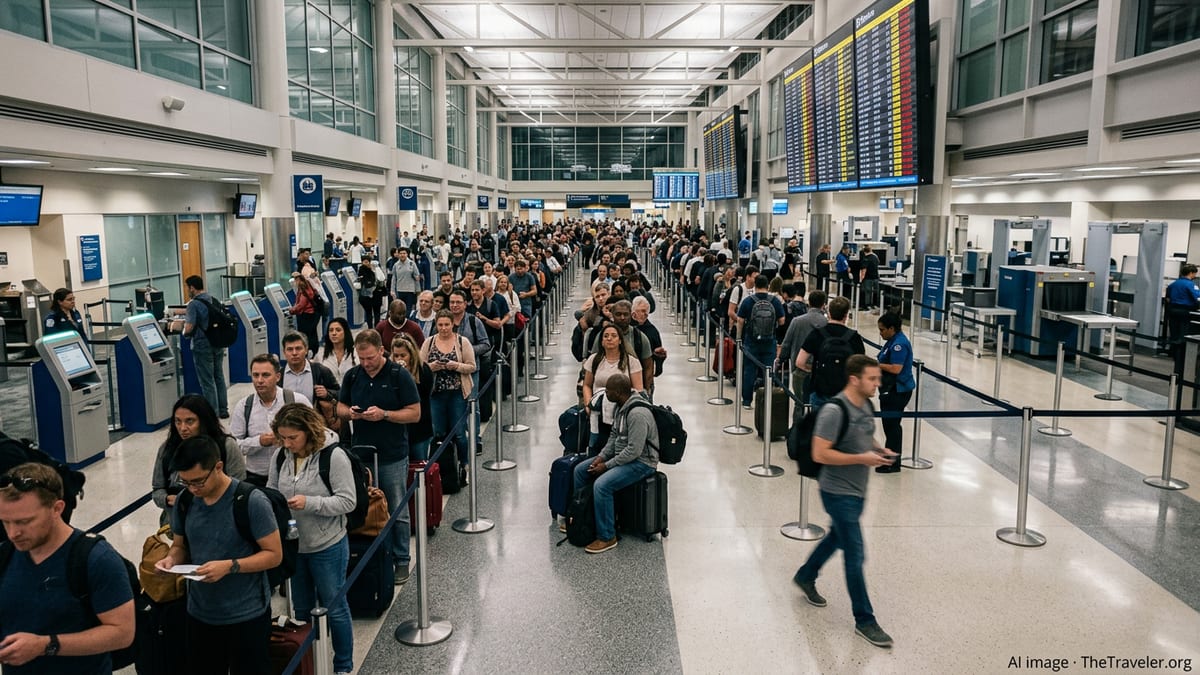
Flight cancellations pile up as recovery drags into weekend
Publicly available flight tracking data shows that more than 3,700 flights within, into or out of the United States were canceled by late Saturday morning, with at least 2,000 more delayed as carriers tried to restart their networks after the shutdown. The figures build on an already severe disruption on Friday, when nearly 10,000 flights were canceled and more than 7,000 were delayed following the order that halted almost all departures for close to five hours.
The Federal Aviation Administration lifted the nationwide stop on Friday evening, but airlines warned that schedules would remain fragile through the weekend. Major carriers including American, Delta, United, Southwest, JetBlue and Alaska focused on operating core routes while cutting frequencies and trimming some regional services to free up aircraft and crews.
According to operational updates published by several airlines and travel data providers, the disruption has been felt most sharply at large hubs such as Atlanta, Dallas Fort Worth, Chicago O Hare, Denver, Newark and Los Angeles, where aircraft and crews are out of position after hours on the ground. Smaller cities that rely on connecting traffic have also seen gaps in service as airlines prioritize long haul and transcontinental flights.
Data compiled by flight tracking services indicates that some airlines faced particularly steep challenges. JetBlue, for example, had canceled roughly 40 percent of its Saturday schedule by late morning, while other carriers posted lower but still substantial percentages of cancellations and delays.
Passengers face long lines, rolling delays and scarce seats
Scenes from major airports on Friday evening and into Saturday showed departure halls crowded with passengers lying on terminal floors, clustering around power outlets and queuing at airline counters in the hope of securing a new itinerary. Coverage from airports including Miami, Boston Logan, Seattle, Charlotte and Los Angeles described travelers facing waits of several hours just to speak with an agent.
Reports from Boston and other cities indicated that some passengers were unable to find hotel rooms near the airport after late night cancellations, pushing them to stay overnight in terminals. Others opted to abandon their trips and search for rental cars or intercity buses after learning that the next available flight on their route might be days away.
Travelers still due to depart over the weekend are being urged in widely circulated advisories to check their flight status frequently before heading to the airport and to use airline apps and websites where possible to rebook or request refunds. Airlines have added call center staff and customer service agents in terminals, but long hold times and crowded queues remain common as the disruption continues.
Sports teams, business travelers and holidaymakers have all been caught up in the fallout. Published coverage of the impact on professional and college sports notes that several National Basketball Association and National Hockey League teams, along with college football programs preparing for weekend games, saw their travel plans thrown into disarray as charter and scheduled flights were delayed or grounded.
What triggered the nationwide ground stop
The Federal Aviation Administration ordered the nationwide halt to departures on Friday afternoon after what the agency described in public statements as serious telecommunications issues affecting air route traffic control centers and terminal radar facilities in multiple regions. The outage disrupted communications and radar feeds used to manage en route traffic across large swaths of US airspace.
According to agency advisories compiled by aviation observers, more than 3,500 aircraft were airborne when the order took effect. While planes already in the sky were allowed to continue to their destinations under established contingency procedures, departures were paused so controllers could focus on maintaining safe separation with limited systems and gradually reduce the number of aircraft aloft.
Transportation Department officials and the contractor responsible for new air traffic technology introduced this year have publicly rejected early speculation that a cyberattack was to blame, pointing instead to overloaded network routers and instability in communications systems. A press briefing on Saturday indicated that there is no evidence so far of malicious activity tied to the outage, although a formal investigation is still in its early stages.
The pause was the first nationwide ground stop of this scale since 2001, and the longest broad halt to US departures since air travel resumed after the September 11 attacks. A shorter nationwide stop linked to a Federal Aviation Administration computer malfunction occurred in January 2023, but that disruption lasted for about an hour and a half, compared with nearly five hours for the latest event.
Airlines roll out waivers and limited assistance
Major US carriers have introduced flexible travel waivers for customers affected by the shutdown, allowing many passengers to change their itineraries without paying standard change fees. In most cases, published policies require travelers to keep the same origin and destination and to travel within a specified window, often through the early or middle part of next week, in order to qualify for fee free rebooking.
Statements collected by news outlets show that some airlines are offering hotel and meal vouchers in cities where large numbers of travelers were stranded, particularly when disruptions cause passengers to miss the final flights of the day. However, because the root cause of the meltdown was an air traffic control system failure rather than an airline specific issue, carriers are generally framing these measures as discretionary goodwill rather than obligations.
Under long standing US Department of Transportation rules, passengers are entitled to a cash refund if their flight is canceled and they choose not to travel, regardless of the reason for the cancellation. Travelers can also request refunds in cases of significant schedule changes or long delays, although the department has not yet issued definitive thresholds for what constitutes significant in this latest event.
Travel insurance providers have begun to issue advisories explaining how policies may respond to the mass disruption. One major global insurer, for example, is advising customers to first seek compensation or rebooking from their airline and to retain receipts for meals, hotels and essential purchases, as many policies only reimburse costs that cannot be recovered through the carrier.
What stranded travelers can expect over the next 48 hours
Analysts who track flight operations expect the disruption to ease gradually through Sunday as airlines work through backlogs, though the process will depend heavily on weather and the absence of further technical issues. Forecasts indicate that storms in parts of the country could create new delays at already stressed hubs, complicating recovery efforts.
Operational plans shared publicly by several major airlines emphasize the need to reposition aircraft and crews, which means some flights that appear on schedules may still be canceled at short notice if they rely on inbound aircraft that remain out of place. Travelers connecting through large hubs are particularly vulnerable to missed connections as carriers consolidate flights and adjust departure times throughout the day.
Consumer advocates are reminding passengers that they do not need to accept vouchers or travel credits if an airline has canceled their flight and they prefer a refund, and that they should review credit card benefits that may provide trip delay coverage for extra hotel nights and meals. Keeping documentation of expenses and records of cancellation notices is being widely recommended in case passengers need to pursue claims later.
With the system still under strain, travel experts suggest that those with flexible plans consider postponing nonessential trips by a day or two to avoid the worst of the congestion. For those already stranded, persistent checking of airline tools, monitoring of same day standby options and a willingness to consider alternate airports or routings remain the most realistic pathways to getting moving again as the industry works to recover from an unprecedented nationwide halt.