


More news on this day
Escalating confrontation between Israel, Iran and armed groups in Gaza is colliding with a fragile regional economy, forcing Jerusalem’s tourism industry to rethink how it operates and who it serves.
Get the latest news straight to your inbox!
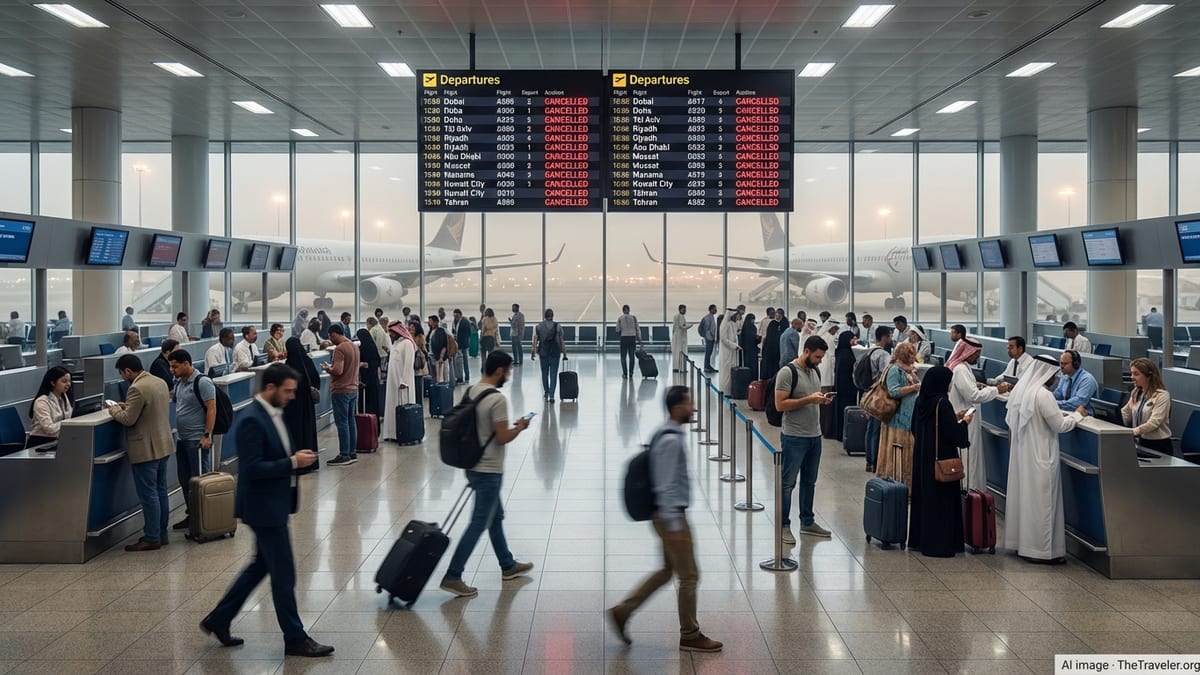
A Tourism Collapse in the Holy City
Jerusalem entered 2023 with tourism close to pre pandemic levels, supported by record arrivals in Israel and strong demand for religious and cultural travel. That recovery unraveled after the 7 October 2023 Hamas attacks and the subsequent war in Gaza, which triggered mass cancellations, suspended airline routes and sweeping travel advisories. Publicly available figures compiled by international organizations and Israeli statistical releases indicate that foreign arrivals to Israel fell by around 80 percent year on year in early 2024, with Jerusalem among the hardest hit destinations.
Hotels, tour operators and small family businesses in and around the Old City report sharp falls in occupancy compared with 2019 and early 2023. Assessment work by civil society groups in East Jerusalem describes occupancy at many properties stuck in the single digits or low double digits through mid 2024, with much of the limited demand coming from domestic visitors or displaced residents rather than international tourists. Pilgrimage sites that are normally crowded during Christian and Jewish holidays have experienced long stretches of near emptiness.
This collapse has filtered through the broader urban economy. Travel related employment in guiding, hospitality, transport and retail has contracted, while municipal revenues linked to tourism spending have weakened. Analysts who track the economic impact of the Gaza war note that tourism losses account for a large share of Israel’s wider downturn in services exports and local consumption, placing added pressure on national and city level budgets.
Iran Israel Tensions Add a New Layer of Risk
The shock to Jerusalem’s visitor economy has been amplified by direct confrontation between Israel and Iran. Iran’s large scale drone and missile attack on Israel in April 2024, launched in response to an earlier strike on an Iranian diplomatic facility in Damascus, marked the first time Tehran openly targeted Israeli territory. Follow on Israeli strikes inside Iran deepened fears of a wider regional war, prompting a wave of fresh travel warnings and flight adjustments affecting Ben Gurion Airport, the main international gateway for Jerusalem.
Travel industry coverage of the April 2024 exchanges describes temporary airspace closures, diverted long haul services and nervousness among airlines and tour wholesalers already reeling from the Gaza conflict. Insurance premiums for aviation and group travel rose, while some carriers extended suspensions of scheduled services to Tel Aviv. Security incidents in subsequent months, including missile and drone alerts coinciding with major Jewish holidays, repeatedly disrupted both inbound and outbound travel patterns.
Risk consultants now treat the Iran Israel confrontation, and the possibility of renewed direct strikes, as a structural factor in their medium term outlook for the Eastern Mediterranean. Destination managers in Jerusalem must therefore plan marketing, pricing and contingency operations around a baseline of elevated geopolitical risk, rather than viewing flare ups as short lived anomalies. This recalibration affects everything from how contracts with foreign tour operators are written to whether investors will finance new hotel capacity.
Jordan’s Parallel Struggle and the Shifting Pilgrimage Circuit
Across the Jordan River, one of Jerusalem’s closest tourism partners is confronting its own shock. Before October 2023, Jordan was enjoying a strong upswing, with record visitor numbers to Petra, Wadi Rum and the Dead Sea. Reports from Jordan’s tourism ministry and central bank show that the war in Gaza quickly interrupted this momentum, as Western travelers cancelled combined itineraries that typically linked Amman, Petra, Jerusalem and Bethlehem in one circuit.
Analyses by the International Monetary Fund and regional research institutes highlight tourism as a primary transmission channel through which the Gaza war has affected Jordan’s growth. Forecasts for 2024 and early 2025 underline weaker activity driven by lower European and North American arrivals and by higher financing costs tied to regional risk. Local media coverage notes that businesses in Petra and other key sites experienced steep drops in bookings, particularly for package tours that depended on open land borders with Israel and the Palestinian territories.
Yet Jordan has also begun to adapt. Recent official reviews and industry interviews suggest that the country is pivoting marketing efforts toward visitors from Gulf Cooperation Council states and other regional markets considered less sensitive to Middle East security headlines. Early 2025 data point to a gradual stabilization in overnight arrivals, even as revenue per visitor remains under pressure. For Jerusalem, this shift implies a reconfiguration of the classic Holy Land circuit, with more travelers choosing itineraries that minimize overland crossings or postpone visits to politically symbolic sites.
Changing Visitor Profiles and On the Ground Experience
As traditional long haul markets pull back, the profile of visitors who still come to Jerusalem is changing. Data and anecdotal evidence gathered by local associations indicate a higher share of diaspora visitors with close family ties, faith based delegations prepared to travel despite security warnings, and independent travelers who are more familiar with the region and willing to accept higher risk. Mass market leisure groups and first time package tourists from Europe, North America and parts of Asia have largely disappeared.
The on the ground experience has shifted with these flows. Some Christian pilgrimage sites operate with reduced hours or limited services, reflecting both security considerations and lower demand. Retailers in the Old City and modern commercial districts have adapted their offerings toward local customers, students and aid workers, while many tour guides have sought temporary work outside tourism. Cultural events that once targeted international audiences now focus on residents and domestic visitors from other parts of Israel.
In East Jerusalem, where the tourism economy is tightly interlinked with the situation in Gaza and the West Bank, social tensions have altered how residents perceive festivals and celebrations. Reporting from regional media around Ramadan 2024 described subdued public activities and a reluctance among some communities to engage in festive tourism oriented events while conflict continued. This atmosphere complicates efforts to revive the city’s appeal as a shared religious destination at a time when political narratives are increasingly polarized.
Long Term Recalibration and Scenarios Ahead
The combined impact of the Gaza war, the Iran Israel confrontation and the economic reverberations in neighboring Jordan is pushing planners to consider new scenarios for Jerusalem’s tourism future. Analysts in multilateral institutions and think tanks outline several possibilities, ranging from a slow recovery tied to de escalation and reconstruction, to a protracted period of volatility in which arrivals remain well below 2019 levels. In all cases, the industry faces years of rebuilding confidence among foreign travelers and international airlines.
Some policy documents and strategy papers circulating in late 2024 and 2025 highlight diversification as a central theme. Proposals include encouraging more regional and domestic tourism, investing in digital experiences that reach religious audiences unable or unwilling to travel, and upgrading transport and hospitality infrastructure so that operators can scale up quickly if and when security conditions improve. There is also discussion of mechanisms to provide financial cushions for small tourism businesses during extended downturns.
For Jordan, which acts as both a competitor and a complementary destination to Jerusalem, similar debates are under way about how to balance dependence on the Holy Land circuit with efforts to cultivate stand alone branding around Petra, desert tourism and wellness offerings. The trajectory of these strategies, combined with the evolution of tensions involving Israel and Iran, will help determine whether Jerusalem returns to its former place at the center of regional pilgrimage routes or settles into a smaller and more volatile niche within the global travel market.