


More news on this day
China and North Korea have restarted international passenger train services between Beijing, Dandong and Pyongyang for the first time in six years, a symbolic reopening that restores a historic rail corridor even as leisure travel into the isolated state remains sharply limited.
Get the latest news straight to your inbox!
A Historic Cross-Border Corridor Back on the Map
Passenger rail links between China and North Korea resumed in March 2026, reconnecting Beijing and the border city of Dandong with Pyongyang after an interruption that began in early 2020. According to published coverage from regional outlets, trains once again cross the Sino Korean Friendship Bridge over the Yalu River, restoring one of the most visible connectors between the two countries.
The flagship international service runs between the Chinese capital and Pyongyang, typically departing Beijing in the late afternoon, stopping in Dandong and then entering North Korea via Sinuiju before arriving in the North Korean capital the following day. Additional reports describe a daily Dandong to Pyongyang train that revives a long-standing route popular with traders and tour groups before the pandemic.
Background reporting on the Dandong Pyongyang through train indicates that the cross-border passenger service was suspended from January 2020, when North Korea sealed its frontiers in response to Covid 19, until operations resumed on March 12, 2026. The restart is being framed by analysts as part of a gradual normalization of ties between Pyongyang and Beijing after several years of pandemic isolation.
Freight trains across the same corridor had already returned in stages, but the restoration of regular passenger services marks a more visible step. Local media in Dandong describe a noticeable increase in rail activity along the riverfront and renewed expectations that the city’s role as a logistical and symbolic gateway to North Korea will strengthen.
Who Can Ride The Trains?
Despite the high profile images of international trains once again rolling toward Pyongyang, access to seats on these services remains narrow. Industry bulletins and rail enthusiast reports indicate that tickets on the Beijing Pyongyang route are currently being issued mainly to passengers traveling on business, official or family visit visas, rather than to casual tourists.
A rail passengers association newsletter notes that the reopened trains are, for now, restricted to travelers with specific categories of authorization, with no sign of the mass market tourism that characterized some pre 2020 departures. Travel agencies that once marketed short rail based city breaks to Pyongyang via Dandong are monitoring developments but have not widely relaunched group itineraries.
North Korea’s border controls also remain stringent. Publicly available information on tourism rules indicates that, although the country began cautiously reopening to a small number of foreign visitors from 2024 onward, access is uneven and heavily managed. Russian tour groups have been among the first to reenter under tightly controlled arrangements, while Chinese and Western leisure travelers face more complex and shifting requirements.
Even for qualified travelers, the resumed trains operate within a heavily regulated environment. Border formalities in Sinuiju remain extensive, with long inspection stops, and schedules can be subject to change with limited notice. Analysts caution that the new rail era should be viewed as a controlled reopening rather than a return to pre pandemic levels of mobility.
Tourism Still Lagging Behind Transport
While transport links are slowly being restored, tourism policy is moving more slowly. Open source reference material on tourism in North Korea notes that the country’s broader reopening to foreigners after the pandemic has been uneven, with some regions and cities remaining off limits and group itineraries subject to abrupt suspension.
Reports from Asian and European tour operators that specialize in North Korea suggest that regular tourism from China has not yet resumed at scale. Some Chinese agencies in the Dandong area have signaled plans to restart rail based packages once visas for tourist groups are reliably available again, but there is no clear timeline for when that threshold will be reached.
Restrictions are influenced by a mix of public health, political and security considerations, as well as international sanctions that complicate payment channels and travel insurance. North Korea has historically treated tourism as a controlled source of foreign currency rather than an open industry, and observers indicate that this cautious approach has intensified since 2020.
The result is a patchwork landscape in which trains and limited flights connect China and North Korea, yet the number of foreign leisure travelers who can actually use those links remains modest. For now, the restored rail corridor functions more as a diplomatic and logistical artery than a mainstream tourism gateway.
Impact on Dandong and the Border Economy
On the Chinese side of the Yalu River, the return of the Dandong Pyongyang train has immediate local significance. Coverage in regional Chinese media highlights how hotels, restaurants and riverfront sightseeing operators in Dandong are hoping that the revived rail traffic will eventually translate into more visitors and higher spending.
The city had experienced a pronounced downturn during the years when freight and passenger flows were sharply reduced. As cargo volumes have picked up and passenger services have restarted, local business owners and municipal planners are positioning Dandong once again as a key hub for cross border trade and tightly managed tourism.
Infrastructure around the border is also evolving. Public information indicates that Dandong Langtou Airport is resuming fuller operations in 2026, complementing the rail link as the city seeks to reassert its role as a multi modal gateway. At the same time, Chinese domestic tourists are returning to Dandong itself, drawn by river cruises that sail along the border and offer distant views of Sinuiju and the North Korean shoreline without crossing the frontier.
However, the benefits for North Korea’s own tourism sector remain limited as long as inbound leisure travel is tightly constrained. Economists tracking the region note that pre pandemic projections of hundreds of millions of dollars in annual tourism revenue are unlikely to materialize quickly under the current policy environment.
What the Rail Reopening Signals for Future Travel
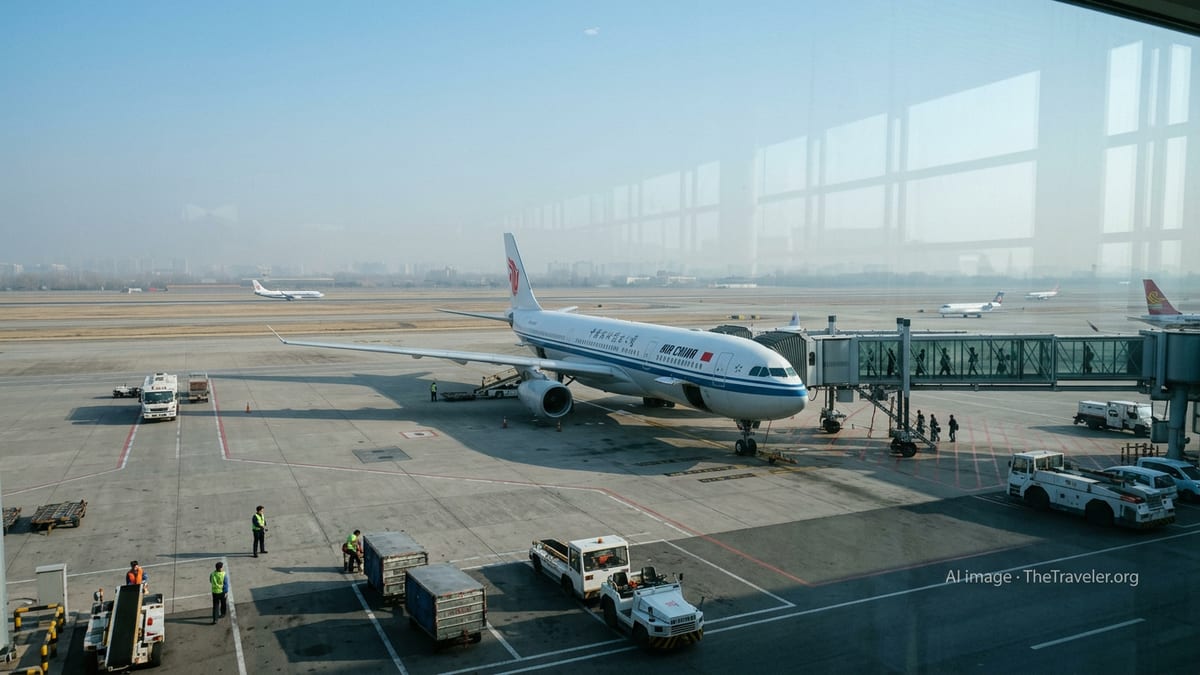
The relaunch of cross border trains fits into a broader pattern of North Korea gradually restoring selected international connections while retaining firm control over who can enter. Alongside the rail developments, Air China has restarted a limited Beijing Pyongyang service, although aviation industry coverage suggests that flights are operating at reduced frequency and with restricted booking channels.
Regional security analysts interpret these moves as signs that Pyongyang is seeking closer economic and political alignment with Beijing and Moscow, while remaining cautious about opening too widely to foreign influences. Restoring rail and air links to China provides practical benefits for trade, official delegations and a narrow pool of visitors, without requiring a wholesale revival of mass tourism.
For travelers, the main takeaway is that the map is changing, but only at the margins. The iconic image of a train crossing the river into North Korea has returned, yet most international tourists, particularly from Western countries, still cannot freely book a ticket to Pyongyang. Industry observers expect any future relaxation to unfold incrementally, with experimental tour programs and region specific openings tested before wider access is considered.
Until that happens, the reopened North Korea China rail services stand as a powerful symbol of connectivity in a region still shaped by sanctions, security tensions and competing strategic interests, rather than as a gateway for spontaneous cross border tourism.